



By: Andreas Svitzer, Engineering Manager, & Jonas Björk, CTO.
As organizations scale, dependencies and ownership boundaries often slow things down. To counter that, we’ve adopted a new way of working: the Builder model.
Inspired by patterns emerging in modern AI-native companies, we’ve moved beyond traditional team-based structures. Instead of optimizing for static team ownership, we organize around domains and workstreams.
This shift reduces organizational friction and allows expertise to flow where it creates the most value. It moves us away from asking, “Which team owns this?” toward a more powerful and empowering question: “Who has the right skills to solve this problem?”
Here’s how we’re redesigning the way we work to stay fast, focused, and outcome-driven.
Moving at the Speed of Competence
A hallmark of the Builder model is organizing around domains and workstreams rather than rigid teams. Engineers, designers, and product managers are not permanently assigned to a single team. Instead, they move toward the highest-impact opportunities within or across domains.
Domains provide strategic direction and context. Workstreams are temporary, focused initiatives designed to achieve specific outcomes.
We encourage collaboration within the domain, but focused work is mostly done by individual contributors deployed into workstreams. When a high-priority opportunity emerges, we don’t wait for a specific team to free up capacity. The people with the right skills step in and take ownership, driving initiatives forward with autonomy and accountability.
AI tooling plays a critical role in enabling this model. It reduces the cost of context switching and allows individuals to take broader ownership across the product and technology stack. Since context is the fuel for LLMs, we ensure it is systematically provided with every meaningful change, so both humans and AI agents can work effectively across a wider scope.
The result: work is no longer constrained by ever-growing team backlogs. We can pursue more high-value initiatives in parallel and move faster on what matters most.
Outcomes Over Syncs
In traditional team-based models, coordination can require as much effort as delivery. We believe that’s the wrong trade-off.
Instead of large, tightly synchronized projects with heavy overhead, we default to small, fast-moving workstreams with minimal dependencies and handovers.
Smaller workstreams provide:
- Rapid feedback loops: We learn in days, not weeks.
- Reduced complexity: We spend less time in meetings and more time building.
- Incremental value: We deliver value to our users every single day, rather than waiting for one massive “launch.”
- Less ownership friction: We avoid silos and reduce the tendency to guard parts of the system, making it easier for others to contribute across the product.
Builders follow the problem
A core principle behind our way of working is our Beyond Boundaries mindset. You may belong to a domain, but your impact isn’t confined to it. Builders follow the problem, not the organizational chart.
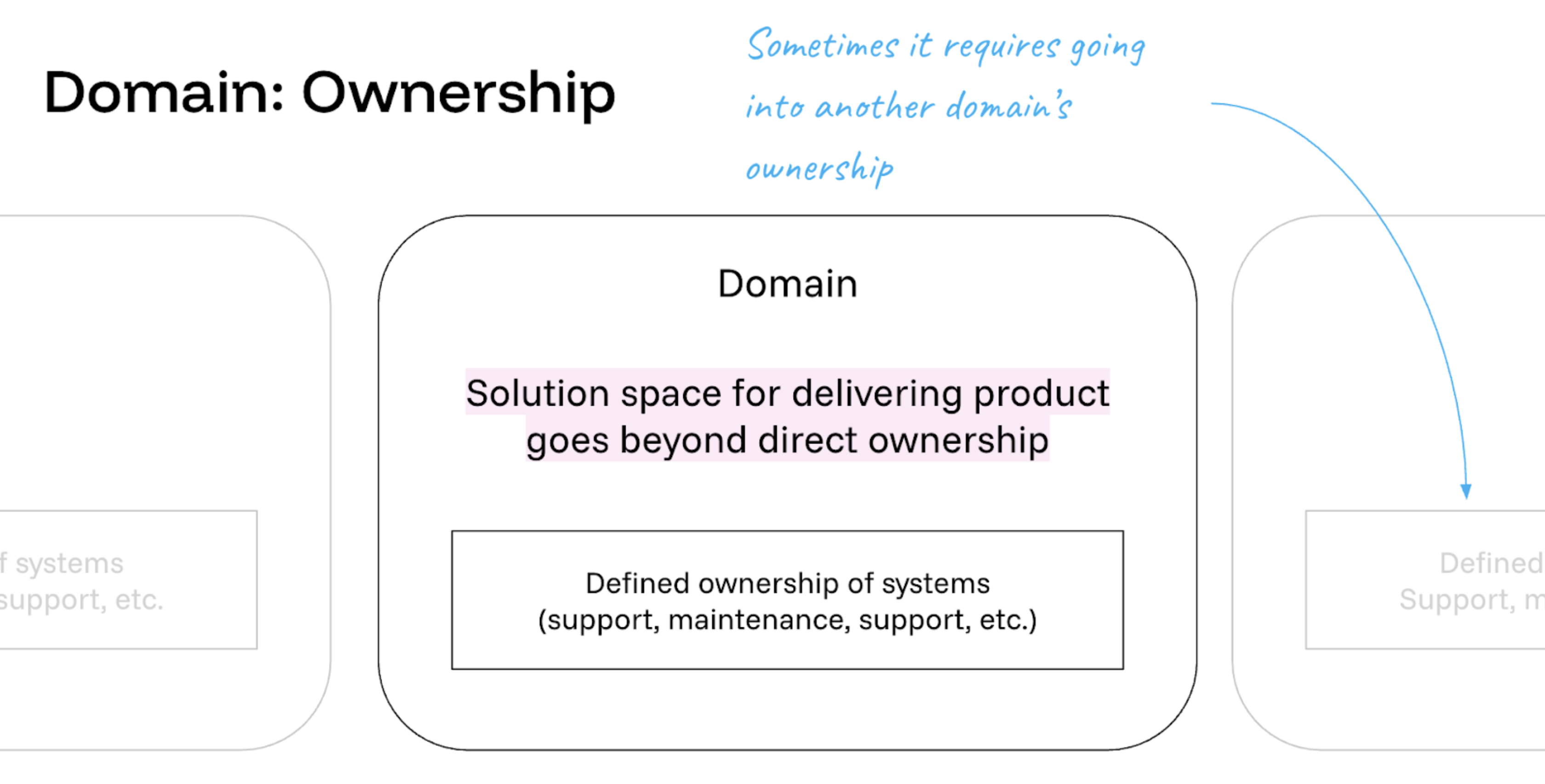
Solving a customer problem often means stepping into another domain’s space. If an engineer in the Data Extraction domain sees an opportunity to improve the User Dashboard to make a feature truly shine, they don’t file a ticket and wait. They collaborate and move the solution forward.
At Funnel, delivering great products matters more than who writes the code.
Long term product health
Who is responsible for the long-term health of the product? We believe the answer is simple: everyone.
Ownership at Funnel is not confined to a team name, a role, or a specific backlog. We default to a shared accountability model where each domain operates as a collective steward of its part of the product. Long-term health, quality, and progress are not someone else’s job. They belong to all of us.
The enable shared accountability, we emphasize:
- Shared context: Everyone understands the why behind the work, not just the how. When we share context openly, decisions improve, trade-offs become clearer, and people can act with autonomy while still moving in the right direction.
- Shared priorities: We align on what matters most. Clear, transparent priorities ensure that parallel workstreams reinforce each other rather than compete. Alignment reduces friction and increases momentum.
- Shared success: We measure success by domain outcomes, not by the completion of individual tickets.
This model only works because it is built on trust. Trust that everyone is acting in the best interest of the domain. Trust that if something is off track, someone will raise it. Trust that quality, sustainability, and long-term thinking are everyone’s responsibility.
How does this work in practice?
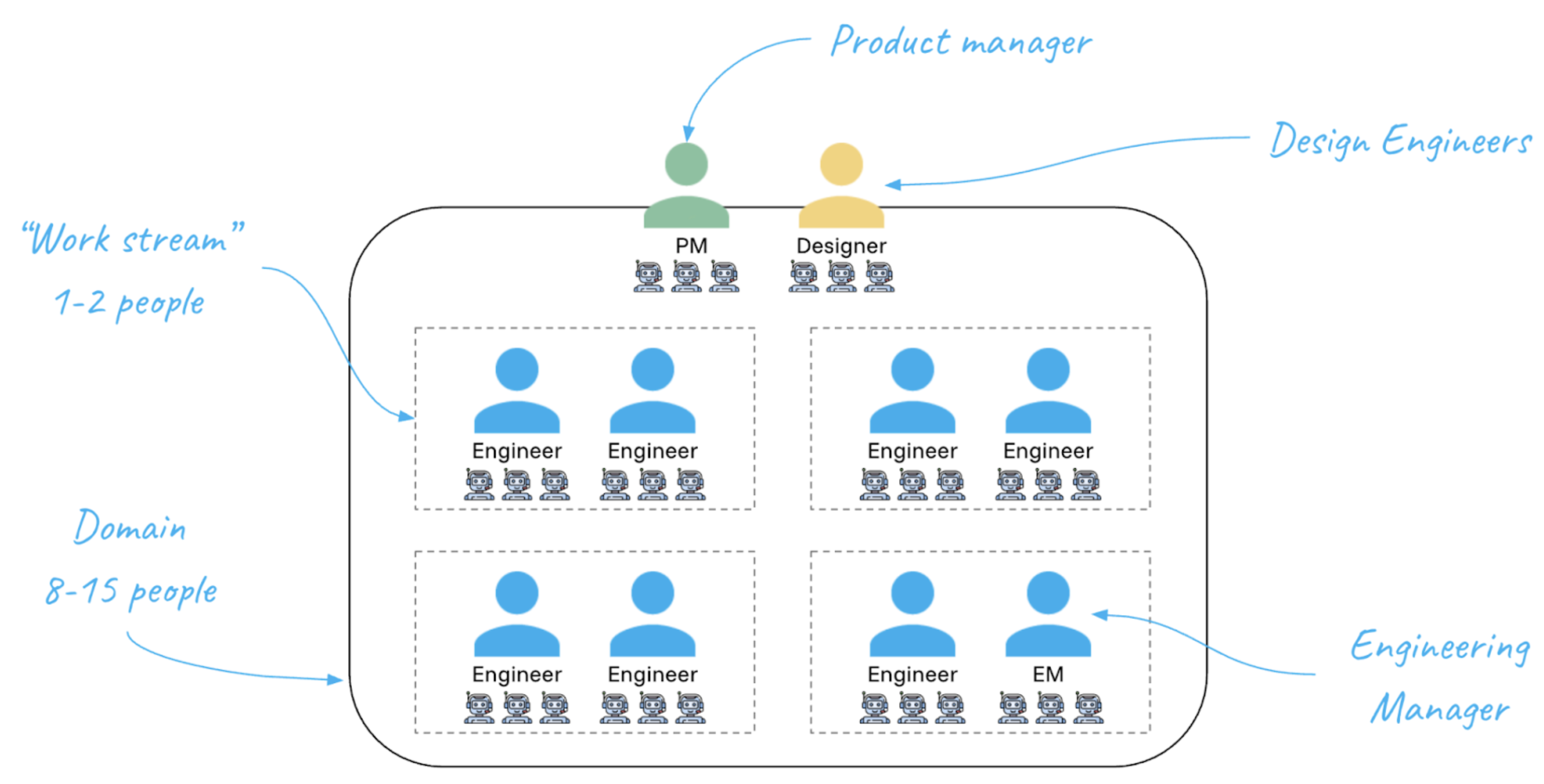
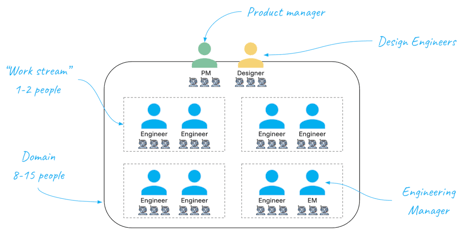
The Builder Model centers on autonomous, cross-functional domains of 8–15 people. Each domain is vertically integrated and contains the competencies required to own its lifecycle: from problem discovery to deployment.
With a shared commitment to Get *it Done, everyone in the domain is responsible for moving initiatives forward and shipping value to customers.
When a domain prioritizes a high-level initiative, we spin up a dedicated workstream that typically moves through three phases:
- Discovery: Defining requirements and validating technical feasibility.
- Implementation: Executing the build with an AI-augmented workflow to maximize developer velocity.
- Delivery: Ensuring seamless integration and release.
We prioritize deep work and individual autonomy. Contributors leverage AI tools to parallelize tasks and accelerate execution. Communication is primarily asynchronous, with live collaboration when needed. Updates are shared at meaningful milestones or when blockers arise.
The focus is simple: move fast, in parallel, toward clear outcomes.
A Culture Built for Builders and Problem Solvers who likes to Get *it Done
The Builder Model is ultimately a commitment to trust.
It’s a belief that when talented people are given the right context and the freedom to move toward the most important problems, they will produce extraordinary results.
By shifting from small aligned teams to domain-driven workstreams; by prioritizing outcomes over dependency management and coordination overhead; and by encouraging collaboration beyond organizational borders, we’ve created an environment where we can move faster, experiment more, and deliver customer value with less friction.
This model isn’t effortless. It requires strong context sharing, mature contributors, and a culture of feedback and trust. But when it works, it dramatically reduces handovers and dependency drag.
If you’re tired of picking tasks from a backlog and never getting to the highest-impact work?
At Funnel, the workstream is ready when you are.