






Every team is feeling pressure to implement artificial intelligence today. Expectations are sky-high, and the promise of AI is being sold as a silver bullet for every challenge.
Yet, while many teams are adopting new tools and AI systems, they’re not unlocking the growth, efficiencies and intelligence AI is supposed to offer. So what’s the problem? Usually, it comes down to not having access to underlying data they can trust.
Dr. Tim Wiegels, executive data advisor at Tim Wiegels Data Solutions, tells Funnel that most companies seeking AI guidance are ten steps away from readiness and more often than not, are getting the basics wrong. With 20 years of experience, he acts as a “therapist” between marketing, data and management teams, helping them identify and fix painful gaps they’ve ignored.
When he audits a company’s marketing data maturity, he rarely finds a lack of technology. Instead, he finds a "stack that grew by accident," a fragmented mess of AI systems where data is scattered across dozens of disconnected platforms. But, without a unified view, AI can’t connect marketing spend to real customer outcomes. It makes it difficult to defend marketing campaigns, optimize budgets and prove ROI.
So what can marketing teams do to implement impactful AI-driven marketing? This article explains what AI readiness actually means for marketing data and provides actionable advice on what to fix first to see real, tangible results.
AI readiness in marketing isn’t about tools. It’s about four things: data ownership, shared definitions, a semantic layer, and a culture of experimentation.
Stop buying AI-powered tools and start building a foundation
The most common mistake in modern marketing is equating tool adoption with AI readiness. It’s easy to feel ahead of the curve when you have a shiny new interface on your screen, but a large language model (LLM), Gemini or a custom GPT agent is only as good as the context it’s given.
The hype: AI as an amplifier of messy customer data
Marketing teams invest in AI-powered tools to automate tasks, but without a solid foundation, these tools can make problems worse. Even the most powerful artificial intelligence cannot fix messy customer data. Instead, it amplifies it.
For example, if your campaign naming conventions are inconsistent, your tracking breaks or your cost data is siloed, your AI marketing tools will simply learn those mistakes and scale them. This leads to what Tim describes as "VLOOKUP hell," where massive, fragile spreadsheets do the heavy lifting behind the scenes.
The reality: A minimal viable foundation for AI
To move past the hype and achieve true AI integration, Tim recommends securing a "minimal viable foundation." This isn't about buying more software platforms; it’s about ownership and structure. You can build this foundation for AI in marketing with these four pillars:
- Data ownership: Don’t rely on consumer data locked in third-party tools. You must have central access to your own historical data.
- Normalization: Data must be clean and consistently transformed. A "conversion" must mean the same thing across every channel and marketing initiative.
- Shared definitions: You need a documented, company-wide consensus on core metrics. If you ask five people what "revenue" was yesterday and get five different answers, your AI will simply pick one of those wrong answers and run with it.
- Alignment: Your marketing cost data and your purchase history (outcome) data must land in the same place.
Why the foundation is business-critical
Without a solid data foundation, marketing leaders cannot answer basic questions regarding channel ROI, campaign efficiency or budget allocation.
Most companies approach digital strategy backward: they launch a website, implement tracking, dump data into a warehouse and then ask if the dashboards are helpful. To be future-ready, flip this script. Secure your foundation first. Once this base is stable, you can point your AI toward a structure that translates data into growth.
Build a semantic layer to bridge the artificial intelligence-human gap
Data is treated as a purely technical asset, but in marketing, data is a language. The problem is that platforms don't speak the same language as your business. A "lead" in a Facebook campaign might be a completely different entity than a "lead" in Salesforce. To bridge the gap, you need a semantic layer for marketing data.
Think of a semantic layer as a translator; it takes messy, technical source data and turns it into business concepts that everyone, and every AI, recognizes. The semantic layer is what Tim calls data gold. This data is more valuable than data that’s still raw and unstructured, or that’s cleaned and transformed but not quite ready for analysis.
- Bronze (the raw layer): Data in its most primitive form, straight from the source. It’s noisy, frequently interrupted by platform outages and riddled with naming inconsistencies.
- Silver (the refined layer): Data that's undergone cleaning and initial transformations. It has structure, but it still speaks a technical language.
- Gold (the semantic layer): This is the business-ready layer. It contains the "gold" concepts that everyone in the organization, from data to marketing, recognizes.
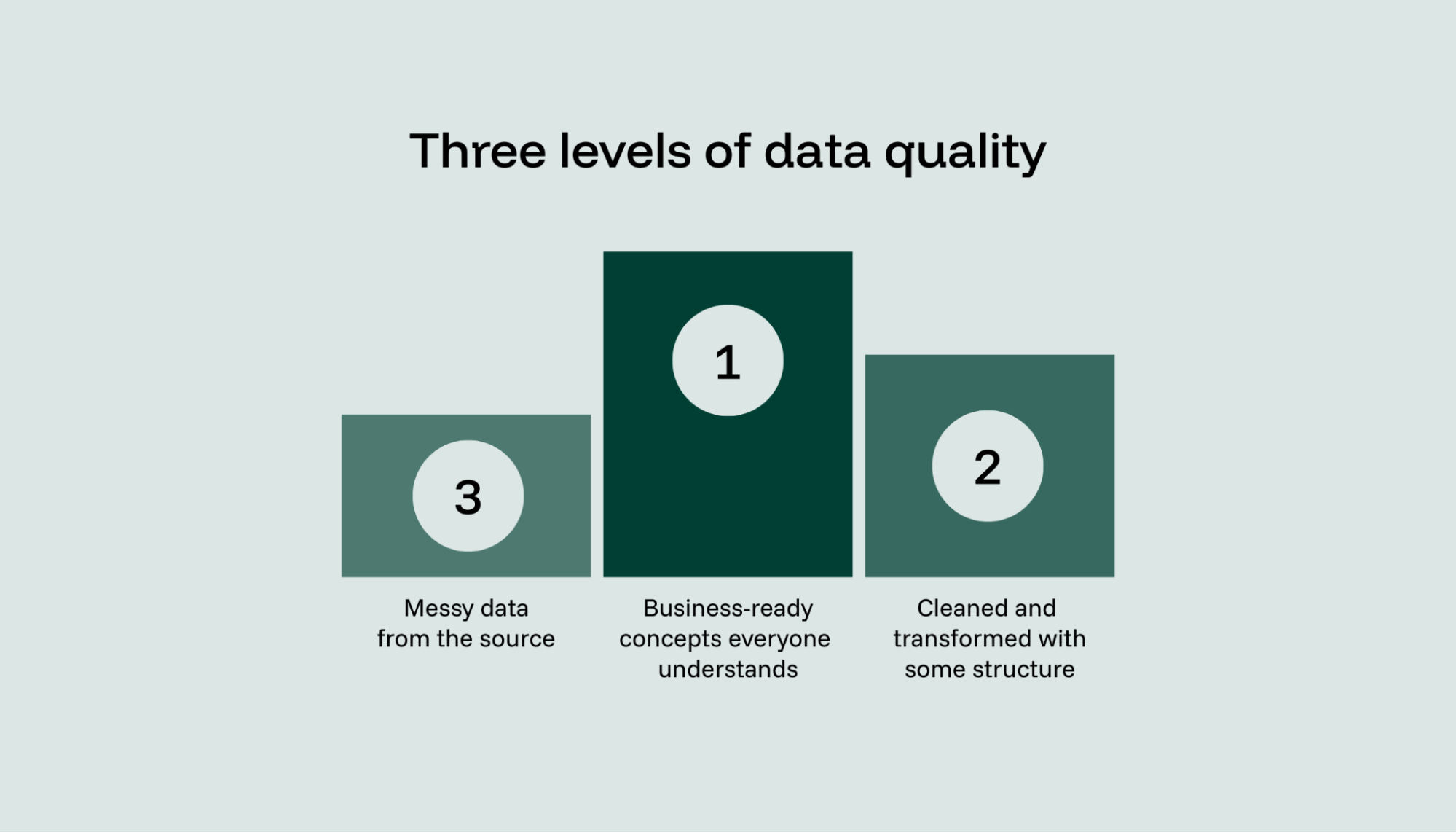
The link between artificial intelligence and data quality is pretty straightforward: don't point AI at the raw layer. If you feed AI bronze data, it will learn from your mistakes. It won't distinguish between a drop in demand and a tracking outage; it will simply scale the anomalies and output confident hallucinations. By pointing AI at the gold layer, you give it stable business logic to support analysis and reduce noise, rather than generate misleading outputs.
Protecting the gold layer
Even when you have that gold layer, you still have to protect it from changing events. Someone from marketing renames an event during a site relaunch without telling the data team, and suddenly, predictive analytics and reports break.
This is where marketing intelligence saves the day. A tool like Funnel acts as a semantic foundation for marketing data by aligning terms, metrics and transformations before that data reaches your BI tools. It exports modelled data, and it gives marketing teams a no-code way to define and reuse logic without digging through raw tables. This ensures your marketing reports and measurement remain resilient even when the underlying tech shifts.
However, before building up your measurement approach with more sophisticated tools and techniques, it’s important to make sure everyone is aligned on what you’re measuring and why.
AI in marketing starts with stakeholders
Tim sees a recurring mistake in marketing data maturity: treating data strategy like a plumbing project.
When teams start with tracking, they capture what is easiest to measure, not what is necessary to decide. The result is zombie dashboards: plenty of numbers, but no shared view of performance. Tim’s approach flips the script:
- Start with stakeholders: Talk to the CEO, CFO and product leads about the decisions they actually make.
- Mock up dashboards: Visualize the answers they need before you write a single line of code.
- Work backwards: Only then do you identify the events, sources and models required.
Doing this prevents the "fishing trip," where analysts stare at spreadsheets of 200 fields, hoping for a bite. If you start with a question like "How many orders did we get yesterday?", you can drill down with intent: by channel, campaign or creative.
This marks the transition from simple reporting to true marketing intelligence. However, measurement isn’t as straightforward as it was before recent privacy regulation changes. So, how do we navigate AI-enabled measurement in a privacy-first world?
Navigating measurement in a privacy-first world
Between GDPR, Apple’s ATT and third-party cookies, the data we rely on has become increasingly opaque. But incomplete data is not useless.
Some claim that marketing attribution is broken. But Tim argues it’s simply limited. Even a single-touch model like last-click provides a directional signal. If 50% of your tracked events show a campaign is winning, it’s a safe bet that the campaign is also performing well in the untracked portion of your audience. The goal isn't to find a perfect 1:1 match for every click, but to find reliable patterns that persist even when tracking is imprecise.
What to do if you’re not ready for MMM
To find insights, you need to zoom out. This is where marketing mix modeling (MMM) enters the picture, using regression-based analysis to cut through the attribution noise. However, if you aren't ready for a full-scale MMM setup, Tim suggests starting with a structured week-by-week analysis to link marketing actions to revenue outcomes.
- Track the variables: Each calendar week, write down exactly what was live, which channels were active and what specific changes were made.
- Track the lag: Monitor the outcomes from that same week, specifically how many customers you acquired and how much revenue they generated over time.
- Compare the delta: If weeks two and three perform materially better than week one, and the main difference was pausing one campaign, you’ve found a credible clue about what is actually driving results.
The manual approach is effectively a poor man's incrementality test. It keeps you from getting trapped in platform dashboards and prepares you for the next level of marketing data maturity: triangulation. By combining MMM, MTA and incrementality, you aren’t forced to pick one method; you use them all to validate one another.
Experimentation, incrementality and fear of change
Marketers value testing, but enthusiasm for it wanes when a test requires a sacrifice in short-term performance — even though moving from dashboards to real insight depends on a culture of marketing experimentation.
At Goodgame Studios, Tim recalls a moment when data asked marketing to keep spend flat for six weeks so they could build a reliable TV tracking model. The model was perfect from a statistical perspective. However, for marketing, it was a terrifying ask.
"Flat spending meant experimentation felt risky," Tim explains. "If you changed something and performance dropped, you might be blamed."
This is the single biggest barrier to maturity: a culture where it’s safer to spend inefficiently than to risk a temporary dip to find the truth. But as Tim points out, the Henry Ford quote still haunts the industry: “Half the money I spend on advertising is wasted; the trouble is I don’t know which half.”
If you refuse to experiment because of fear, you are 100% guaranteed to keep wasting that 50%. You just lose the ability to find out where.
Why A/B tests fail (and how to fix them)
The pushback against experimentation stems from a history of underpowered tests. If a test takes forever to reach statistical significance, the team loses trust in the process. To move from guessing to proving, you must redefine what a good test looks like:
- Use geo-tests: Instead of standard A/B testing, use structural geo-tests to validate your MMM findings in the real world.
- Align with business objectives: Stop testing for clicks and start testing for the KPIs your stakeholders actually care about, like revenue or customer lifetime value (CLV).
- Avoid confirmation bias: Refuse the temptation to stop a test early just because the initial results look good.
But before climbing further up the marketing intelligence maturity ladder and diving into more AI capabilities, what steps should marketing take to make sure systems are ready to generate focused insights?
Tim Wiegels’ CMO Playbook: 3 things to audit before implementing AI tools
If Tim Wiegels walked into a new company as CMO tomorrow, he wouldn’t start by shopping for the latest AI-driven marketing tools. Instead, he would perform a rigorous audit of the company's marketing data maturity. Here is his three-step playbook for building a data foundation for AI that actually delivers ROI.
1. Audit your marketing data source of truth
The first question: Where does your cross-channel marketing data live today?
If you cannot see your channel, campaign, cost and revenue data in a single view without manual VLOOKUP hell, you aren't managing a business, you’re managing a spreadsheet.
Tim notes that using a platform like Funnel alongside a data warehouse (like BigQuery) is essential for this task. It allows you to see exactly how different campaigns influence customers, revenue and costs in real-time, moving you toward a trustworthy gold layer of data.
2. Implement a simple attribution baseline
Don't let the search for a perfect model cause paralysis. Start with a one-touch attribution model like last-click or simple multi-touch to gain directional insight.
When doing this, it’s important to treat the results as an input for actionable insights rather than an infallible source of truth. As your historical data improves and your foundation stabilizes, you can then graduate to more advanced measurement modeling, incorporating MMM and other sophisticated approaches.
3. Build toward CLV prediction and advanced modeling
Once quality data is in place, you can finally layer on the advanced work: MMM, churn prediction and customer lifetime value (CLV) forecasting. Tim’s goal is to have a system that signals early indicators of whether a campaign is likely to be profitable, so teams can intervene sooner. By using historical data, you can determine within just a few days if the customers acquired from a specific campaign are likely to be valuable. This is where AI can safely accelerate analysis and decision-making, acting as a high-performance engine on top of the solid foundation you’ve built.
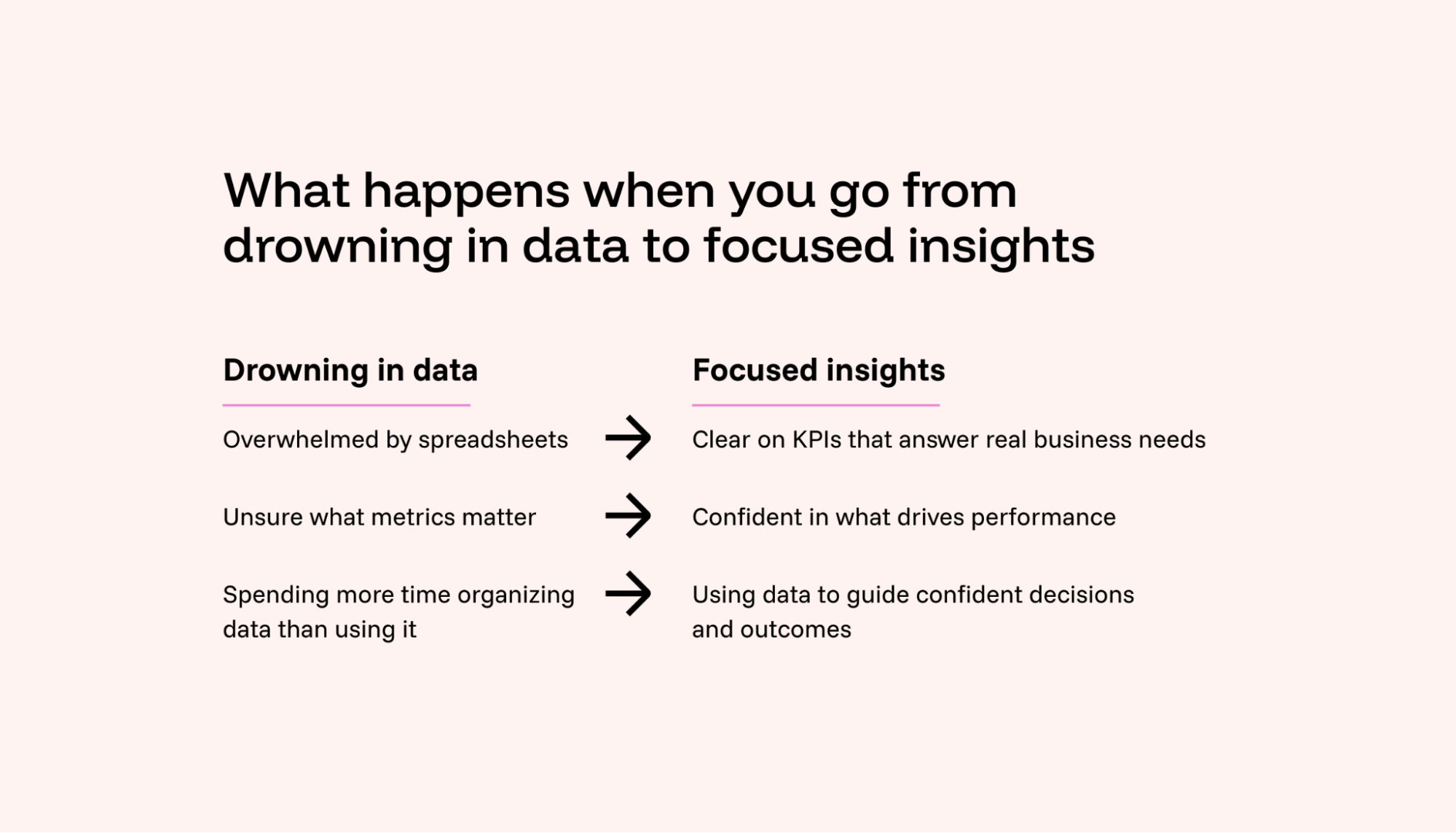
However, a playbook is only as strong as the people running it. Tim is adamant that data literacy isn't optional anymore; if you're a marketer in today's landscape, tech and data are part of your core craft.
One behavior to stop: Ego-driven silos
The final hurdle to AI readiness is organizational. Tim recommends killing "ego-driven silo thinking" immediately, which is when teams optimize only their specific part of the funnel without looking at the big picture.
He shares an example from earlier in his career at a mobility company. A team was tasked with improving the conversion rate from “see price” to “book ride” in the app.
They achieved it by automatically applying a small voucher to every user. Conversion rates jumped, and the funnel metrics looked fantastic.
But there was a catch. The value of the voucher was roughly equivalent to the margin per ride. In other words, they improved their local KPI by giving away most of the profit, including to many customers who would likely have booked without the incentive.
In short, they hit their numbers, but the business impact looked different once you zoomed out.
This is the danger of siloed optimization. That team hit their KPI, but the business lost money.
To reach AI maturity, you need an organization that zooms out and prioritizes overall business impact over individual channel metrics. Otherwise, everyone won’t be on the same page when it comes to the what and why behind implementing AI.
Data clarity isn't optional if you want a competitive advantage with AI-driven marketing
The unglamorous work of fixing ownership, governance and your semantic foundation is what creates the most leverage for AI tools. Once that foundation is in place, AI becomes a growth catalyst rather than a source of noise.
If you’re questioning whether your data is AI-ready, start by auditing your marketing data foundation. Funnel can help you consolidate, clean and model your data so that AI becomes a growth catalyst, not another source of noise. Book a demo today to get started.