






The use of conversational analytics gives marketers another way to interact with data. They let you ask questions using natural, intuitive dialogue, providing a more seamless pathway to actionable insights.
Where dashboards let you track your KPIs and customize your views so you can keep an eye on the metrics that matter week after week, conversational analytics are there to surface quick insights and help you figure out the why behind a performance shift. They add another layer to marketing analysis that’s faster and more flexible than dashboard analytics.
A recent report by Symbolic Data found that organizations using natural language querying cut their time to insight by 68% and increased active data use by 73%. Conversational analytics is the next step in that evolution.
Conversational analytics turns marketing data into dialogue and offers decision-makers a direct line to the information they need to make decisions and plan smarter. Funnel provides the trusted, connected foundation that makes it possible.
What is conversational analytics, and why does it matter for marketers?
Conversational analytics uses large language models (LLMs) to bridge the gap between structured data and human language. It helps people interact with data through simple conversational questions instead of static dashboards or complex queries.
A marketing leader can ask “Which channels drove the highest ROI last quarter?” and get an instant, sourced response. By turning marketing and customer data into dialogue, conversational analytics software removes reporting delays and supports faster data-driven decisions.
The concept is spreading fast as businesses implement AI-supported analytics to improve operational efficiency and uncover actionable insights. According to the McKinsey & Company State of AI in 2025 survey, 88% of organizations today say they use AI in at least one business function.
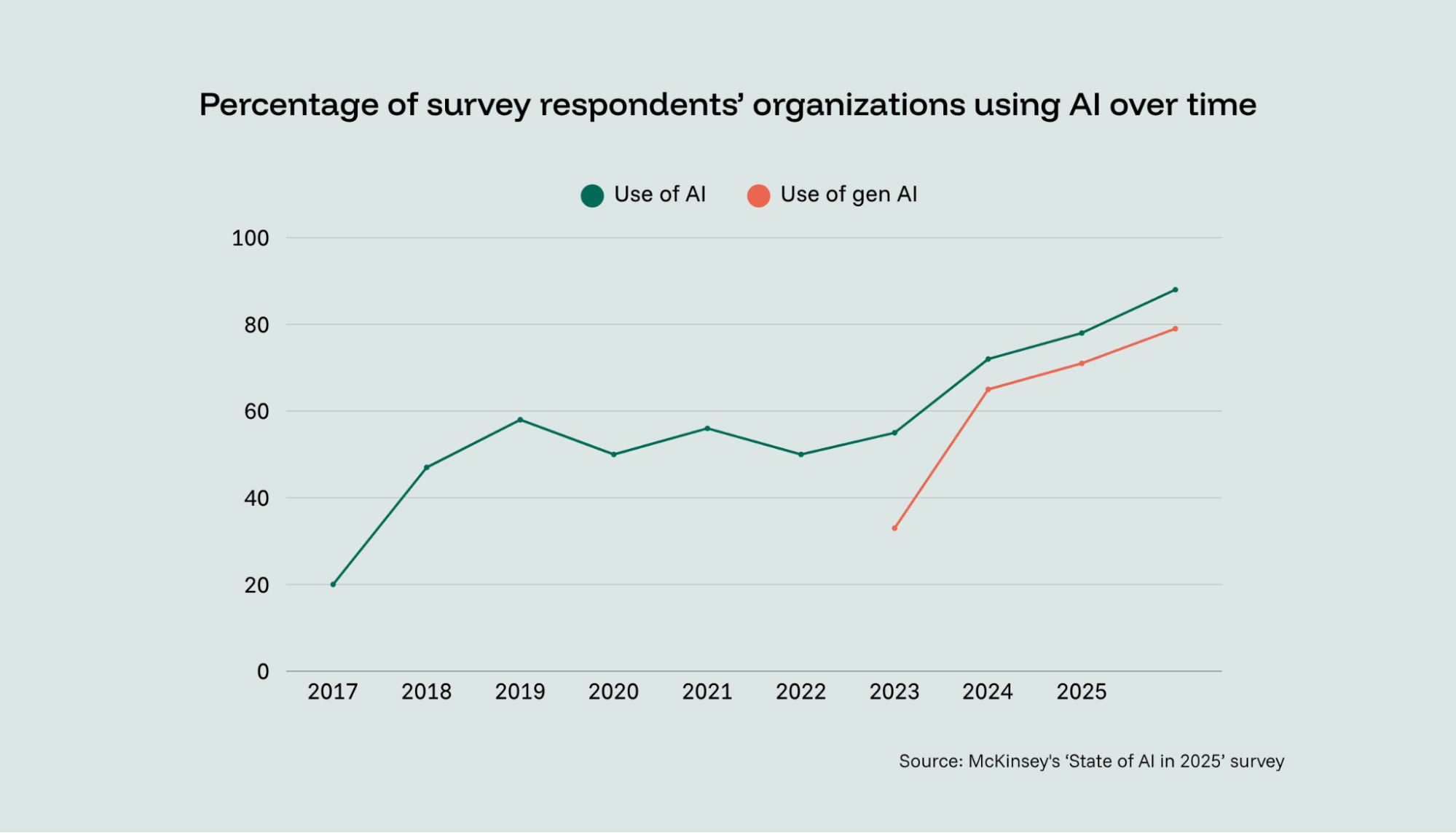
That means the question is no longer: should you adopt conversational interfaces and NLP-driven tools to automate workflows and extract insights? It’s how fast can you do it? In marketing, especially, teams leaning into conversational analytics and natural-language access to data are gaining speed, freeing up creative time and closing decision loops faster.
Conversational analytics changes what teams can investigate because natural language technology removes the barriers that usually slow analysis. When people can query data without SQL or manual exports, they explore scenarios they would have ignored in the past because they were too time-consuming or required engineering help. The result is a broader range of questions and a faster path from curiosity to insight.
It also speeds up how decisions get made. Teams shift from static reporting to rapid exploration, test more ideas in less time and validate assumptions before spending budget. For marketers, this means quicker decision cycles, better alignment with sales efforts and clearer visibility into customer behavior and preferences. Insights surface in plain language that anyone can act on.
Although the technology is still maturing, its impact is already reshaping how marketing teams operate. Natural language tools move teams away from waiting for reports and toward continuous investigation that supports faster learning and more confident choices.
How is conversational analytics changing the way we work with data?
The most important shift is behavioral. Conversational analytics narrows the gap between how marketers and analysts work, giving both groups access to the same data on the same timeline. A campaign manager can check performance by communication channel, while finance reviews return on ad spend in the same interface. Shared access replaces silos and builds cross-team confidence in every metric.
These tools also improve how insights are shared. When conversations about data stay in one environment, teams keep the context that usually gets lost in email threads or slides. This creates a living record of questions and findings, shortening the distance between discovery and action and improving operational efficiency across marketing and data functions.
As adoption grows, conversational analytics will reshape how organizations learn from their data. Real intelligence will come not from the data volume teams collect but from how naturally people can talk to it.
Why is data trust the foundation of conversational analytics?
Trusted data begins with unification. When a conversational system pulls from disconnected platforms, it can misinterpret even simple questions. A marketer might ask “What drove conversions last week?” and get an answer that blends mismatched definitions from Google Ads and Facebook Ads. One platform might count a form fill, another might count an app install. The AI will answer with confidence but not with truth.
Funnel removes that risk by giving conversational systems a clean and consistent source to draw from. It unifies and normalizes marketing data so every channel speaks the same language. Duplicate fields are reconciled, naming inconsistencies are removed and raw spend is preserved for finance teams that need a clear audit trail. Because Funnel holds the last known good data when APIs fail, dashboards stay live and historical reporting remains intact.
This is why Funnel’s Data Guarantee matters. It keeps your performance history stable even when source platforms shift attribution windows or rename metrics. While tools like Supermetrics or Fivetran only pass data through and lose it when APIs break, Funnel protects the integrity of your marketing history so you can measure, model and forecast with confidence.
Accuracy also depends on timeliness and context. Marketers need data that is live, verified and consistent across channels. McKinsey’s 2024 research shows that analysts spend almost 70% of their time producing reports instead of doing strategic work, which slows decision-making. When the underlying data is inconsistent, teams spend even more time fixing gaps instead of acting on insights.
Funnel gives marketing teams unified and reliable decision-ready data that future conversational systems will depend on. By cleaning and standardizing information today, Funnel prepares organizations for dialogue-driven analytics without a major overhaul when those tools become mainstream.
When data becomes trustworthy, conversation becomes possible. The next shift is how that dialogue connects people across the organization.
How does conversational analytics bridge marketing, data and leadership teams?
Conversational analytics breaks down silos between marketing, data and finance by creating one shared language for insight. Instead of waiting for reports, each team can ask questions directly and get consistent answers in real time.
When marketers, analysts and executives engage with the same verified dataset, alignment improves. Marketing can track campaign impact and customer engagement, finance can see spend efficiency and analytics can verify models without rebuilding dashboards. This shared access keeps decisions grounded in fact rather than interpretation.
A Think with Google study highlights this challenge at the leadership level. One CMO explained:
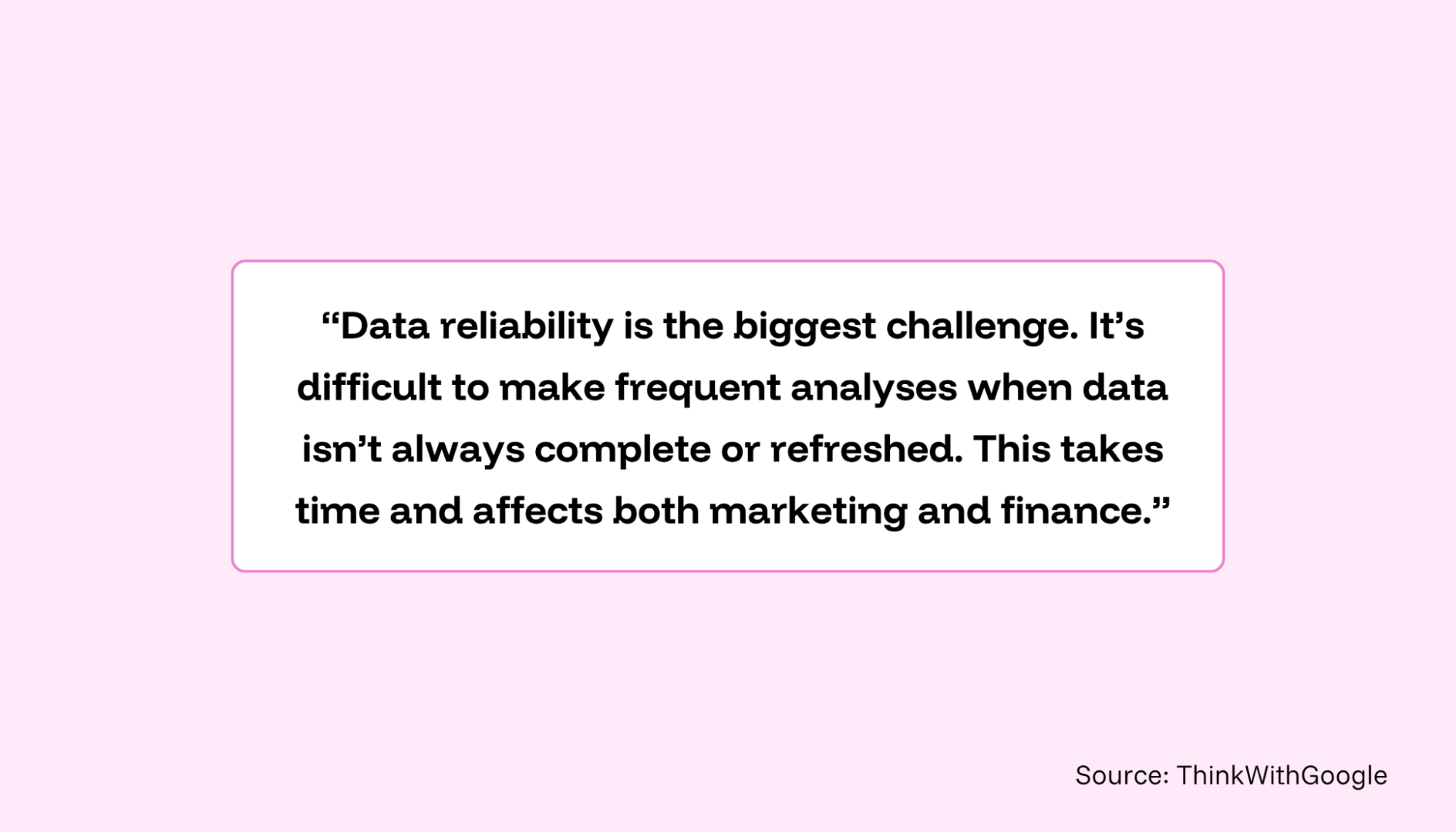
That reality shows why unified, decision-ready data is the foundation of trust between CMOs and CFOs.
How this plays out in team workflows
Marketing managers can ask, “Which campaign drove the highest incremental revenue this quarter?” and get an answer framed in business terms, not raw ad metrics.
Finance leaders can query the same dataset for “marketing contribution to margin growth” in a voice interface rather than a spreadsheet.
Analysts act as custodians rather than gatekeepers. Their role shifts from delivering reports to validating context and enabling self-serve insight.
Shared access reduces friction, limits translation errors and accelerates alignment. It builds confidence across teams that the same data is telling the same story.
Funnel’s connected data layer ensures that the data foundation behind this process is solid.
Because all teams query against the same normalized dataset, conversational interfaces won’t need to interpret conflicting definitions or outdated imports. They’ll respond to one version of the truth. When that layer becomes interactive, marketers and business leaders will be able to talk to their data together in real time.
Once teams are speaking the same analytical language, the next step is learning to ask smarter questions. That is where measurement and modeling expand what conversational analytics can deliver.
What makes conversational analytics more powerful with measurement and modeling?
Predictive analytics depends on the same foundation of unified and trusted data. Fragmented or incomplete datasets limit what conversational systems can reliably simulate.
Sixty-four percent of B2B marketing leaders responding to Forrester’s Marketing Survey 2024 acknowledged that they don’t trust their organization’s marketing measurement for decision-making.

That lack of confidence shows how fragile many analytics systems still are. It highlights the growing need for accurate, connected data that can support predictive models and conversational intelligence. As marketers move toward more dynamic ways of exploring data, the systems beneath them must evolve from fragmented reporting to unified foresight.
Funnel already provides the marketing data structure that future conversational user interfaces (UIs) will rely on.
Today, it connects spend, impression and conversion data from different sources, creating the consistency and context that measurement models need. Once conversational interfaces are live, those models will serve as the intelligence layer that powers them.
The conversational future of analytics won’t replace measurement and modeling. It will depend on them.
Marketers will still need a data foundation they can trust, and Funnel is building that readiness now so teams can step confidently into the next era of dialogue-driven decision making. As this future takes shape not every platform will be ready to support it. The difference will come down to who built their data foundations to last.
What does the future of conversational marketing intelligence look like?
Artificial intelligence is transforming how organizations think about marketing intelligence. The next phase will redefine what it means to understand performance.
In the future, AI systems will move beyond surfacing metrics to interpreting relationships, recommending actions and forecasting outcomes in real time.
In this model, analytics becomes a continuous dialogue between human judgment and machine reasoning. Marketers will shape strategy through conversation, asking AI to test assumptions, validate hypotheses and simulate outcomes before decisions are made. This shift will blur the line between analysis and planning.
The future of marketing intelligence will belong to teams that treat data as a living system, not a report. AI will make insight immediate, but its quality will still depend on human curiosity and data discipline. The most successful organizations will pair machine-driven foresight with human creativity to guide investment and innovation.
Funnel’s role in that future is to ensure the data foundation is ready. When AI-driven systems begin powering these interactions, only those built on trusted, connected and contextual marketing data will deliver reliable intelligence.
How can marketers prepare their data for conversational analytics today?
For those preparing for conversational analytics, building the discipline that will make them work is your first step. The marketing teams that benefit most from AI-driven analytics will be the ones that invest early in data clarity, structure and governance.
The first step is consolidation. Disconnected platforms create blind spots that conversational systems just can’t fill. Marketers should bring their spend, impression and conversion data into a single environment where definitions and timeframes align.
Next comes standardization. Metrics must mean the same thing across every channel and campaign. Consistent taxonomies and naming conventions prevent AI systems from drawing false conclusions.
Finally, context matters. Conversational analytics will be most effective when it can link marketing data to broader business outcomes such as revenue, retention and margin. To help build this connection, teams can start capturing all the tactic knowledge floating around that can improve a conversational analytics system. For example, questions like, “What do we know that the system doesn’t know?” and What information related to business goals, historical performance, special challenges and other nuances would a new colleague need to be told to be successful?”
Conversational analytics systems can be adjusted for context using unstructured information like this. Just as you can tell a generative AI system what your goals are to help it generate more relevant answers, you can add details that apply to your business logic. Then, the system takes that information into account when generating answers to queries. Funnel’s Workplace Instructions feature lets users specify in plain text how the data chat should behave in a given workspace, helping to keep your insights relevant.
Funnel also helps by connecting data from hundreds of marketing sources, cleans and organizes it and keeps it synchronized for analysis. The result is a reliable foundation for whatever conversational systems come next, giving marketers confidence that their insights will be accurate when their data starts talking back.
What’s next: will your data be ready?
Conversational analytics is not a distant concept. The technology is developing quickly, and marketing teams that prepare their data today will be the first to benefit. The future will belong to organizations that can trust their data enough to let AI interpret it with confidence.
Funnel gives marketers that advantage. By delivering unified, consistent and contextual marketing data, it builds the readiness that conversational systems will depend on. When data becomes reliable enough to hold a conversation, the smartest marketers will already know what to ask.