






What’s the difference between Sellforte and Funnel? Your choice between them boils down to where you want to handle your data prep.
Funnel collects, cleans and stores data natively within the platform before building a model, whereas a standalone tool like Sellforte expects you to feed it clean data from your own database.
This guide breaks down what each platform does best, what Sellforte leaves on your plate and when Funnel’s data foundation-plus-measurement setup is the right fit for marketing and data teams. You’ll also learn the ins and outs of what you need for reliable measurement.
Sellforte and Funnel Measure at a glance
Sellforte and Funnel Measure approach marketing performance analysis from different directions.
Sellforte is a marketing mix modeling platform built for retail, ecommerce and DTC brands. It measures the incremental sales impact of each channel and optimizes media budgets down to the campaign and ad-set level. Sellforte also runs AI agents that recommend and execute budget changes inside paid social.
Funnel Measure runs natively on top of Funnel's Data Hub. Think of Measure as the analytics layer sitting on a marketing database. Measure runs marketing mix modeling, multi-touch attribution and incrementality tests. The Data Hub collects, cleans, normalizes and continuously updates the data that those models feed on.
Here's how these two measurement vendors compare:
|
Capability |
Sellforte |
Funnel Measure |
|
Marketing mix modeling |
Yes, Bayesian MMM at campaign and ad-set level |
Funnel Digital MMM included in both Digital Measurement and Advanced Measurement plans |
|
Multi-touch attribution |
Used as calibration input only |
Funnel Data-Driven MTA included |
|
Incrementality testing |
Geo Lift and Conversion Lift analysis via Experiments module |
Included in Advanced Measurement |
|
Offline media and TV |
Supported via data upload |
Included in Advanced Measurement |
|
Data ingestion |
500+ built-in connectors feeding the MMM |
Data Hub with 600+ connectors as the underlying foundation |
|
Managed data preparation |
Customer responsible for data quality per service description |
Managed by Funnel across ingestion, normalization, schema and history |
|
Native data storage |
Writes results to the customer's Snowflake or BigQuery |
Funnel stores and pre-aggregates source data in Data Hub |
|
Update cadence |
Daily model updates |
Daily updates |
|
Spend optimization |
miROAS recommendations at campaign and ad-set level; Media Buyer Agent pushes bids to Meta, Google and TikTok |
Saturation curves, marginal ROAS, scenario modeling and automated bid optimization in Advanced Measurement |
|
EMEA presence |
Strong; multi-market deployments across 22 live markets |
Strong; Stockholm-headquartered |
|
Industry focus |
Retail, ecommerce, DTC |
Cross-industry |
|
Pricing model |
Tiered by annual media spend across three plans: eCommerce brands, DTC and Retail |
Advanced Measurement starts at $7,500 per month |
The measurement problem that both tools are trying to solve
Marketing data platforms promise perfect, real-time attribution, but the traditional measurement playbook has broken, leaving marketers to make multi-million-dollar budget decisions in the dark.
Signal erosion
Privacy updates and cookie deprecation have cut off the cross-platform user-level data attribution models rely on.
Platform bias
Paid platforms track and report their own numbers (often overinflating them) and optimize for their own commercial incentives rather than your returns.
Last-click and platform reporting fall short
As a result, your attribution tools can’t work as well. Last-click models rely on tracking data that no longer exists at full fidelity, while native platform dashboards systematically over-credit their own ads.
Marketing mix modeling matters, but most marketing teams can't act on it
Marketing mix modeling doesn’t depend on tracking individual users. It uses statistical causal inference and forecasting methodology to estimate the impact of your marketing performance, yet marketers find operationalizing it a hurdle. Eighty-seven percent know marketing mix modeling is important, but only 28% say their team converts those insights into timely, impactful action.
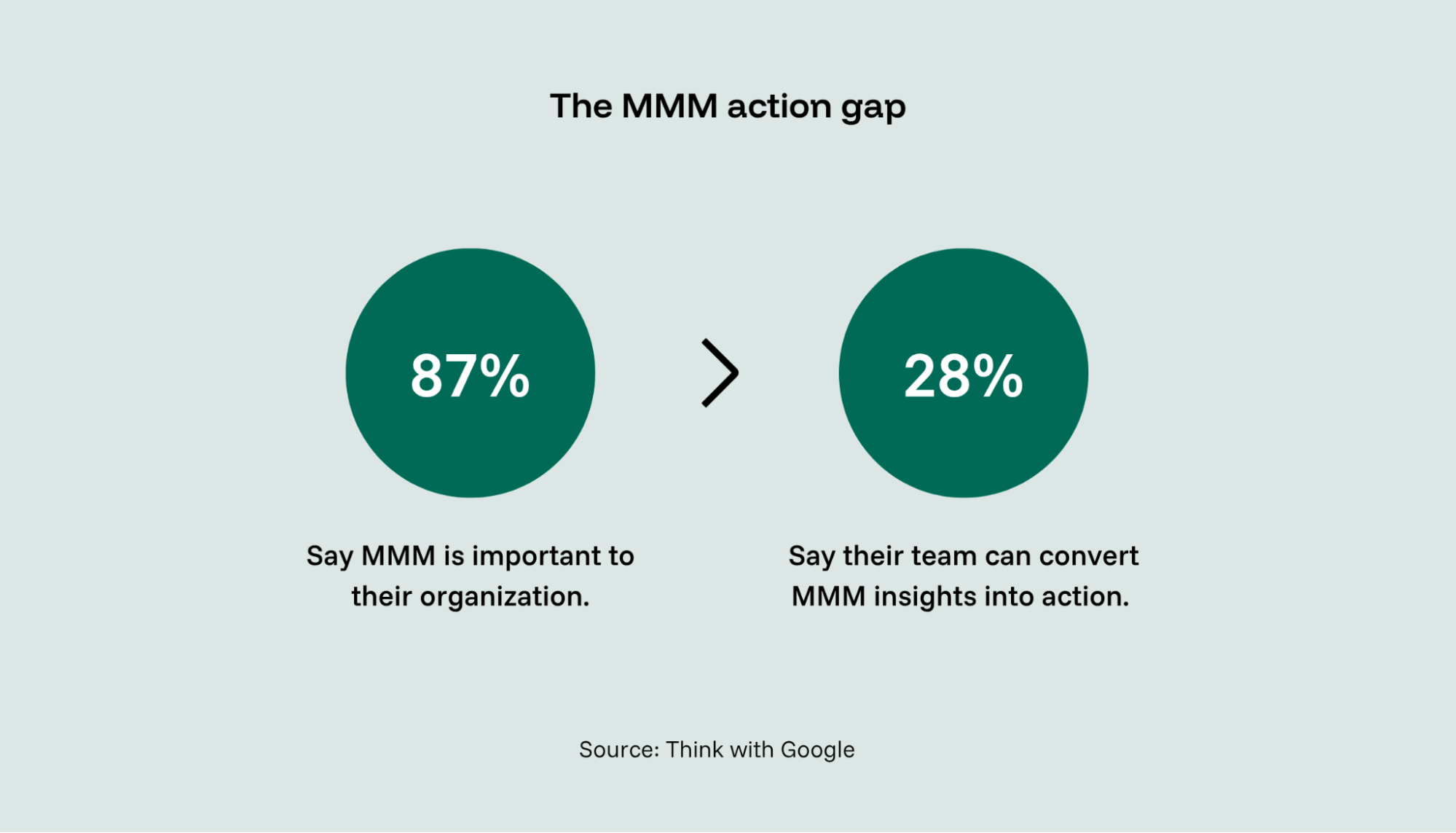
At the same time, up to 75% of marketers consider their current measurement approaches insufficient on speed, accuracy or trust.
The gap derives from the data underneath
The gap between valuing MMM and acting on it is an issue with the data pipeline. If the data feeding your model is broken, delayed or inconsistent, even the most brilliant statistical engine will sputter and stall.
Where Sellforte fits as a marketing mix modeling solution
Sellforte is a purpose-built marketing mix modeling platform. It’s a strong option for large retail brands.
Granularity
Sellforte isolates incremental performance down to the campaign and ad-set level. Instead of looking backward at historical blended averages, it calculates marginal incremental ROAS (miROAS) and tells you exactly what the next dollar you invest will return. This is the leverage you need to prove if a top-of-funnel Meta campaign is driving actual business growth, or if your budget is simply cannibalizing organic traffic and branded search.
Model calibration
Sellforte feeds your Geo Lift tests, Conversion Lift studies and digital attribution outputs back into the engine as Bayesian priors. As evidence accumulates, its budget recommendations sharpen.
Always-on
Sellforte's models refresh daily so your budget allocations can keep pace with real-time market shifts.
Fast onboarding
E-commerce brands can expect to see their initial model outputs within two to three weeks of kickoff, which is exceptionally fast for an enterprise-grade MMM implementation.
Media Buyer Agent
Through its Media Buyer Agent, once you approve its budget or bid recommendations, the platform pushes the changes back to the ad platforms.
Data connectors
To feed the model, Sellforte provides over 500 built-in data sources, alongside CSV uploads, Google Sheets support and direct data warehouse access.
Proven for retail and DTC brands
Sellforte's customer base skews toward complex EMEA retail operations. It’s trusted by household names such as C&A, Lidl, Intersport, Tchibo and bonprix.
Who is Sellforte built for?
Sellforte is custom-built for retail, e-commerce and DTC brands with an established data infrastructure and an in-house analytics function that owns the input pipeline. If your primary day-to-day job is optimizing budgets at the campaign and ad-set level, Sellforte delivers exactly what it promises.
What Sellforte doesn’t include
Sellforte provides the marketing mix model, the optimization logic and the software platform itself. What it doesn't supply is the raw input data.
You’re responsible for data quality and data preparation
While Sellforte is powerful, the tool relies on you to handle data preparation and quality control. Even AI measurement still depends on cleaned, governed data. Sellforte can’t salvage skewed analysis results caused by incomplete inputs. Delivering daily, machine-readable data in the correct format is entirely in your court.
The knock-on effect
When you buy Sellforte, you must either have dedicated, in-house data engineers to maintain your input pipeline or pair the platform with a separate data integration tool to handle the prep work. Ultimately, this creates a clear, necessary division of labor between your data storage and your measurement engine.
How Funnel Measure works differently
Funnel Measure is the only measurement product on the market with its own built-in data foundation. The Data Hub prepares the data, and Measure runs the data science on top.
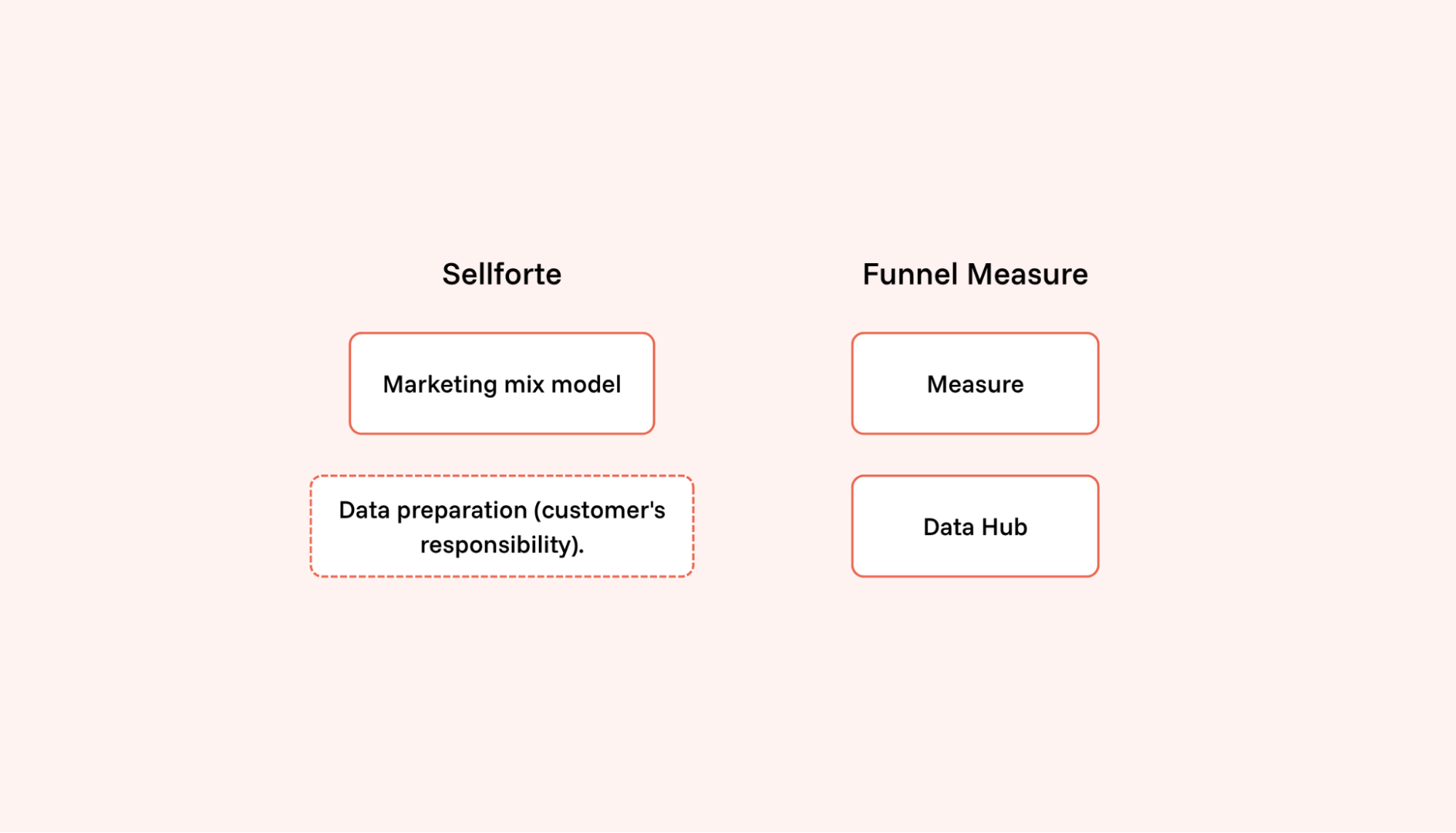
Data Hub
The Data Hub automatically ingests raw data from over 600 sources, normalizes your currencies and metrics, manages changing platform schemas and preserves your historical records. The hub acts as a data foundation, so your outputs remain clean and consistent enough to feed your models.
Data Guarantee
Funnel provides a data guarantee for API-change consistency, so your reports stay stable even when ad networks alter their API connections. Plus, if you use a platform that’s not currently supported by our 600+ pre-built connectors, you can request it, and Funnel’s engineering team will build the integration for you.
Funnel Measure
Building on the clean data from Data Hub, Measure runs your marketing mix modeling, multi-touch attribution and platform attribution. Funnel offers this measurement layer in two plans.
Digital Measurement
Designed for brands with only digital channels, this self-serve plan combines Funnel's top-down statistical model (Digital MMM), sequence-based tracking (Data-Driven MTA) and native platform attribution. It automatically applies contextual variables like public holidays.
Advanced Measurement (Triangulation)
Built for the enterprise, this plan runs marketing mix modeling, multi-touch attribution and incrementality testing simultaneously. Each method is calibrated against the others to cross-validate your results. You get a complete picture of what's driving your campaign performance, something MMM can’t do alone. It covers offline media, TV, custom contextual variables and geo-experimentation.
Marketing measurement is only as reliable as the data underneath it
Measurement is only as reliable as the data behind it. In reality, most analytics projects fail due to pipeline issues such as mismatched platform taxonomies, connector drops, unmapped currency conversions and broken API schemas.
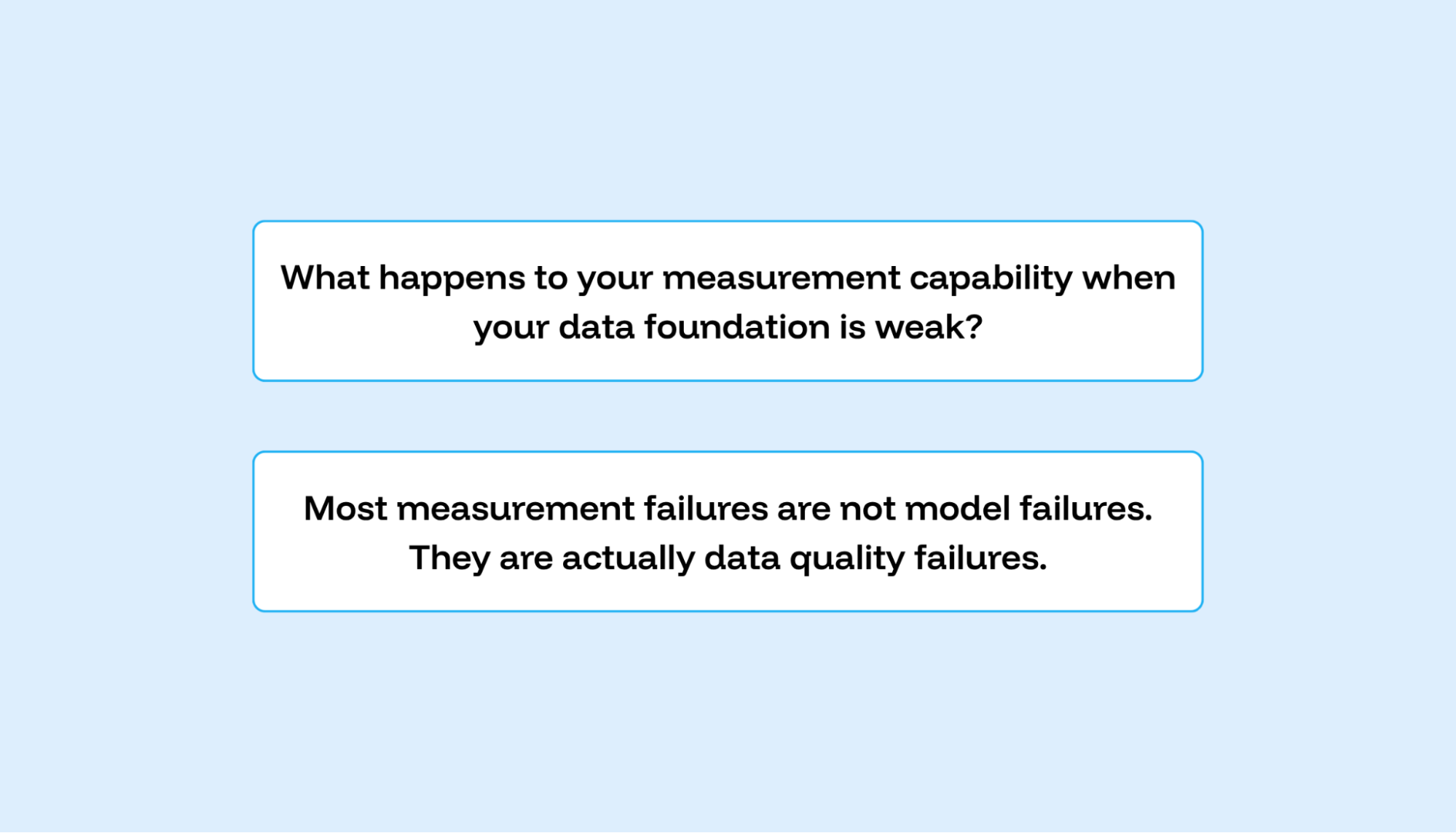
To be clear, Sellforte’s Bayesian MMM and experimental calibration are sophisticated, well-documented and highly credible. The issue is structural risk. When a separate internal data team is responsible for managing your input pipelines on a completely different schedule, your taxonomy and schemas will inevitably drift, and your model's outputs will drift right along with them.
Housing data ingestion, cleanup and modeling under one roof eliminates the friction of managing separate vendors, pipelines and schedules. Funnel is the only vendor that combines managed marketing data infrastructure and measurement into a unified measurement system, ensuring your models are always fed by clean, consistent data.
So when you’re deciding between Sellforte and Funnel, you need to ask yourself: who owns the data foundation your marketing mix modeling depends on, and how mature is that ownership?
Which MMM platform fits your team?
Let’s skip the technical spec sheets for a minute and ask yourself these questions about your current setup. Your answers will point you to the right platform.
1. Do you already have a managed marketing data foundation?
If your team already has a warehouse-native data stack, in-house analytics teams and strictly enforced channel taxonomies across every ad network, Sellforte will plug right in. If you don't have that infrastructure, you’ll either need to build the data layer from scratch or buy a tool like Funnel that includes it out of the box.
2. What is the scope of your measurement?
If you’re a digital-first e-commerce brand focused on day-to-day campaign and ad-set optimization, you’ll favor Sellforte’s granular miROAS modeling. However, if you need cross-channel measurement that covers TV, offline media, brand campaigns and offline conversions, you’ll want the breadth of Funnel’s Advanced Measurement.
3. What team owns the measurement?
If Marketing owns measurement and has limited data science resources, Funnel’s Data Hub takes the pipeline maintenance off your hands. Go with Sellforte if you have an in-house data science team that wants full, transparent model access and hybrid delivery.
4. Is cross-channel reporting in scope?
Sellforte writes its modeling results back to your data warehouse, which means you must build your own front-end dashboards. Funnel, on the other hand, runs its marketing reporting and dashboards on the same Data Hub engine that powers its models.
5. What’s your industry?
Sellforte was purpose-built for the complex, inventory-driven world of retail, e-commerce and DTC. Funnel is a broader horizontal solution that serves brands and agencies across retail, B2B SaaS, fitness, beauty and global communications.
The bottom line
Sellforte is the better fit if you have the data foundation already and want a specialist model on top. Funnel is the better fit if the data foundation itself is part of what you're trying to solve.
When comparing, look at what each platform assumes about your existing data setup, and pick the one that fits your team's day-to-day.
Ready for measurement built on a data foundation you trust? Talk to the Funnel team.
Frequently asked questions
What's the difference between Sellforte and Funnel?
Sellforte is a specialist marketing mix modeling (MMM) vendor. Funnel Measure runs marketing mix modeling, attribution and incrementality on top of a managed marketing data foundation. Sellforte gives you a model and expects clean, structured data to feed it. Funnel is a self-serve platform that gives you the model plus the layer that collects, cleans and stores the data.
Is Sellforte a direct competitor to Funnel Measure?
Both tools appear on the same shortlist in marketing mix modeling evaluations, but they address different aspects of the problem. Sellforte is a measurement model. Funnel Measure is a measurement model plus the data foundation it runs on. Both exist because last-click tracking misses how people shop, ad platform dashboards over-credit their own campaigns and quarterly consulting studies deliver insights that are already stale.
Does Funnel do marketing mix modeling?
Yes. Funnel Digital MMM is a top-down statistical model included in both the Digital Measurement and Advanced Measurement plans.
What's the difference between a marketing mix modeling tool and a marketing data hub?
A marketing mix modeling tool takes structured marketing data as input and produces channel-level or campaign-level incrementality estimates. A marketing data hub collects, normalizes and continuously updates the marketing data that any model, report or activation depends on. One produces the analysis. The other produces the data the analysis runs on.
Why is a data foundation important for MMM accuracy?
Marketing mix models infer relationships from time-series data. When the inputs change from broken connectors, schema changes, currency mismatches or lost history, the outputs change with them. A data foundation keeps the inputs consistent, which is a precondition for trusting the outputs over time.
When is Funnel Measure the better choice over Sellforte?
Funnel Measure is the better fit when your measurement scope includes offline media or brand campaigns, when your team doesn't have dedicated data engineering resources to own the input pipeline or when reporting and measurement need to sit on the same governed data foundation.