






Multi-touch attribution (MTA) has long been a critical tool in digital marketing, helping businesses understand how different customer touchpoints influence conversion. But in 2026, the conversation around attribution has evolved.
A 2025 EMARKETER survey found that nearly 35% US marketers plan to invest in multi-touch attribution over the next year. But they’re also pairing MTA with other types of measurement.
Close to half expect to invest in marketing mix modeling (MMM), and 36% plan on focusing more on incrementality testing. While multi-touch attribution still plays an important role, many marketing teams now combine MTA with MMM and incrementality testing as part of broader marketing attribution strategies to improve measurement accuracy and decision-making.
Choosing an MTA tool is no longer just about comparing attribution features. It’s also about understanding where MTA fits within a broader measurement strategy. This guide compares the top MTA tools for digital marketing in 2026 and looks at when MTA is most useful, where it falls short and why integrated measurement is the stronger long-term strategy.
Top MTA tools in 2026
Here’s a look at the best marketing attribution software that digital marketing teams should be using in 2026:
|
Tool |
Best for |
Core strength |
|
Funnel |
Teams that want a unified measurement solution |
Combines MTA, MMM and incrementality testing with an integrated Data Hub |
|
HockeyStack |
B2B teams focused on pipeline and revenue visibility |
GTM intelligence and attribution for complex B2B journeys |
|
LeadsRx |
Teams that need cross-channel attribution |
Universal Pixel and first-party data capture across marketing channels |
|
GA4 |
Teams that want a built-in baseline attribution tool |
Native attribution reports and model comparison inside GA4 |
|
SegmentStream |
Teams that want attribution plus validation and budget optimization |
AI-powered attribution, incrementality testing and automated budget allocation |
|
Dreamdata |
B2B companies with longer sales cycles |
B2B attribution tied to pipeline, revenue and buyer journey reporting |
|
Northbeam |
Ecommerce / omnichannel teams |
Independent multi-touch attribution and broader measurement suite |
1. Funnel
Overview:
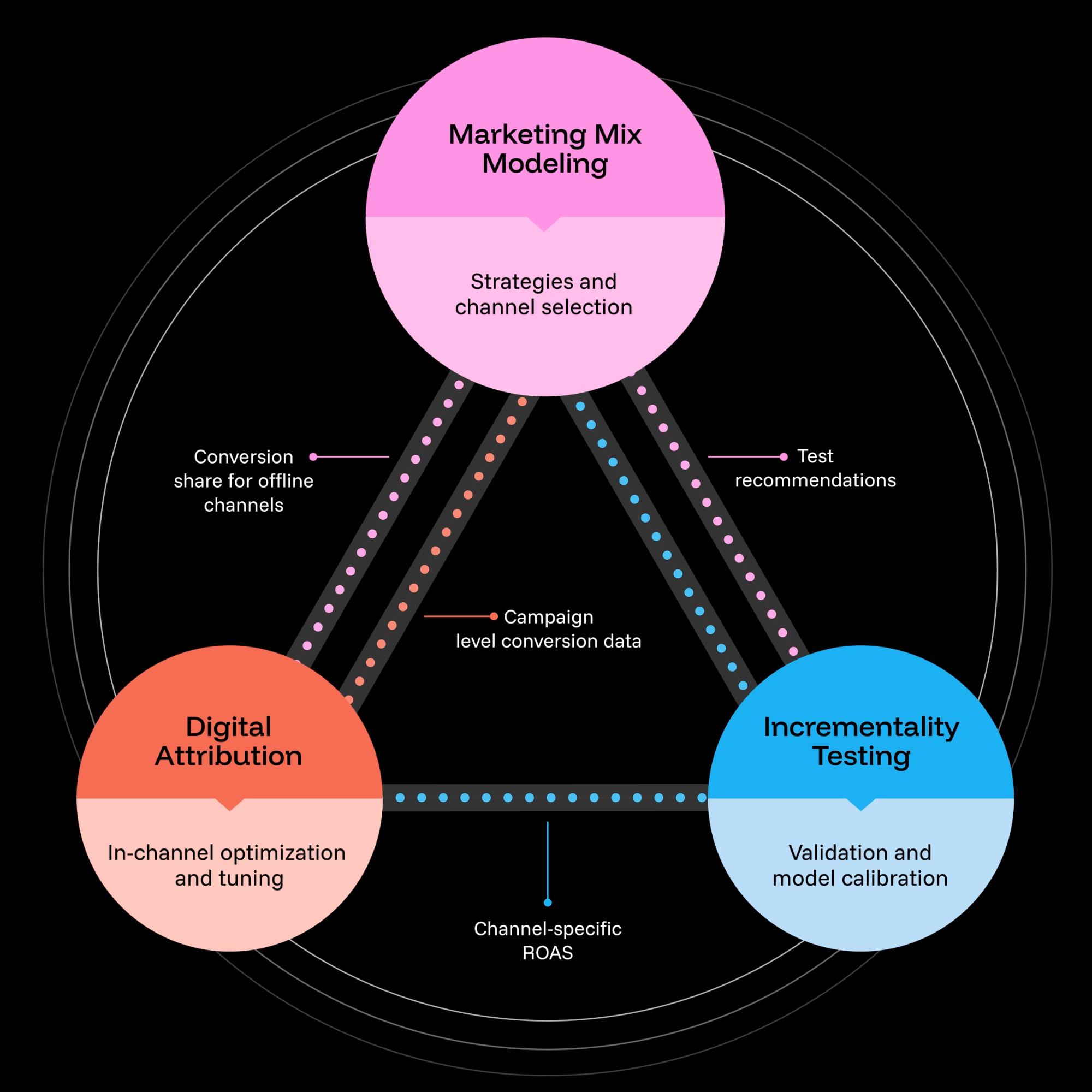
Funnel’s Measurement product helps you unlock the full potential of your marketing investments and make smarter budgeting decisions. The platform combines the power of multi-touch attribution, marketing mix modeling and incrementality under one roof, giving teams a more comprehensive view of marketing effectiveness.
By validating performance across different models instead of relying on a single method, Funnel helps marketers generate more accurate, unbiased and cross-validated insights.
Funnel’s agentic AI approach also automates manual work, like data quality checks and model optimization, to help teams move from data to measurement insights faster.
With Funnel Measurement, you can:
- Optimize media spend across channels with marginal acquisition cost to maximize return on investment.
- Understand upper-funnel impact more clearly with an all-in-one view that offers more insights than a simple MTA tool.
- Run incrementality tests to evaluate various marketing strategies in different channels and locations to understand their effectiveness.
- Measure what is truly incremental through baseline calculation, not just reported conversions.
- Capture delayed marketing effects with adstock modeling, so teams see impact beyond clicks.
- Turn analysis into action with agentic AI insights and recommendations.
Standout Feature:
Funnel is the only multi-touch attribution solution with an integrated Data Hub. Because measurement is built directly on top of the Data Hub, models are consistently fed clean, reliable data.
Funnel’s Data Hub aggregates marketing data from 600+ connectors and then cleans and standardizes it centrally so teams can work from a single source of truth. It also automates connector and API management and refreshes data at regular intervals, ensuring measurement data is always up to date.
2. HockeyStack
Overview:
HockeyStack is a revenue acceleration platform that focuses on B2B SaaS attribution, with detailed mapping of the customer journey. The software uses a no-code approach — making it accessible to both technical and non-technical team members — and integrates with third-party tools such as your ad platforms, CRM (customer relationship management) platform and data warehouse.
For businesses that need help interpreting their attribution data, HockeyStack offers “Odin,” an AI assistant that can crunch data and provide insights and recommendations. What’s more, HockeyStack is fully compliant with data privacy laws and frameworks such as GDPR, CCPA and SOC 2, so you don’t have to worry about running afoul of regulations.

Standout Feature:
HockeyStack offers account-based analytics that are designed to capture multi-step journeys. The platform’s ABM/ABX capabilities allow you to calculate account penetration and view your most important accounts based on engagement and intent, using a formula that considers data from a wide range of sources.
3. LeadsRx
Overview:
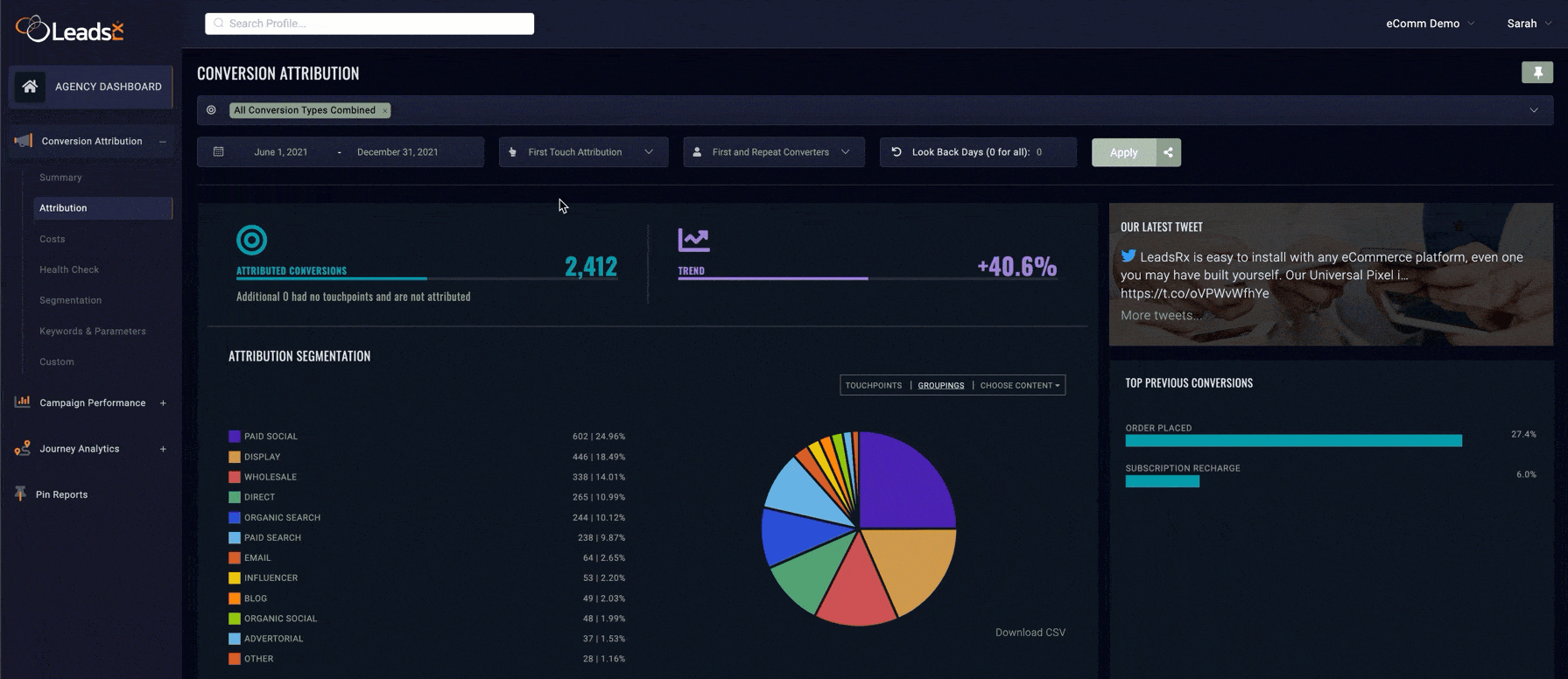
LeadsRx is a multi-touch marketing attribution software platform that provides cross-channel and omnichannel insights, integrating both online and offline data. LeadsRx uses a single tracking pixel or marketing tag across multiple channels and ad vendors, making it easier to get a full picture of your customers. Using this information, you can calculate metrics such as return on ad spend, customer acquisition cost and lifetime value to decide where to focus your marketing efforts.
The software incorporates not only digital marketing touchpoints like email and social media, but also TV and radio commercials and podcast and video streaming advertising. In fact, LeadsRx claims it was the first marketing analytics company that could assess the performance of podcast ads in real time alongside other channels.
Standout Feature:
LeadsRx offers real-time touchpoint analysis and is compatible with many different marketing tools, making it easy to bring into your existing technology stack. The software has built-in integrations with Marketo, Salesforce, LinkedIn, HubSpot, SurveyMonkey and more.
4. Google Analytics 4 (GA4)
Overview:
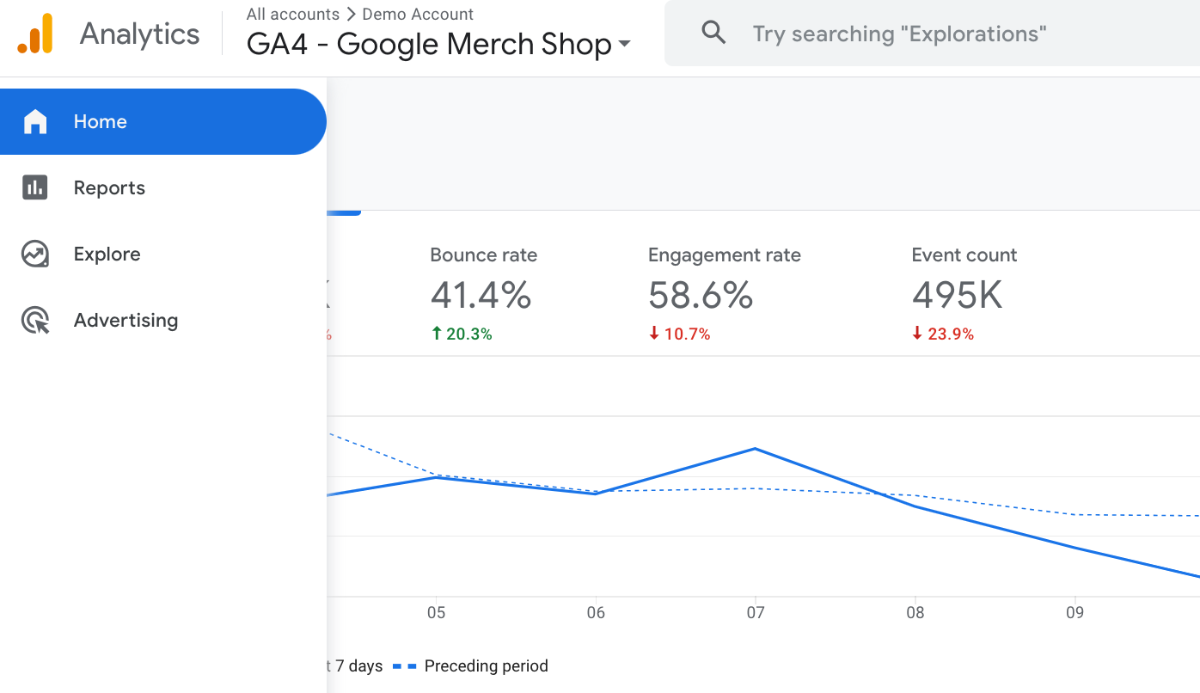
Google Analytics has been an essential web marketing attribution tool for nearly two decades. Its latest incarnation, Google Analytics 4 (GA4) offers built-in multi-touch attribution capabilities including enhanced conversion path reports and property-level attribution.
GA4 users can define an attribution model that determines how to assign credit to multiple touchpoints along the customer journey. The tool has three options for this attribution model:
- A data-driven attribution model that uses machine learning to decide how to proportion credit appropriately among key events.
- A paid and organic last click model that allocates 100 percent of the credit to the most recent channel that engaged the customer before the conversion.
- A Google paid channels last click model that allocates 100 percent of the credit to the most recent Google Ads channel that engaged the customer before the conversion.
Standout Feature:
For businesses that rely heavily on Google, GA4’s selling point is very likely its ease of integration with the rest of the Google ecosystem. In addition to its machine learning-enabled attribution model, GA4 also uses machine learning for predictive analytics, providing more accurate forecasts about your users’ future behavior.
5. SegmentStream
Overview:
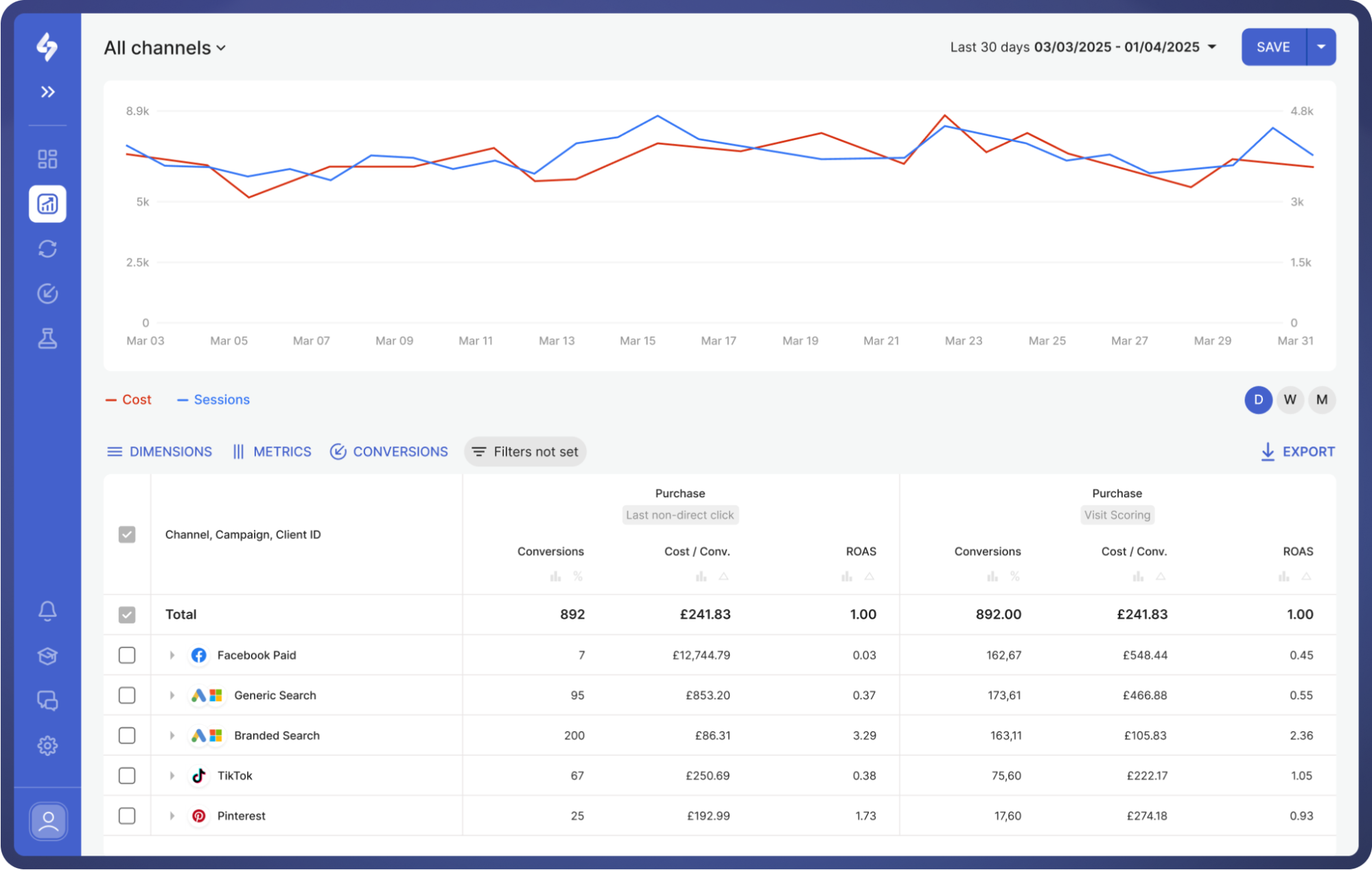
SegmentStream is a marketing measurement platform that includes cross-channel attribution, incrementality testing and automated budget allocation. The AI-powered platform focuses on measuring advertising ROI using a mix of first-party and third-party data.
It supports several multi-touch attribution models, including first-touch, last paid click, last paid non-brand click and multi-touch attribution. It combines attribution with incrementality testing, so teams can optimize campaigns daily while checking whether those campaigns are actually driving true lift.
SegmentStream also includes marketing budget optimization features that help teams rebalance ad budgets each week based on performance data. Marketers have a straightforward way of turning measurement insights into budgeting decisions.
Standout Feature:
Instead of assigning credit based on only touchpoint position, SegmentStream’s AI Visit Scoring model looks at behavioral signals within each visit to estimate how much that visit increased the likelihood of conversion. It can account for signals such as engagement depth, navigation patterns, pages viewed, key events and micro-conversions
6. Dreamdata
Overview:
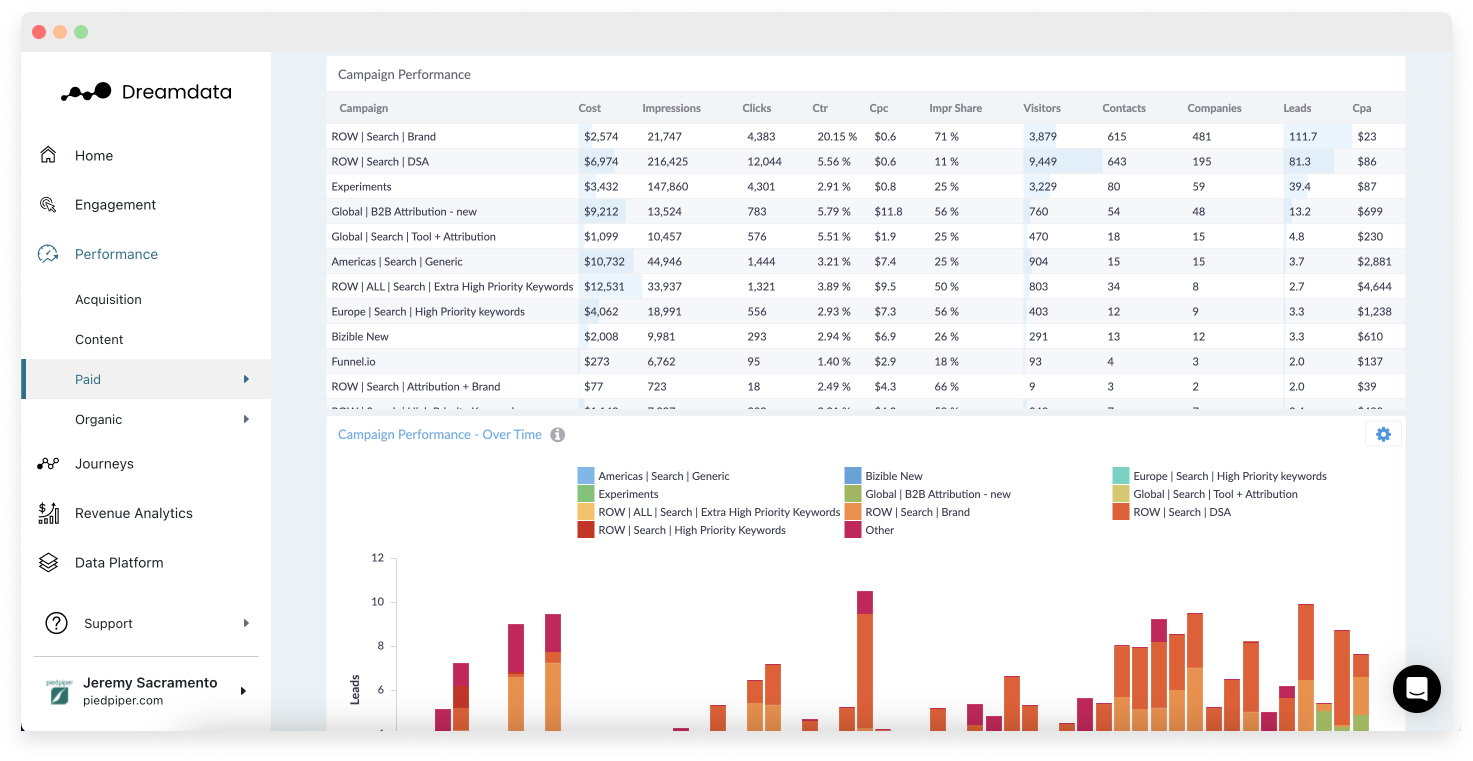
Dreamdata is a B2B activation and attribution platform built to connect go-to-market activity with pipeline and revenue. It pulls data from marketing platforms, CRM systems and other market tools to build a clearer view of the customer journey across the B2B funnel.
With six attribution models available (first-touch, last-touch, W-shaped, U-shaped, data-driven and linear attribution), Dreamdata gives teams more flexibility in how they evaluate performance. The first-touch attribution model shows which channels create early awareness, while the linear attribution model spreads credit across the journey. U-shaped or W-shaped marketing attribution models place more weight on key conversion moments.
It also includes audience building, AI signals and conversion syncing back to downstream ad platforms, which helps teams do more than just report on performance. For example, they can build and sync audiences using go-to-market data, spot buying intent earlier and send pipeline data back to ad platforms to support better targeting and optimization.
Standout Feature:
Dreamdata’s revenue attribution reporting helps teams connect marketing activity to later-stage outcomes, which is important in B2B because several campaigns and interactions can influence one account before it converts. It’s especially useful for longer, multi-touchpoint sales cycles where the full journey is harder to see through simpler attribution reports.
7. Northbeam
Overview:
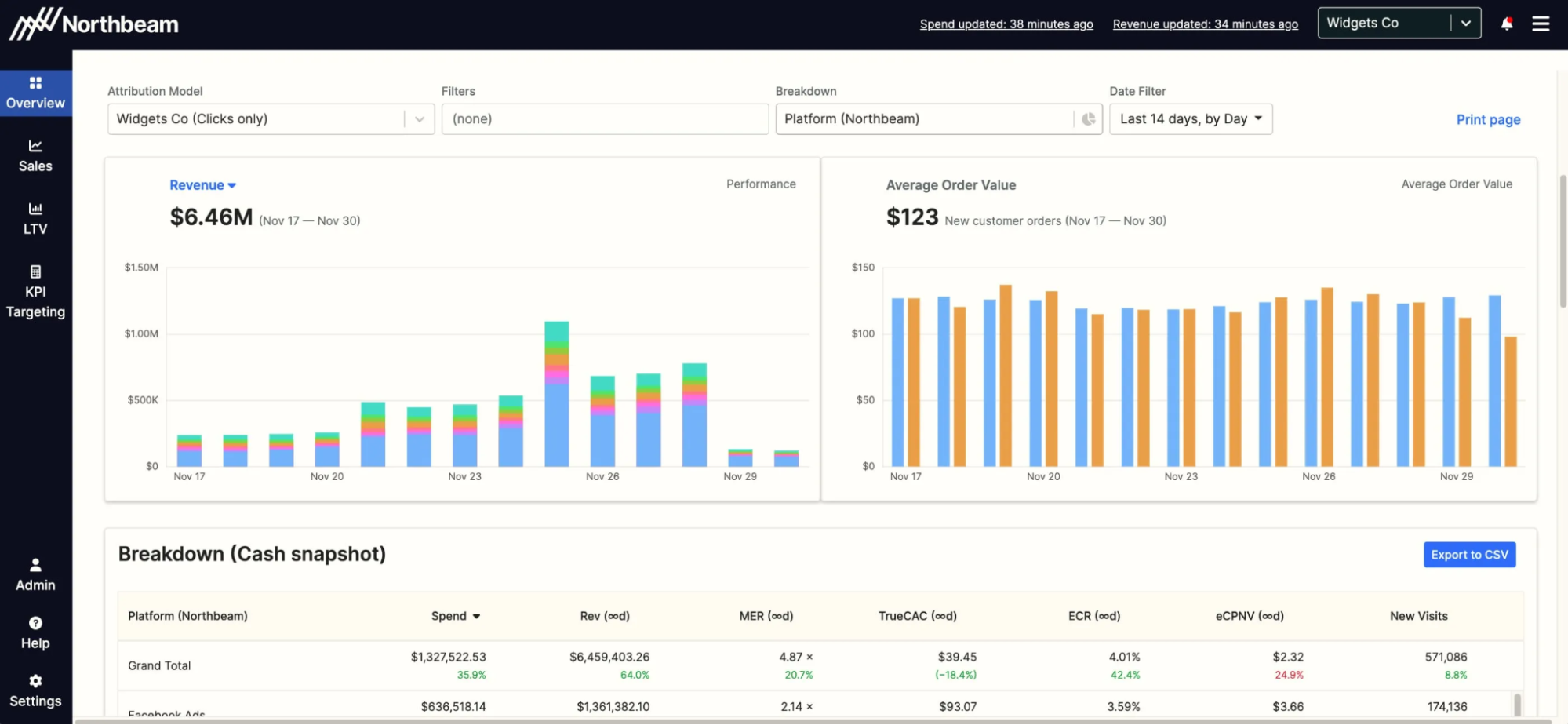
Northbeam is a marketing intelligence platform that specializes in attribution for direct-to-consumer brands. The software’s MTA solution uses your own first-party data to better understand the customer journey. Northbeam provides near-real-time performance data on marketing campaigns, letting you rapidly scale your ad campaigns up or down based on the results.
Beyond multi-touch attribution models, Northbeam also includes marketing mix modeling functionality, which it calls “MMM+”. The company claims that MMM+ can capture more complex non-linear interactions between channels and that the underlying machine learning models are retrained every week for maximum effectiveness.
Standout Feature:
Northbeam has a feature specifically for working with Facebook and Instagram ad campaigns: Northbeam Apex. This feature automatically connects your MTA data to Meta, which the company says can improve Meta ad performance by up to 30 percent.
MTA vs. MMM vs. incrementality
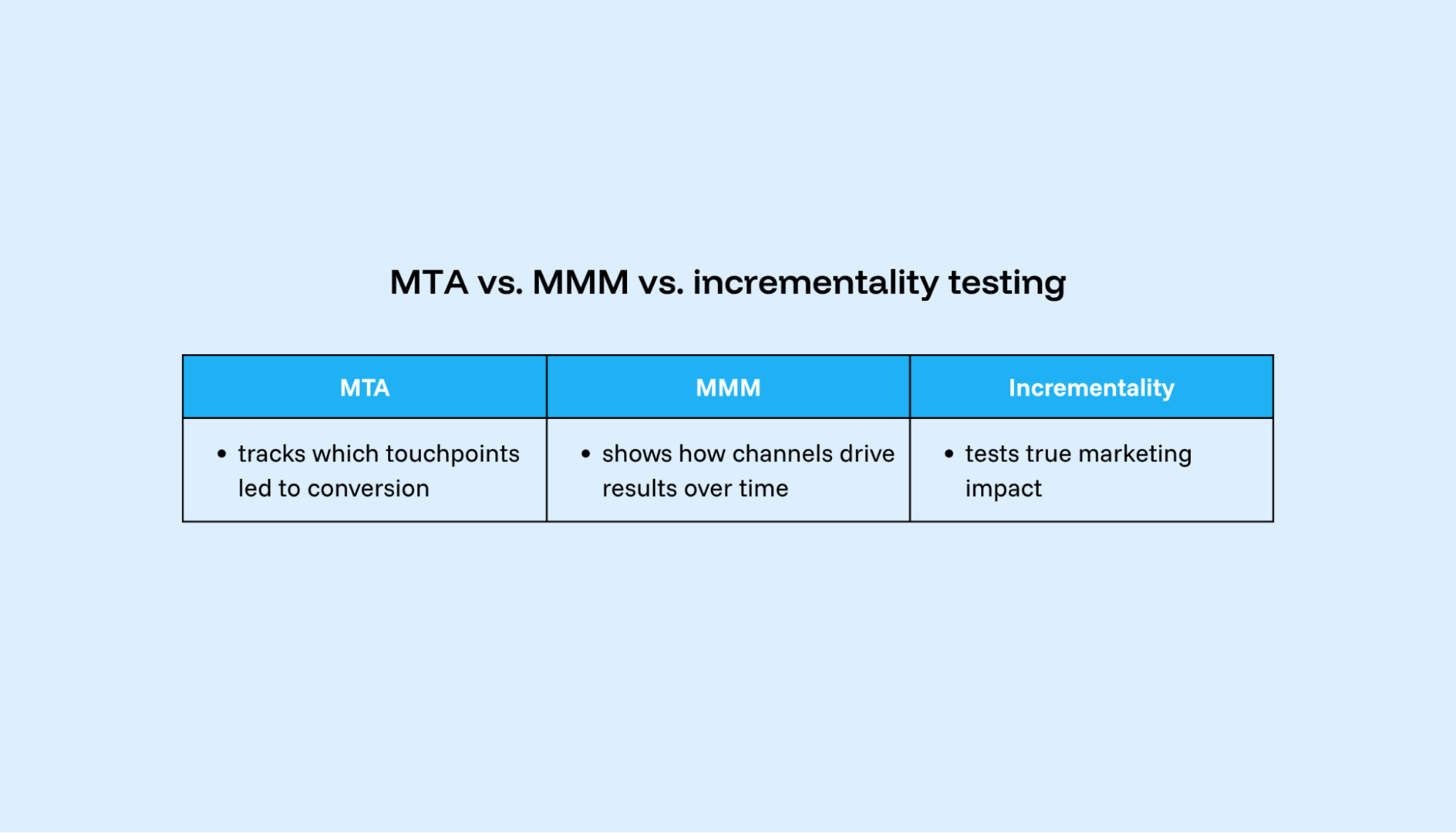
While MTA, MMM and incrementality all help measure marketing effectiveness, they don’t answer the same question. Multi-touch attribution helps explain which marketing touchpoints led to conversion, MMM looks at broader channel impact over time, and incrementality tests whether marketing actually caused the result.
Imagine your team launches a new campaign for protein drinks across paid search, Meta, YouTube and email. The goal is to increase online sales of a new high-protein shake while also building brand awareness.
Here’s how each method would help you evaluate that campaign:
When to use MTA
Multi-touch attribution is useful for understanding how channels, campaigns and creatives contribute to conversions across a trackable customer journey. It looks at user-level digital touchpoints and assigns credit for conversion across those interactions. Because of that, MTA is best for day-to-day campaign and channel optimization, where teams need more granular insight.
Let’s say your team wants to understand how customers are moving from awareness to purchase for your protein drink. Using MTA, your team realizes the purchases were not driven by just one interaction. Your customers generally follow a common path: see a Meta ad, later watch a YouTube review from a fitness key opinion leader (KOL), then search your brand on Google through organic search before finally converting through a paid search ad.
Knowing this, your team decides to keep Meta focused on awareness, use YouTube creator content to build trust and interest and optimize paid search to capture demand at the bottom of the funnel.
When to use MMM
Marketing mix modeling looks at broader marketing performance by using historical data to estimate how different marketing tactics contribute to overall business outcomes. It helps teams understand the impact of offline media, upper-funnel activity, seasonality, promotions and other broader factors that MTA may miss.
It’s often used during budget allocation and strategic planning because it helps answer bigger questions, like which parts of the marketing mix are driving growth over time.
Say your team is planning next quarter’s budget after a strong January sales spike for your protein drink. Marketing mix modeling shows that YouTube video ads and gym-area billboards helped drive overall demand, while paid search mostly captured shoppers who were already ready to buy. It also shows that part of the January lift came from a New Year fitness push and a retail promotion, not just lower-funnel ads.
With that context, your team avoids overinvesting in paid search based on a seasonal spike and continues investing in YouTube and out-of-home to maintain awareness.
When to use incrementality
Use incrementality when your team needs to prove whether your marketing efforts actually caused additional results. By comparing exposed and control groups, incrementality shows what changed because of the campaign or what would have happened without it.
Now, imagine Meta reports great numbers for your campaign for the protein drink. You’re considering increasing marketing spend, but leadership wants proof that Meta actually drove sales. To answer that, your team runs an incrementality test. One group of regions sees your Meta ads, while another similar group does not.
After comparing the difference in sales between the two groups, the team finds that the regions exposed to Meta generated a clear lift in sales. Your team now has stronger evidence to justify to leadership about increasing that budget.
No single method can tell the whole story. Multi-touch attribution, MMM and incrementality each add a different layer of insight, and when used together, they give teams a more complete measurement strategy.
Why standalone MTA is no longer enough
We’ve just gone over the top marketing attribution tools for MTA — now let’s switch tracks and talk about the dark side of the MTA approach. While multi-touch attribution undoubtedly offers valuable insights, it has inherent drawbacks and limitations that prevent you from getting a complete view of your marketing effectiveness.
Below are three of the biggest problems with using only multi-touch attribution for your marketing attribution software:
1. Privacy changes have reduced visibility
User privacy protections, consent requirements, browser limits and device restrictions have made it harder for marketers to directly observe the full customer journey. Not every ad interaction, click or conversion path can be tracked at the user-level the way it once could.
As visibility declines, platforms have shifted toward modeled measurement to fill in the gaps. Parts of the journey are estimated or inferred using available signals and patterns when the full journey cannot be observed directly.
Multi-touch attribution depends heavily on trackable use-level interactions, so when parts of the path disappear, it has less complete journey data. As a result, standalone MTA becomes harder to rely on as a full source of truth for total marketing impact.
2. MTA only captures part of the customer journey
Marketing channels such as TV and radio commercials, print ads and billboards are essential for building brand awareness. The problem is they leave no digital trace, which makes them invisible to marketers relying on multi-touch attribution. So, MTA only reflects the trackable digital part of the customer journey.
On top of that, even trackable interactions don’t always connect neatly into one complete path. Without significant effort, multi-touch attribution often fails to connect online and offline actions or track different touchpoints across multiple devices — desktops, laptops, smartphones, tablets and more.
A customer might see an ad on mobile, visit the site later on desktop and convert after seeing another ad somewhere else. If those interactions cannot be linked, MTA may treat them as separate journeys instead of one continuous path. This makes the customer journey look shorter and simpler than it really is.
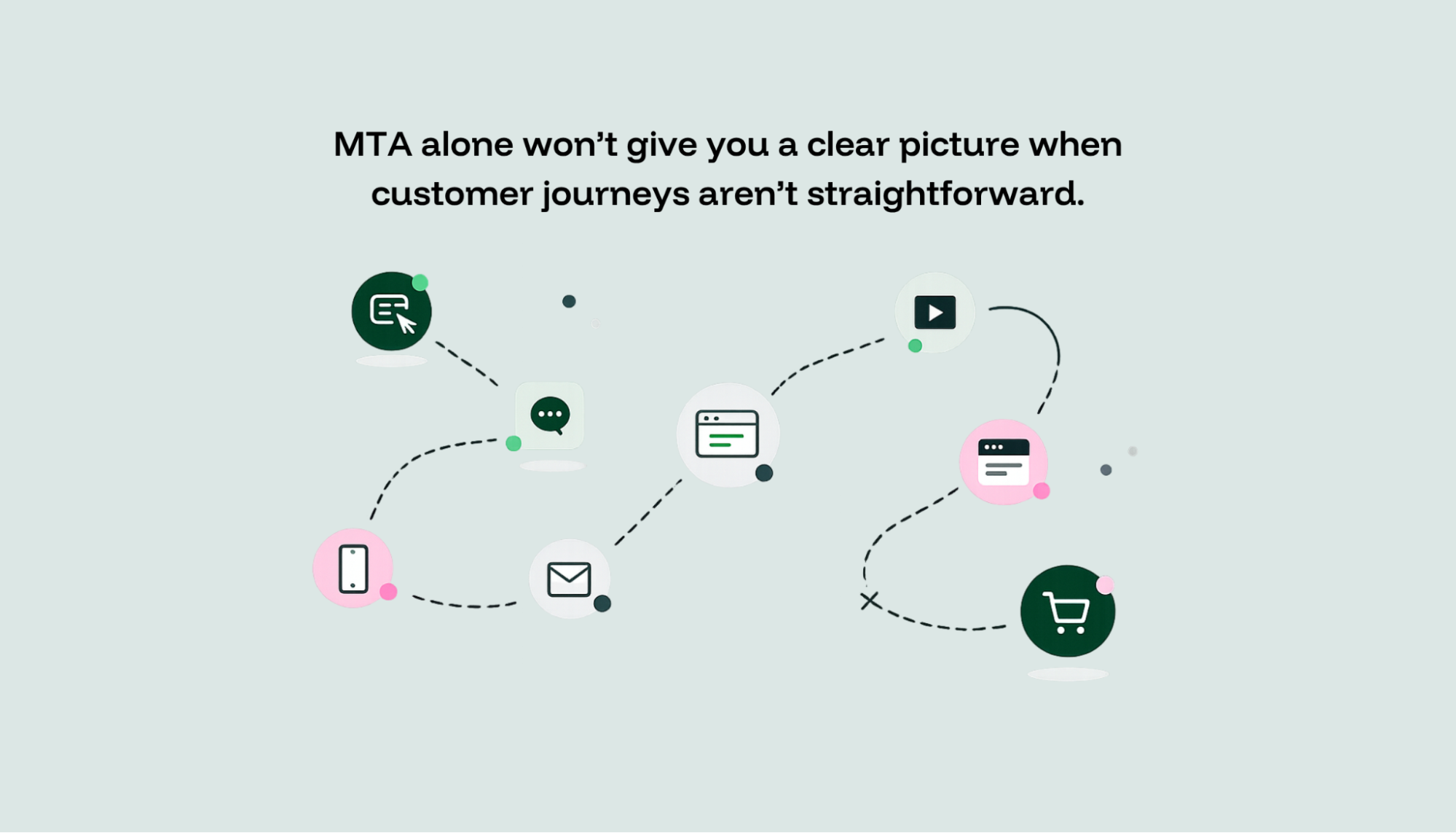
Multi-touch attribution fails to capture the messy middle, where customers move across channels and devices before they finally convert. Teams are left with a fragmented view of the customer, making it harder to collect data and properly attribute the channels that led to the conversion.
3. MTA promotes a last-click mindset
By design, multi-touch attribution depends on user-level, trackable actions, which leads to a short-term bias that emphasizes the customer’s most recent interaction. Because MTA can struggle to measure upper-funnel activities that don’t lead to immediate clicks or conversions, it can make upper-funnel marketing activity look weaker than it really is.
But upper-funnel campaigns often influence conversions indirectly, not immediately. A video ad, creator review or awareness campaign may help introduce the product and build interest, but the final purchase may happen later through branded search or retargeting.
Without accounting for the broader context, teams may be encouraged to shift spend toward channels that appear to drive faster, easier-to-measure returns over those that drive long-term, sustainable growth.
Integrating MTA, MMM and incrementality testing for marketing campaigns
Because of the limitations above, digital marketers need a different, integrated approach for their marketing attribution software. Many marketing teams are combining MTA with MMM and incrementality testing to get a more complete view of marketing impact.
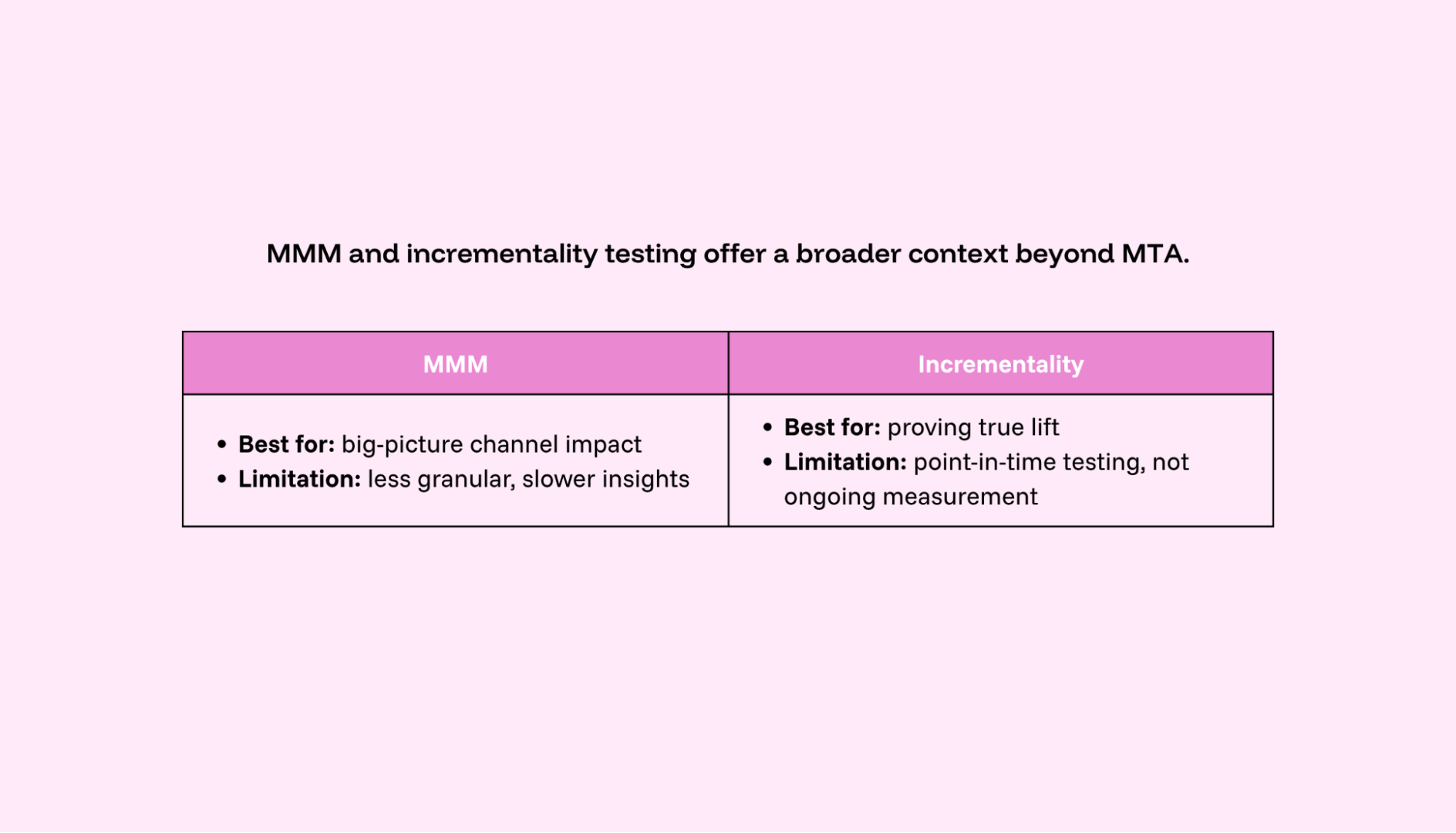
Marketing mix modeling covers broader channel impact over time, including factors outside the trackable customer journey:
Advantages of MMM:
- Includes offline and non-trackable data that MTA may miss
- Helps account for seasonality, promotions and market conditions
- Gives teams a higher-level view of channel impact over time
Disadvantages of MMM:
- Does not offer the same granular insights as MTA
- Does not show the sequence of customer interactions
- Slower than MTA and not ideal for up-to-the-minute insights
Incrementality testing measures the causal lift of marketing efforts:
Advantages of incrementality testing:
- Shows whether a campaign created true lift
- Helps teams separate new demand from existing demand
- Can support better budget decisions and stronger channel validation
Disadvantages of incrementality testing:
- Better suited to specific tests than ongoing daily measurement
- Results can be affected by poor test design or overlapping audiences
- Requires a control group, which can create opportunity cost
Together, these three pillars of marketing attribution software offer a holistic, data-driven approach that compensates for the weaknesses of any single element. Multi-touch attribution provides tactical insights, MMM offers strategic impact analysis and incrementality testing validates the real, causal impact of marketing initiatives.
The MTA takeaway
Multi-touch attribution still plays an important role in digital marketing. As prospects turn into customers, MTA tools help businesses decide how much credit different marketing channels deserve for the conversion.
But on its own, it’s not enough to assess a company’s overall digital marketing strategy. Only when you supplement your MTA tools with MMM and incrementality testing will you be able to fully understand your marketing initiatives and trust your insights.
Funnel’s Measurement product gives you the power of all three methods — MTA, MMM and incrementality testing — in one solution. With Funnel, teams can move beyond standalone attribution and make data-driven business decisions with more context, confidence and consistency.
FAQs
What are the best multi-touch attribution tools for mid-market teams?
For mid-market teams, the right attribution model is one that helps you make better decisions with the resources you actually have. Mid-market companies often work with limited budgets and smaller teams, so they don’t always have the time or capacity to manage several disconnected measurement systems.
That’s why Funnel stands out for mid-market teams. Funnel Measurement combines MTA, MMM and incrementality testing so teams don’t have to rely on a single model. This means they get a more complete view of performance without having to piece together separate tools and workflows on their own.
Why combine MTA, MMM and incrementality testing?
Merging these three approaches into a single marketing attribution software helps marketers extract the benefits from each one while compensating for its disadvantages. Each method is well-suited for addressing unique challenges and insights:
- Multi-touch attribution helps track specific customer interactions across channels such as email, display ads and social media and is particularly effective for digital marketing.
- MMM takes a bird’s-eye view that considers all marketing initiatives together with external factors, making it especially useful for evaluating offline marketing efforts.
- Incrementality testing quantifies the increase in sales or conversions due to specific marketing activities, isolating the direct impact of these initiatives from other factors.
Therefore, combining MTA, MMM and incrementality testing in one marketing attribution software creates a well-rounded, comprehensive measurement framework that helps companies maximize their return on marketing investment.
Is multi-touch attribution dead?
No, but its role has changed. Multi-touch attribution is still valuable for understanding the trackable digital journey, but it’s no longer a complete measurement strategy by itself.
Today, many teams use it as one part of a broader setup that includes MMM and incrementality tests to get a fuller picture of marketing performance.