






Fivetran is a powerful warehouse-first ELT platform that helps businesses streamline and automate data movement at scale. However, most marketers hit walls with Fivetran.
Scaling leads to cost spikes because of the usage-based pricing model. And, without the technical knowledge to query data on their own or to handle the setup required to move data efficiently, marketing stays dependent on engineering to access, manage and analyze data.
Unlike Fivetran, which is built to push raw data into a warehouse for engineers to model, platforms purpose-built for marketing data store and model it in a governed hub before sending it anywhere. That’s what makes them usable day-to-day by marketers, freeing up time for data teams and enabling better collaboration between marketing and data.
If your agency or brand is struggling with a dependence on SQL to generate insights, the technical setup needed to manage data movement or the unpredictable pricing, you’re probably looking for an alternative to Fivetran.
There are lots of options available, so how do you know which one is a good fit?
The right solution depends on the problems you need to solve. This guide explores the best Fivetran alternatives, from a marketing data foundation that complements the modern data stack to open-source ELT and AI-powered client reporting tools. We’ll look at the strengths and limitations of each to help you choose the right fit for your business.
What to look for in a Fivetran alternative
Fivetran handles complex data integration needs with hundreds of pre-built connectors to relational databases, BI tools, warehouses and more. It hosts dbt Core for transformations, giving data teams plenty of flexibility and control over data management. And features like automated schema mapping and change data capture (CDC) help you keep your pipelines running smoothly.
Fivetran might be a great general-purpose ELT for data teams who want flexibility and control. But where does that leave marketing teams and agencies that need access to insights fast?
Dependent on engineers, stuck wasting time putting together manual reports and at the mercy of API updates and seasonal data spikes.
Marketing needs a Fivetran alternative that’s easy to use, offers outputs that are ready for analytics and reporting, supports scaling and has predictable costs.
They also need a platform that lets them collaborate with data teams so everyone is on the same page. That’s how you can turn your data stack into an engine for experimentation, innovation and growth, rather than just a pipeline to fill dashboards with vanity metrics.
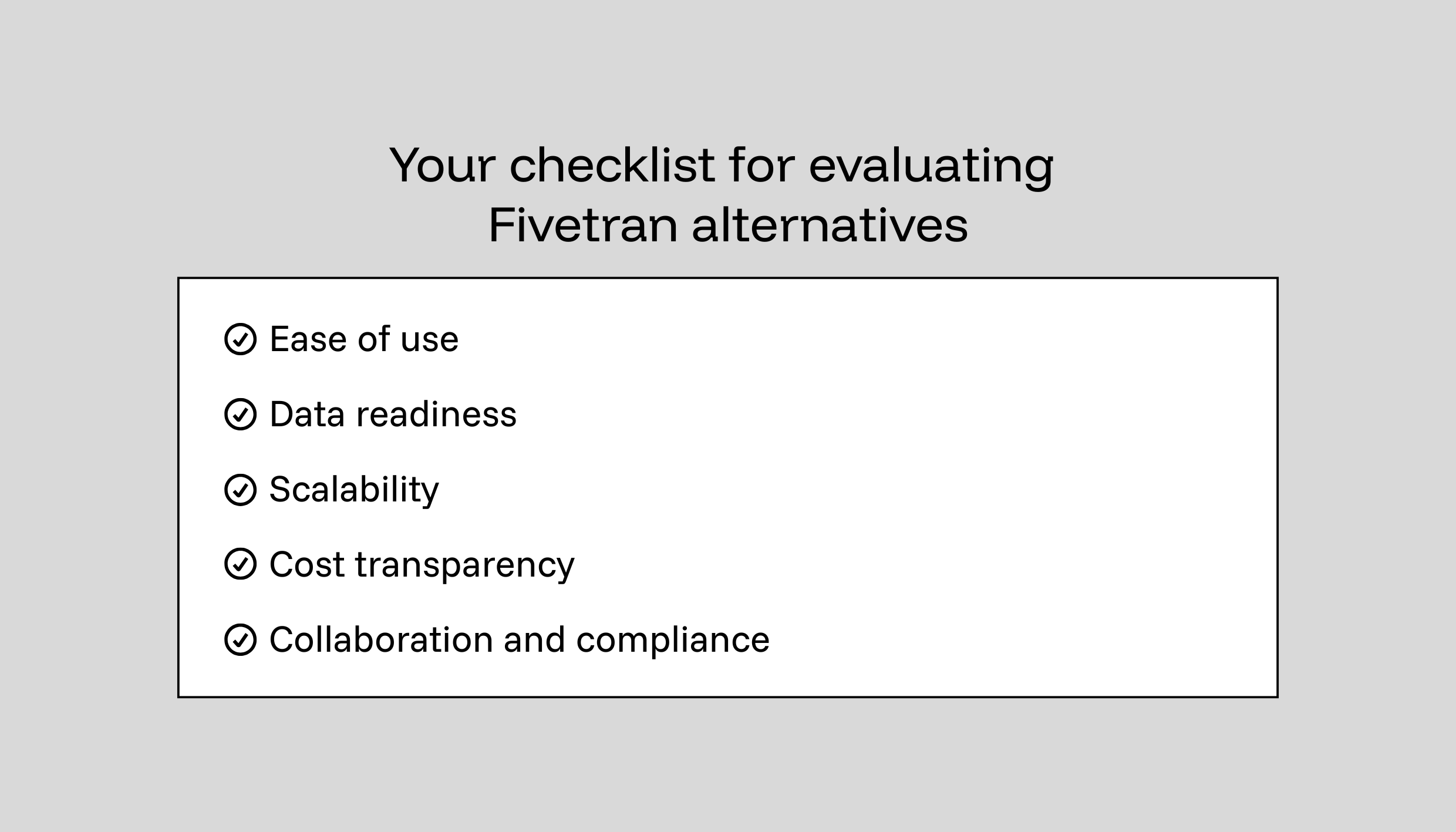
Let’s look at what you should look for in each of these evaluation criteria and why it matters to your business.
Ease of use: No-code vs. engineer-led setup
Connecting more data sources shouldn’t lead to more IT tickets, longer waits and more frustration.
In an engineering-led setup, every time marketing needs a new connection, they submit an IT request. This leads to ticket queues and delayed insights.
By the time marketing’s request is resolved, they’ve moved on to a different campaign. An engineering-led setup also forces data teams to divert time they could be spending on innovation or real-time analysis business-wide to helping marketers create reports.
That’s why, for teams that need a marketing-first approach to data integration, a no-code platform is so important. In a no-code setup, marketers can connect data sources, export to data warehouses and BI tools and build reports without SQL.
A Fivetran alternative with self-serve analytics eliminates bottlenecks caused by ticket queues, freeing up data teams and leading to faster campaign iterations.
Data readiness: Are outputs usable for marketing analytics and reporting?
Marketing data is notorious for being fragmented and unstable. According to a 2025 Commerce Brand Media Summit Insights study, the biggest internal challenge advertisers face right now is fragmented data, followed by limited measurement capabilities.
API updates and schema changes mean that data moving into your warehouse or reporting tool needs to be cleaned and normalized before it’s usable. Currencies, time zones and naming conventions differences have to be unified.
Fivetran automates ETL, streamlining extractions and loading. But someone with SQL skills needs to handle data transformations to make sure data is clean and consistent before it’s ready for measurement.
In a marketing intelligence platform, these aren’t ad hoc SQL models; they live in a shared, governed data hub that everyone can reuse. This is a key difference from Fivetran, where the modeling and governance typically sit in scattered dbt/SQL code in the warehouse.
Scalability: Can it grow with the team?
New clients or markets mean more data and connections. A robust ELT tool like Fivetran can handle data scaling in itself. The problem is that the fixes and changes that come with scaling increase the risk of breakage and lead to more work for data engineers.
Engineering has to handle pipeline debugging, SQL and dbt transformations just to keep data flowing smoothly. And, the more you scale, the more work for data teams.
A marketing-first data integration platform takes a different approach, which makes scaling marketing data easier. The connectors are fully managed, so every API update or schema drift doesn’t put your pipeline at risk.
Cost transparency: Row-based vs. predictive pricing
Until recently, Fivetran’s volume-based pricing model was strictly based on monthly active rows (MAR), where you’re charged based on the amount of data you use. Pricing is now connector-based, but usage thresholds are still influenced by data volume, which can make costs unpredictable for high-volume marketing data.
For marketing teams with large impression and click volumes, row-based pricing balloons due to high-performing campaigns or onboarding new clients — exactly when budget scrutiny is at its highest.
When choosing a Fivetran alternative, look for pricing models that align with marketing data and stay predictable even with large volumes and regular syncs. That way, high-performing teams and successful campaigns aren’t penalized by design.
Collaboration and compliance: Can both marketers and data teams work in sync?
Data silos and fragmentation make it difficult for marketing and data to work together. Different naming standards, time zones and currencies mean that teams might be working with inconsistent metrics. Also, ad platforms don’t store your data indefinitely, so you won’t have historical data for audits with an ELT tool alone.
A marketing data hub keeps data governed in a central location so teams see a unified version of all data. Both marketers and data teams are working on the same definitions, not separate versions of the truth in spreadsheets or warehouse models.
When your data stack enables teams to access and analyze trustworthy data more swiftly and with less frustration, campaign iterations occur faster and marketing can foster a culture of experimentation. The best alternative for your team depends on who owns the stack and how quickly marketing needs to move.
The top Fivetran alternatives for 2026
These tools solve very different problems. The table below compares them based on who they’re built for, not just what features they offer.
|
|
Core |
Measurement & reporting |
Modeling & transformation |
Pricing |
|
Funnel |
Marketing intelligence |
Dashboards, MMM, CAPI |
Managed & governed |
Connector based |
|
Adverity |
Enterprise integration |
Dashboards, templates |
Advanced managed |
Custom |
|
Supermetrics |
Lightweight reporting |
Templates, live data |
Raw/Minimal |
Tiered public |
|
Improvado |
Data automation |
BI dashboards only |
Automated modeling |
Custom |
|
Airbyte |
Open‑source ELT |
None, BI required |
Raw ELT |
OSS / usage |
|
TapClicks |
Client reporting |
Dashboards, schedules |
Managed |
Tiered + add‑ons |
|
Hevo Data |
No‑code ELT |
None, BI required |
Raw ELT |
Volume based |
1. Funnel — Best all-around marketing intelligence platform
Funnel is a marketing intelligence platform for data integration, reporting, measurement and activation.
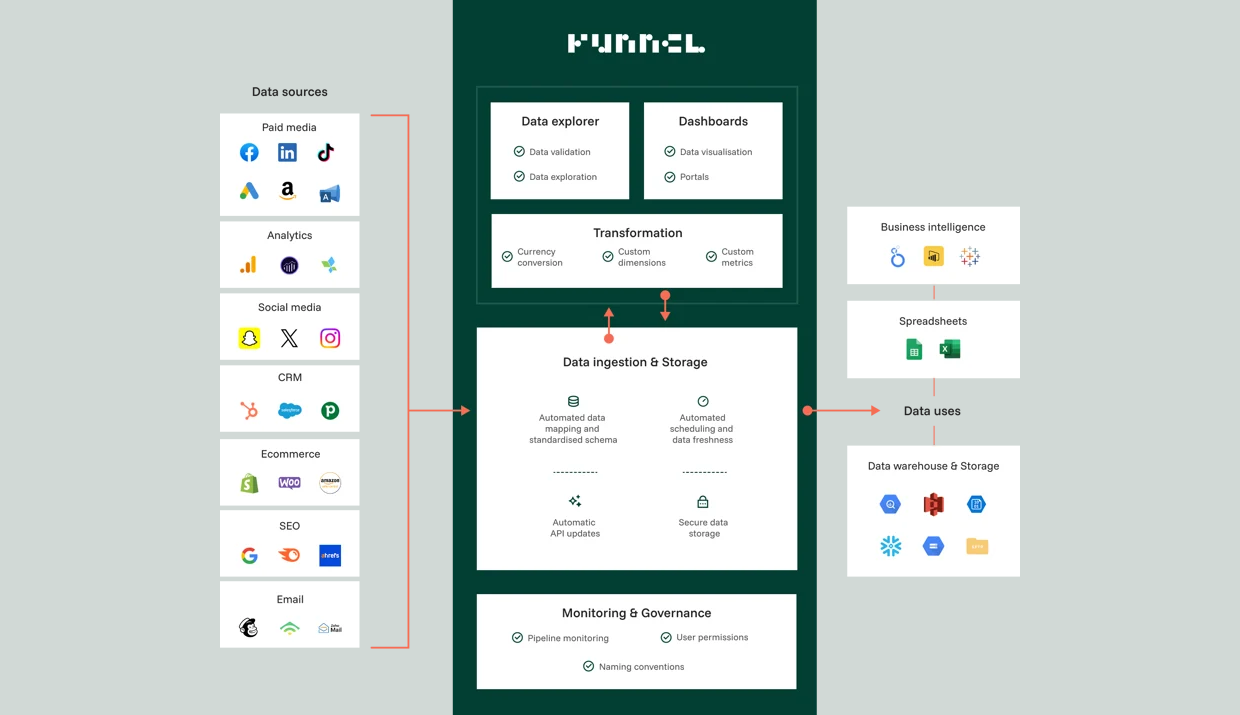
Funnel automatically pulls data from hundreds of sources, including ad platforms, email, CRM systems and search. It acts as a hub for marketing data that complements warehouse ELT tools.
Marketers can generate reports with built-in dashboards or export to the data warehouse or BI tools. Transformations don’t require SQL, empowering marketers to take control of their data and freeing up BI and data teams.
The Data Hub has built-in measurement capabilities, so teams can run and operationalize advanced measurement techniques, including marketing mix modeling (MMM) and incrementality testing, without exporting data to a third-party tool. Setup and scope depend on data availability and business complexity.
Funnel also lets marketers activate their data with conversion API connections to boost campaign performance. Funnel can send high-quality conversion signals back to ad platforms automatically, without the need for extra tools or maintenance work.
With a reliable marketing data foundation and self-serve analytics, marketers gain control so they can focus on improving marketing effectiveness with advanced measurement, clear reporting and workflows that aren’t dependent on data teams.
Ideal users:
Mid-marketing to enterprise marketing teams and agencies that work with large volumes of data. Funnel doesn’t charge for data volumes or rows of data, so costs won’t spike when data scales. The platform can complement the modern data stack, integrating with existing pipeline management and warehousing solutions.
Strengths:
- No-code, marketer-first platform, enabling non-technical teams to work directly with clean, standardized marketing data without relying on engineering
- Built-in measurement layer, where MMM, incrementality and activation are powered by the same underlying data rather than bolted on as separate tools
- Funnel’s Data Guarantee, which preserves historical data and keeps reports consistent even when APIs or schemas change
- Predictable, connector-based pricing, avoiding the volume-driven cost spikes common with row-based ELT tools
- AI-powered workflows that help surface insights faster and highlight anomalies and potential data quality issues
Limitations:
- Teams still export data to external BI tools for deeper analysis with other business data.
- Can be complex for small teams that only extract data from a couple of sources.
Best for:
Teams that want marketing-ready data, fast onboarding and predictable costs.
2. Adverity — Best for enterprise teams needing flexibility
Adverity is an enterprise data integration platform for marketing data. It comes with a vast library of pre-built connectors and sends data directly to your warehouse or BI tools.
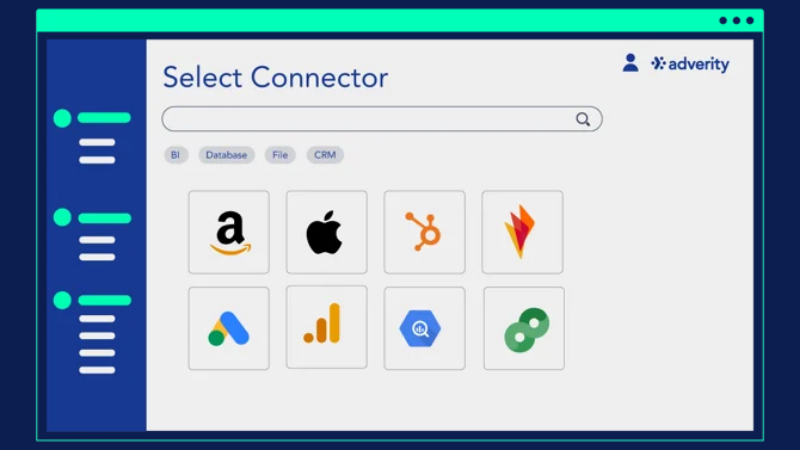
Source: Adverity Data
Users can select from pre-built templates to help customize reports and have access to a huge range of dimensions and metrics. There’s not a unified data foundation, but the Notebooks feature lets users create a clean, structured place for collaboration. Marketing can also benefit from automated sharing for recurring reports, and teams with the technical expertise can use AI agents to configure and activate data.
Ideal users:
Large enterprises with established data ownership, where marketing depends on a central team to ingest, standardize and govern data at scale.
Strengths:
- Highly configurable: Supports Python transformations and offers granular control over data fetching.
- Built-in AI tools: AI agents can help with tasks like data preparation and campaign optimization.
- Robust governance: Rule-based access controls, audit trails, secure data sharing and other features help you keep your data safe.
Limitations:
- The same flexibility that appeals to central teams can slow users without technical expertise.
- Onboarding and ongoing changes generally run through an engineering or analytics owner, leaving marketing dependent and slowing down insights.
Best for:
Complex enterprise environments that prioritize control and precision: global brands, multi-business-unit organizations and teams that want both UI-driven and code-based transformation paths with strong governance rules.
3. Supermetrics — Best for lightweight reporting and small teams
Supermetrics is an easy-to-use marketing analytics tool that allows teams to start connecting and moving data fast. It connects to popular sources, like Google, LinkedIn and TikTok, letting you bring data together for cross-channel campaign tracking.
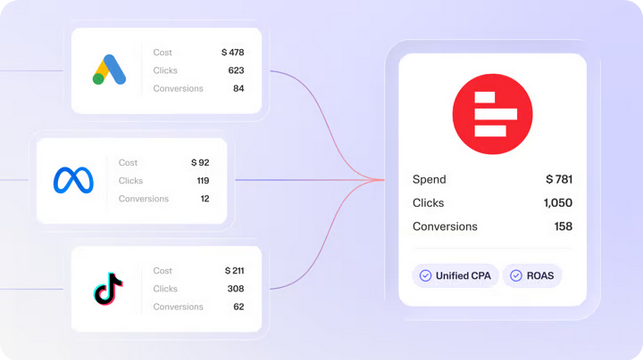
Source: Supermetrics data management
This tool is a self-serve solution that lets marketers access the database without waiting on IT or BI teams, and streamlines reporting with pre-built templates.
Dashboards are fed with live data, so marketers can shift budget in real-time to maximize campaign performance. Supermetrics also offers helpful features like alerts and automated reports to help marketers act on data quickly.
Teams with the technical skills can build custom APIs and transformations, and then benefit from low-maintenance pipelines with automations for API changes, rate limits and authentication refreshes. Supermetrics also supports loading to common cloud destinations like BigQuery and Snowflake for teams that want to centralize data later.
Ideal users:
Marketing teams and agencies that want fast reporting inside spreadsheets or Looker Studio, without having to manage pipelines or data transformations.
Strengths:
- Fast time to value: Connect a source, pick a template and build a dashboard fast with pre-built templates.
- Familiar workflows: Many marketers live in Sheets. Supermetrics caters to that habit with a Google Sheets connector and step-by-step guides.
- Destinations when you grow: If you outgrow spreadsheets, you can route data to a warehouse or cloud storage and keep your reporting intact.
- Clear entry pricing: Public tiers and a free trial make it easy to test with real data before you commit.
Limitations:
- Transformation depth is limited compared with engineer-led ELT or marketing data foundations.
- Complex harmonization, shared governance and multi-brand modeling usually live outside Supermetrics and must be handled in your warehouse or BI layer.
Best for:
SMBs or agencies getting started with data automation. It works well on a small scale. However, when clients or channels grow, or when you want to use complex data modeling, Supermetrics’ limits become a blocker.
4. Improvado — Best for large-scale data automation and centralization
Improvado centralizes marketing and sales data so teams can automate ingestion, harmonize fields and deliver analysis-ready datasets to warehouses, data lakes and BI tools. The platform offers a large library of maintained connectors, a no-code transformation layer with AI assistance and delivery to common destinations.
Source: Improvado data governance
With Improvado, marketing can move quickly on campaign iterations, and data and BI teams have granular control over data management.
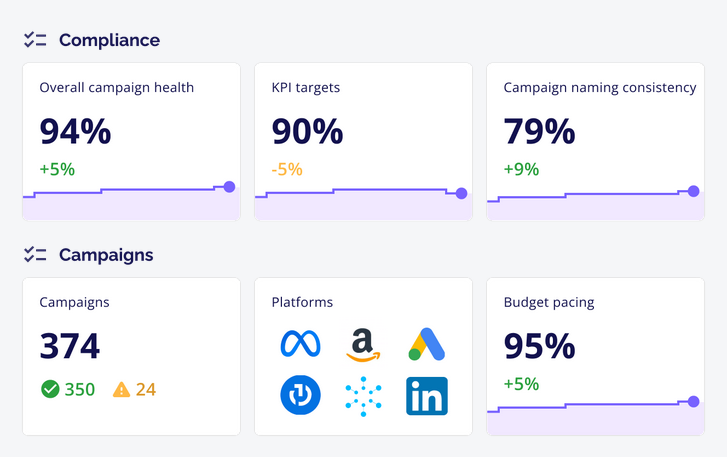
Built-in data governance with predefined rules helps track compliance, and alerts warn you if something is off with a campaign so you can address it quickly. AI features also help teams interpret data fast.
Ideal users:
Enterprises that want to unify data across channels prefer to analyze data in their BI tools and are comfortable with the higher price point. IT involvement is important for proper setup.
Strengths:
- Connector breadth: Connect over 500 marketing and sales data sources. Improvado will build custom connectors as needed.
- Pre-built transformations: Harmonize data from search, email, social and display ads with ready-made transformations for marketing use cases.
- Automate reporting: Pre-built BI dashboards that are compatible with Power BI, Looker Studio and Tableau.
- AI analytics co-pilot: The AI Agent feature helps with report building and answering queries.
Limitations:
- Custom pricing and enterprise processes can mean higher costs.
- Non-technical users may still rely on a central team to configure complex transformations and govern changes over time.
Best for:
Enterprise teams that want full-stack automation and have the right technical support.
5. Airbyte — Best open-source Fivetran alternative
Airbyte is an open-source data integration tool with both self-hosted and managed editions. It offers a large connector catalog and gives engineering teams control over how data pipelines run and where they live.
Source: Airbyte extract and load
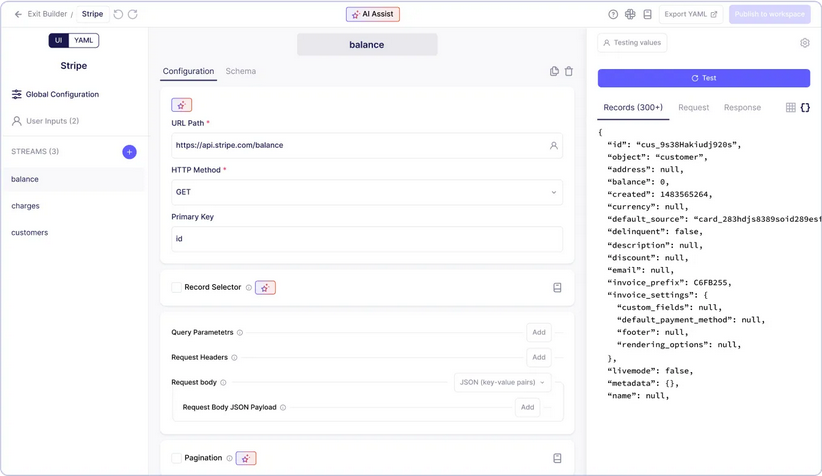
You can deploy the open-source core on your own infrastructure, use Airbyte Cloud with usage-based credits or choose enterprise plans that add security and governance features. If you need a connector that doesn’t exist, Airbyte provides a no-code builder and a low-code Connector Development Kit so teams can create and maintain custom data sources quickly.
Ideal users:
Teams that want full control of deployment and security, and that are comfortable owning maintenance. This developer-friendly platform can help teams that want more than a marketing data integration tool. It lets teams build a comprehensive data foundation for analytics and building AI.
Strengths:
- Flexibility: Open-source core with self-hosting, plus managed Cloud and Enterprise options. Teams can choose where to run data pipelines and how to scale them.
- Large library of data connectors: 600+ prebuilt connectors as well as no-code and low-code Connector Builders.
- Fast database replication: Use your preferred change data capture (CDC) method to replicate databases in minutes.
- Enterprise features when needed: Options like SSO, role-based access control, and PII masking on enterprise plans support regulated environments.
Limitations:
- Even with low-code tooling, building and caring for custom connectors requires engineering time and testing.
- Marketing measurement and data activation require third-party tools.
- Non-technical marketing users will usually rely on a data team for changes and troubleshooting.
Best for:
Teams that prefer open source tools and have developer capacity. If you value sovereignty, want the option to self-host and need to build or tune connectors for niche data sources, Airbyte gives you the flexibility to do it on your terms while offering managed options when you want them.
6. TapClicks — Best for agencies prioritizing client reporting
TapClicks aggregates marketing data and delivers ready-made dashboards for client reporting. It combines a large library of maintained connectors with a reporting layer that includes TapAnalytics and SmartReports.
Source: TapClicks DataMax
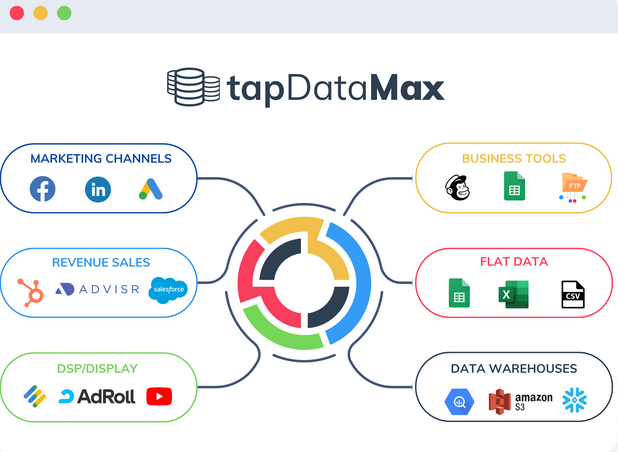
Agencies can pull data from many data sources, harmonize it and present it in interactive dashboards or scheduled reports without building a warehouse-first stack. TapClicks also offers TapData, which provides stored and on-demand connectors, so teams can balance historical storage with near real-time pulls.
Ideal users:
Agencies that need fast client-facing reporting and standardized templates across many accounts. Teams that want to centralize cross-channel metrics in a single view and aren’t looking for advanced measurement capabilities.
Strengths:
- Interactive dashboards: data visualizations update automatically as new data comes in.
- Client-friendly reporting: The Report Scheduler feature lets you send automated reports to clients, and configuration features let you customize views for specific users.
- Streamlined campaign management: Consolidate data from multiple campaigns to help monitor engagement and budget performance. Combine related datasets for a more holistic view.
- Data integration tiers: Low-cost option for small teams, 250+ connector library for mid-marketing teams, and advanced ETL tool for teams with more complex needs.
- AI-powered features: Users can surface insights and get recommendations with the help of built-in AI agents or build an AI agent to automate specific tasks.
Limitations:
- No built-in measurement layer, limiting what you can do with your marketing data.
- Starter plans are limited for growing agencies and teams.
- Not enough transformation depth or control for most teams.
Best for:
Reporting first use cases where visualization speed matters most. If your priority is to roll out consistent client dashboards, automate report delivery and reduce manual spreadsheet and slide work, TapClicks provides a practical path. However, teams outgrow the built-in features quickly.
7. Hevo Data — Best no-code ELT tool with built-in transformations
Hevo is a managed, no-code ELT platform that provides data movement from multiple data sources into your warehouse and lets teams prepare data with visual and code options.
Source: Hevo Data
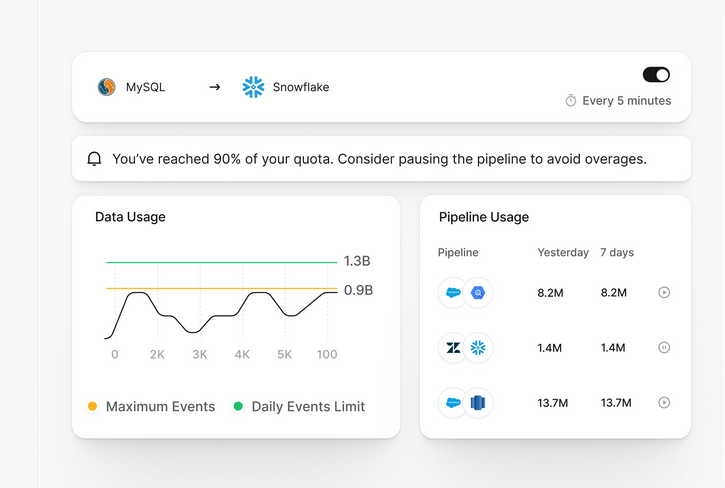
You can shape data in the app before it loads into a warehouse or BI tool. Hevo also supports dbt Core projects on the platform, which gives teams a familiar way to organize data transformations. At the time of writing, dbt Core on Hevo is in beta.
Ideal users:
Hevo is built for data teams; it’s not a marketing-first tool, so it’s a good option when data owns the stack and marketing isn’t struggling with access issues. With no-code connectors, it gives brands and agencies that don’t have deep technical resources the ability to build and manage a pipeline.
Strengths:
- No-code data pipelines: BI, data and even marketing can set up connections without writing code.
- Minimal maintenance: Alerts let you know when there are database changes, and scheme drifts are handled automatically.
- Fast data replication with CDC: Move high-volume data to your warehouse or data lake quickly without worrying about data spikes.
- Up-to-date dashboards: Marketing reports are continually refreshed with the latest data.
Limitations:
- Hevo is an ETL tool, not a marketing intelligence platform, so there are no marketing-specific features for measurement or data activation.
- Data teams don’t have the same control over transformations that they get with Fivetran.
- The connector library is smaller than what you’ll find with other comparable data integration tools.
Best for:
Teams that want a no-code ELT tool with fast time to value and low-maintenance pipeline management.
Which Fivetran alternative above can help your team? Are you after fast reporting, control over the pipeline or a broader tool for marketing intelligence? Let’s look at how these alternatives line up when considering data readiness, technical flexibility, reporting capabilities and BI integration.
How to choose the right Fivetran alternative
Deciding the right fit depends on who owns the stack, how quickly marketing needs to move, your governance needs and your tolerance for pricing volatility.
|
Need |
Best fit |
|
Fast setup, no-code, marketing-ready data |
Funnel; Hevo Data |
|
Technical flexibility and scripting |
Adverity; Airbyte |
|
Basic reporting and dashboards |
Supermetrics; TapClicks |
|
Enterprise automation with BI integration |
Improvado |
Fast setup and no-code, marketing-ready data
Choose this path if marketers should be able to connect sources, adjust fields and create custom dashboards without a line of SQL. Look for managed connectors, a governed marketing data model and a clear UI for defining fields such as channel, campaign, currency and time zone.
The key outcome is speed and data readiness, so a marketing-first platform will give you the best outcome. Funnel delivers here with a governed data model, hundreds of connectors and no-code reporting. Non-technical users can send normalized data to any destination in a few clicks, and teams can collaborate with a unified data hub.
Funnel’s measurement layer opens the door to campaign optimization and informed budget allocation, shifting the focus from trying to justify ROI to knowing how to optimize the media mix for growth, turning marketing into a profit driver.
Hevo Data is a good fit if you want a no-code pipeline, but your priority isn’t a marketing-first platform, nor do you want an all-in-one marketing intelligence solution for measurement, reporting and activation.
Best fit: Funnel; Hevo Data
Technical flexibility and scripting
Go to this category when you have a strong engineering team and complex logic that is easier to express in code.
You’ll want support for dbt-style projects, Python-based transforms, custom connectors and granular control over orchestration. Expect a warehouse-first mindset instead of a central hub for marketing data.
With enterprise tools like Adverity and Airbyte, you gain precision and extensibility, but non-technical users will rely on data engineers for setup and many changes.
Choose this path when governance and custom logic matter more than hands-off speed for marketers.
Best fit: Adverity; Airbyte
Basic reporting and dashboards
Pick this option if your near-term goal is to get clean pulls into spreadsheets or Looker Studio and stand up a few core dashboards.
Look for connectors that land data directly in the reporting tool, plus starter templates that reduce build time. This path works well for small teams and agencies with a handful of clients.
The tradeoff is depth. Complex modeling and shared governance usually live outside the tool, so plan your graduation path to a warehouse or a governed data hub once your reporting footprint grows.
Best fit: Supermetrics; TapClicks
Enterprise automation with BI integration
This route suits organizations that want a centralized, IT-backed reporting layer with strong governance. You’ll want a large connector catalog, a platform transformation layer, reliable delivery to warehouses and data lakes and real-time monitoring.
The benefit is scale and standardization across marketing and data teams. The cost is a higher investment and a more involved implementation, which is usually the right trade for complex environments.
Best fit: Improvado
Why teams move from Fivetran to Funnel
Where teams start looking for a Fivetran alternative is when they need a solution that’s more marketing-friendly and scalable.
With Fivetran, IT bottlenecks and manual data prep start to slow down time to insight. Collaboration is difficult because of the technical complexity and marketing’s reliance on data for every pipleline update and data query.
A warehouse ELT is built for loading data into tables. Marketing intelligence platforms store, model and measure on the same governed foundation. Teams move when they want that day-to-day usability without losing their warehouse strategy.
From engineer-first to marketing-ready
When marketing depends on engineers, Monday requests turn into Thursday dashboards. Funnel’s Data Hub changes the cadence. Managed connectors standardize names, currencies and time zones. A no-code Fields UI lets marketers adjust definitions inside guardrails.
Take Ria Money Transfer, for example. After centralizing marketing data and automating reporting with Funnel, teams started getting insights in near real-time and making decisions faster. Cross-channel performance reporting is 10x faster, and teams are using insights to make decisions rather than relying on instinct.
The practical impact is fewer tickets, less rework and faster iterations on creative, budgets, and targeting.
Speed and predictability
Teams often switch because they’re tired of explaining spikes in usage to finance. When campaigns perform well, volumes jump, and so can usage bills.
Funnel offers faster onboarding and a straightforward relationship between usage and cost, which makes budget conversations easier. Real organizations see the effect in spending and time.
For example, broadhead, a US agency, cut data management spend by 50% after adopting Funnel’s Data Hub and exports. That freed up hours for analysis and client work instead of pipeline care.
Funnel as a complement to the modern data stack
You don’t have to replace your warehouse or general-purpose-ELT when using Funnel. Keep BigQuery, Snowflake or Redshift as the system of record, and use your preferred pipeline tool for other types of data. Use Funnel to centralize marketing data in a governed hub, then export clean, consistent tables back to the warehouse or straight into your BI tools. The goal is to enable marketers to self-serve while working with your existing infrastructure.
Funnel is made for data-driven marketers
As marketing grows more data-driven, teams need platforms that balance power and accessibility. They need access to trustworthy data and the tools to help them use that data to iterate quickly and run more effective campaigns.
Funnel makes that balance possible by helping you unify, measure and activate your data without engineering delays or hidden costs. Explore how Funnel can complement your stack — start for free or book a demo today.