






Marketing reporting is meant to create clarity. But for many teams, it’s become a bottleneck. Reports are built and dashboards reviewed. Meetings end with agreement on the numbers, and then everyone goes back to doing the same thing.
However, the issue isn’t a shortage of dashboards, it’s what we expect dashboards to do. Most marketing reporting still focuses on documenting activity rather than driving progress. A dashboard might explain what happened, but it stops short of uncovering why performance shifted.
This article breaks down why the old reporting playbook no longer works and how leading teams are modernizing their approach to marketing insights, using data as a starting point for clear, evidence-backed action.
Why most marketing reporting fails today
It’s easy enough to pull numbers, build marketing dashboards and deliver a monthly deck on time. But it’s this kind of “tick the box” reporting that limits what dashboards can do. To understand why marketing reporting so often fails to drive action, we need to look at the patterns that show up across most teams.
Dashboards document the past instead of shaping the future
For many marketing teams, dashboards act as historical records rather than decision systems. They tell you what happened last month, what went up, what went down and which channels “won.”
Sure, that’s useful to a point. But it’s not enough.
Most dashboards reliably answer one question: What happened? The thing is, they rarely help teams answer the questions that actually move performance forward:
- Why did it happen?
- What should we test next?
- What should we change?
In our 2026 Marketing Intelligence Report, 41% of in-house marketers say they report results without analyzing the “why.” That’s nearly half of teams sharing outcomes without building a point of view on what caused them.
The confidence gap behind the charts
Reporting failure isn’t only because of tools. It’s a confidence problem. Marketers lack the confidence to act on what they see.
And can you blame them? Marketing data is messy, multi-channel and full of moving parts. Results are influenced by timing, creativity, competition, seasonality and a dozen other variables that never show up neatly in a single colorful chart.
Our research shows that as many as 86% of marketers say they don’t have a clear signal through the noise. When every platform tells a different story, it’s hard to know what to trust. And if you can’t defend the data, you avoid bold calls. The fear of being wrong trumps the fear of experimenting.
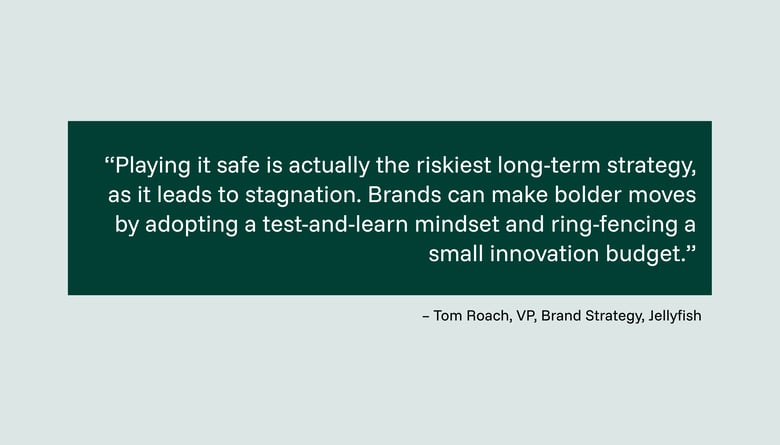
So marketing teams do the safest thing: they keep reporting. They keep presenting. They don’t change much.
That behavior is baked into the culture. According to our 2026 Marketing Intelligence Report, only 13% say continuous review and refinement is embedded in how their teams work. For the rest, reporting marks the end of the work rather than the beginning of learning.
What good marketing reporting looks like in practice
So what does good marketing reporting look like? Here are the best practices outcome-focused teams use to turn dashboards into a competitive advantage.
They invest in clean, unified data
Step one is having trusted data as your foundation to ensure a consistent view across teams and client dashboards. That means creating the infrastructure for automated data pipelines that don’t break with API updates or high volume. It also means prioritizing first-party data collection strategies to reduce reliance on third-party data sources.
A centralized marketing data hub that ingests data from all your sources, including CRMs, ad platforms, and email, stores it in its raw form without retention limits and normalizes and cleans it automatically gives you the consistency and clarity you need in your reports.
They automate reporting
Once data is ingested and standardized so it’s in a usable format, it should move to your visualization tools or spreadsheets automatically.
High-performing teams use a marketing intelligence platform that lets you automate scheduling so data is constantly refreshed. Interactive dashboards with drag-and-drop functionality make it easy to communicate what the data is saying clearly, and automatic alerts can flag trends so you know what to explore further.
You should also be able to connect your data to Looker Studio, Power BI, and other popular visualization tools without engineering help, and share reports with clients with a couple of clicks.
They align on KPIs
Nailing your KPIs helps teams focus on goals that impact business growth and clearly see how to better allocate resources to create a bigger impact. When your marketing reporting shows which channels are lifting ROAS and converting more high-quality leads because they aren’t cluttered with vanity metrics like traffic and clicks, decisions can focus more on improving financial health.
They treat dashboards as hypothesis engines
Dashboards should be a place to generate ideas, not just to review results. A good marketing report is where patterns emerge, questions form and decisions begin to take shape. A rise in conversions, a dip in a channel or an unexpected result doesn’t get filed away. It triggers questions about cause and effect.
Teams start asking what changed and why. Did conversions dip because of a shift in audience preferences, a message that didn’t connect, the delivery timing or the way channels interacted? Should we try a new creative approach to drive more engagement?
This is what it means to treat dashboards as hypothesis engines. You’re not expecting them to deliver answers on their own. Rather, they’re a jumping-off point to help teams form testable ideas about what’s influencing performance.
The modern reporting workflow
For reporting to drive real impact, it has to become part of how teams work, not something that happens every quarter and then disappears. The teams that get the most value from their data follow a simple, repeatable rhythm that turns insights into action over time.
- Dashboards show patterns: Dashboards surface what’s changing across channels and time. They show where performance lags and where there might be opportunities. They help teams spot movement, anomalies and areas worth paying attention to — not just summarize performance.
- Hypotheses explain why patterns exist: Once a pattern appears, teams start forming ideas about what might be driving it. Was that marginal lift in sales because we increased spend on Meta ads? How much of the conversion rate drop can be attributed to pausing APAC ads? This step is about making sense of the data, not rushing to conclusions.
- Experimentation tests assumptions safely: Rather than acting on instinct alone, teams run small tests to validate their thinking. Experiments that focus on marginal lift or loss reduce risk and create clarity before bigger decisions are made.
- Decisions are made based on evidence: With test results in hand, teams can adjust spend, creative or channel mix with confidence. Decisions feel defensible because they’re grounded in what the data has shown.
- Optimization compounds learning over time: Each cycle builds on the last. Insights accumulate, teams move faster and decision-making becomes more consistent and less reactive.
This workflow is what separates basic reporting from smarter marketing. Reporting moves beyond looking back and becomes a way to learn and improve over time. When teams have a clear, shared view of their data, this workflow starts to feel natural.
Why AI won’t fix broken reporting (and can make it worse)
It’s tempting to think AI will solve reporting by default. More automation, faster summaries, smarter recommendations. Problem solved, right?
But AI doesn’t fix reporting problems on its own. It just works with whatever data you give it.
If the underlying data is messy, inconsistent or incomplete, AI will still produce answers. They’ll just be faster versions of the same uncertainty teams already struggle with. In some cases, that actually makes things worse because the output sounds confident even when the signal isn’t clear.
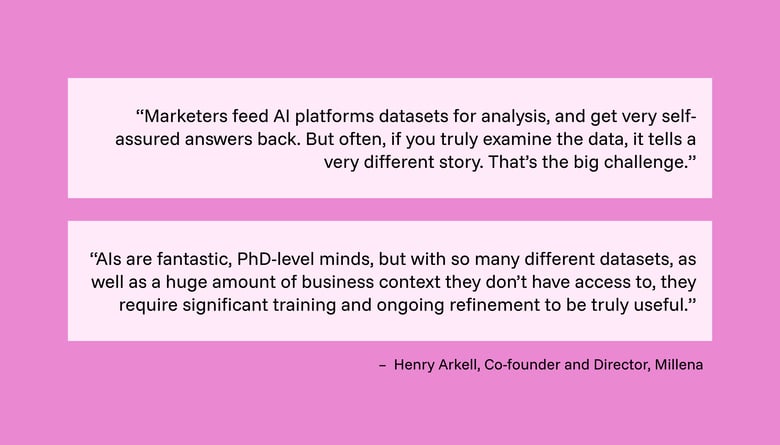
That doesn’t mean AI isn’t useful. Used thoughtfully, it can be incredibly helpful for summarizing performance and cutting down on tedious manual work. But it’s not a shortcut around the fundamentals. If teams don’t trust their data today, adding AI won’t suddenly make decisions easier tomorrow. That’s why data maturity is so critical to good reporting and measurement.
The foundation high-performing teams invest in
Better reporting doesn’t start with better dashboards. It’s the data foundation feeding those dashboards that matters.
When teams have confidence in their numbers, everything downstream improves. Conversations move faster. Decisions feel less risky. Reporting shifts from explaining what happened to supporting what should happen next.
For example, a dip in paid social performance becomes a prompt to test new creative or adjust audience targeting. A spike in conversions leads to questions about timing, messaging or channel mix, and a follow-up experiment to see if it can be repeated.
When reporting is working well, it creates momentum. It helps teams decide what to adjust, where to lean in and what to stop doing.
The reporting maturity curve
Not every team needs advanced analytics on day one. Most teams don’t move from basic reporting to sophisticated measurement overnight, and they don’t need to.
Performance-driven marketing teams tend to invest in foundations before adopting sophisticated analytics and AI tools. Instead of jumping straight to advanced models, they focus on getting the basics right first. Things like consistent definitions, connected data and a shared view of performance across channels.
Our research shows that only 8% of in-house teams use advanced analytics consistently, yet more than 70% say they want to improve their measurement skills. That tells a clear story: teams know there’s more value in their data, but they’re cautious about adding anything that might slow them down.
Marketing teams should strengthen their data foundations first. Then, gradually layer in better questions and more sophisticated experiments and measurement models to widen the lens.
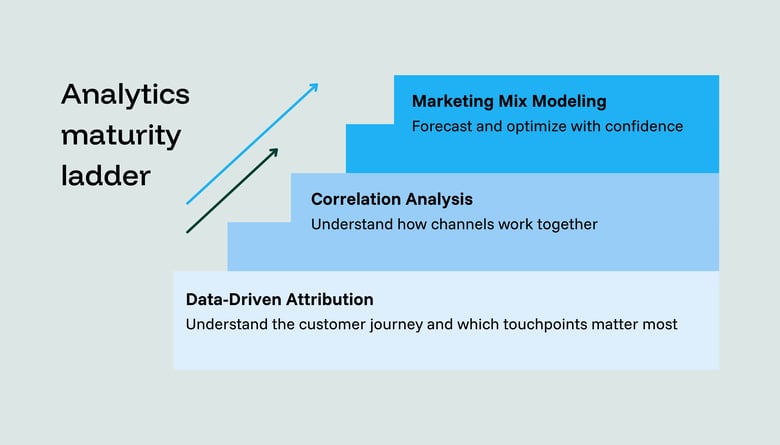
The end goal is a holistic view of marketing performance that starts with granular insights and keeps building on layers of measurement to reveal what’s working, why and what to do next.
What modern marketing reporting enables
When digital marketing reporting evolves beyond static dashboards, it changes how teams learn, decide and lead. The shift from reporting to intelligence is where growth unlocks because you can make more confident budget and channel optimization decisions.
More confident recommendations
When marketers can trace performance across channels and trust that metrics line up, recommendations get sharper. You can explain why something is working, not just that it is. That’s the difference between saying “we think this might help” and “this is what we should change next.” A solid data foundation gives you that footing.
Better budget allocation
Teams don’t waste their marketing budget because they’re careless. They waste it because moving money feels risky when the picture isn’t clear. Modern reporting lowers that risk. Rather than spreading spend evenly, teams can reallocate resources based on what demonstrably drives results.
Stronger credibility with finance and leadership
When marketing can clearly explain not just what happened, but why it happened and what will change, it stops being a battle to defend numbers. Campaign results begin to inform real business decisions. Finance can see where money is going, leadership gets predictability and marketing earns more trust at the table.
Reporting as a competitive advantage
When reporting is treated as a static output, it puts teams in a state of action paralysis. But when your dashboard is designed for learning and decision-making, reporting stops being a defensive exercise and starts shaping strategy.
A marketing intelligence platform like Funnel brings spend and performance data together in one place. Disconnected data is automatically cleaned, and metrics are standardized without any manual fixes or spreadsheet workarounds.
By focusing on a reliable data foundation first, marketing can align with other teams, communicate metrics clearly and stay focused on the KPIs that matter. There’s less noise and time spent putting the picture together, and more space for strategy and taking action.