






More data, tools and technology surround marketing agencies than ever before. But according to Funnel’s 2026 Marketing Intelligence Report, a striking gap persists: 72% of in-house marketers say they have mountains of data, but turning it into insights is a challenge. Agencies aren’t far behind at 55%.
The problem isn’t access to tools. It’s having the right stack of tools: one that’s reliable, scalable and built to help you prove results to clients who expect more than vanity metrics.
That’s why we’re breaking down the modern agency tech stack by function, from data and reporting to measurement and modeling. You’ll gain a framework for choosing tools that actually fit your agency’s growth trajectory.
What agencies need in their marketing stack in 2026
Agency tech stacks have grown messier over the years. New clients bring new platforms. New platforms demand new connectors. Suddenly, your team is juggling a dozen tools that don’t talk to each other. That’s why it’s helpful to understand the core layers every modern agency stack should cover before evaluating solutions.
- Data and reporting: Collect, organize and visualize performance across every client and channel.
- Project management: Keep campaigns, deliverables and client communication on track.
- Digital marketing automation: Execute campaigns, including emails, social scheduling, ad management and more.
- Creative and AI: Enhance content production and ideation.
- Measurement and modeling: Spans day-to-day performance evaluation to more sophisticated approaches such as marketing mix modeling (MMM) for clients with sufficient scale and maturity. What matters most is that measurement rests on a solid data foundation, with metrics that are collected, cleaned, normalized and trustworthy.
Not every agency needs the same depth for each layer. The key is to build a stack where each layer supports the others without creating redundancy or gaps.
How to evaluate tools for your agency
Below are six criteria that separate tools built for agency scale from those that might hold you back.
Does it scale with your client roster and data volume without retention limits or breaking connections?
Growth shouldn’t break your client reporting. Look for platforms that handle increasing volume without retention limits or degraded performance.
Will it serve your clients’ unique needs?
Some clients want real-time dashboards. Others need advanced measurement or custom reporting. The right tool adapts to meet those demands.
How well does it integrate with other platforms in your stack?
Prioritize platforms that connect cleanly with your existing infrastructure to reduce manual work and keep the data flowing.
Does it meet the compliance and security requirements your clients expect?
Enterprise clients expect rigorous data handling. Evaluate whether a tool meets standards like SOC 2 and GDPR.
Can one platform replace multiple tools to reduce bloat and overhead?
Consolidation reduces overhead. It also simplifies vendor management and prevents your team from sinking time into managing an unnecessarily complicated infrastructure.
Is the tool easy to onboard and maintain without heavy developer resources?
Prioritize solutions that marketers can manage without heavy technical restrictions.
With these evaluation guidelines in mind, let’s walk through the tools that belong in each layer of your modern agency stack.
Data and reporting tools for marketing agencies
If you’re pulling reports manually, your account managers spend countless hours tinkering with different platforms, manually entering data and chasing team members for project updates.
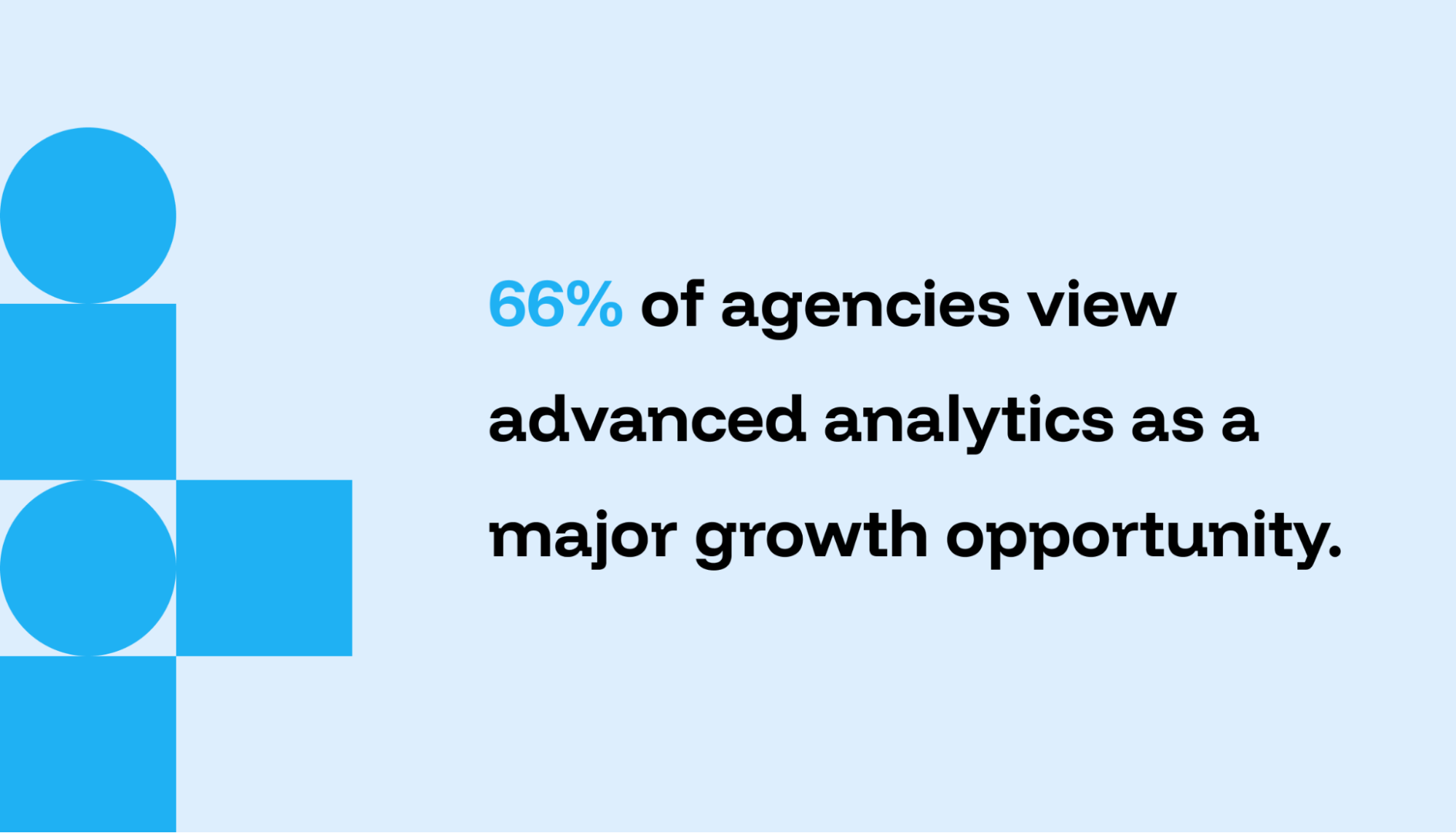
It’s a time drain that leaves too little room for strategic work. But the right analytics tools can end up being a growth driver, not just a time-saver. According to our report on Agency Acceleration, 66% of agencies think advanced analytics is a major growth opportunity.
Let’s dive into the best data and reporting tools agencies can rely on to build dashboards, track performance and make data-backed decisions, so your team can gain a competitive advantage.
1. Funnel: the marketing intelligence platform for scalable, client-ready reporting
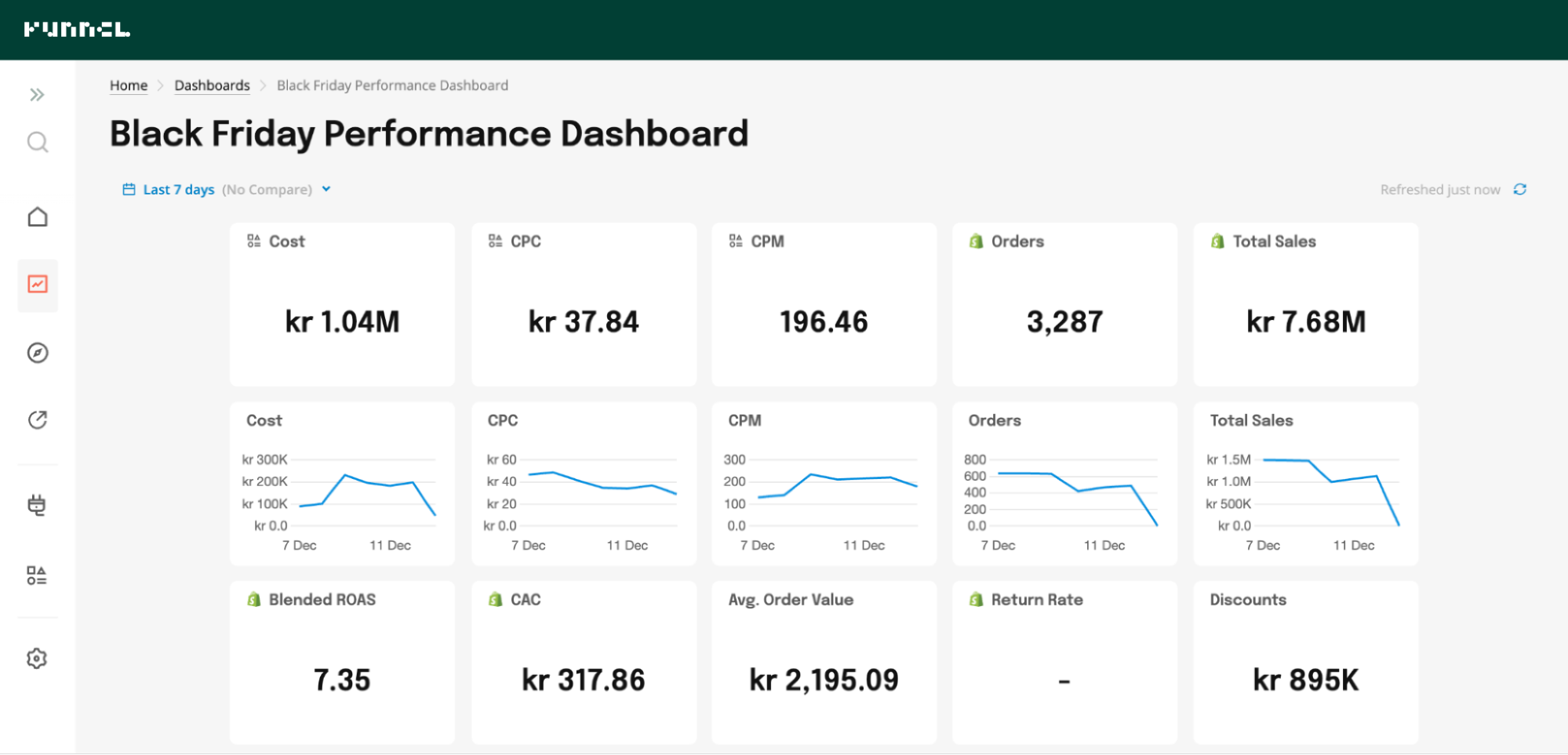
As client expectations grow, reporting becomes more complex and manual data wrangling starts to slow teams down. That’s where Funnel comes in to help agencies generate client-ready reports quickly.
Source: Funnel
Funnel is a marketing intelligence platform that automates data collection and standardization across every client and channel. Instead of downloading CSVs or fixing inconsistent naming conventions across ad platforms, Funnel creates a single, reliable source of truth that powers accurate, scalable reporting.
The Funnel Data Guarantee means that once Funnel ingests your data, it’s yours permanently. Reports stay consistent even when APIs change, so your team isn’t scrambling to fix broken dashboards every time a platform updates its structure. Funnel also includes built-in dashboards and Funnel Portals for client-facing access, with no retention limits holding you back as you onboard more clients.
For agencies, this means:
- Automated data gathering across 500+ platforms
- Consistent, normalized data that eliminates manual cleanup
- Templated dashboards you can reuse across clients
- Faster onboarding for new accounts and juniors
- A data foundation that supports advanced analytics, including MMM when the use case calls for it
Funnel includes advanced measurement capabilities as part of the platform. While most agencies don’t run marketing mix modeling or advanced measurement across all clients today, having clean, unified, analysis-ready data ensures agencies are prepared to collaborate with partners, internal data teams or clients when deeper measurement questions arise.
In an industry where only 40% of marketers believe agencies focus on long-term growth, Funnel helps teams shift from execution to strategic partnership using data your clients can trust.
As you explore the tools below, think of them as great additions to your workflow. Funnel is the engine that makes your entire data stack more reliable, efficient and scalable.
See Funnel’s plans for pricing details.
2. Google Looker Studio
Looker Studio is a useful starting point for prototyping dashboards or handling simple use cases. It allows you to build dashboards using drag-and-drop components, blending data from multiple sources and sharing interactive reports with clients.
For example, you can pull in GA4 and spreadsheet data to create a performance overview for a client, all without code. Because the tool is free, agencies often use Looker Studio as a lightweight way to present insights or prototype dashboards before formalizing reporting processes.
Best for:
- Agencies building dashboards on a budget
- Teams that want customizable visual reports
- Sharing performance insights in a client-friendly format
Limitations:
Looker Studio depends on the quality and freshness of the data flowing into it and connectors from marketing platforms can break or lag. As agencies scale, many find they need a more reliable data foundation behind their dashboards.
3. Google Analytics 4
GA4 gives agencies access to real-time and historical website performance data at no cost. It tracks traffic sources, conversions, user behavior and key engagement metrics that help agencies understand which channels drive the most value.
For example, you can analyze how paid campaigns influence time on page, conversion rates or user paths. GA4 also integrates well with other Google tools, making it a solid starting point for data-driven agencies.
Best for:
- Understanding website and funnel performance
- Building simple reports for clients
- Tracking conversions and on-site behavior
Limitations:
GA4 does not offer cross-channel marketing reporting and attribution can be hard to interpret. Most agencies eventually need to combine GA4 with other data sources for a full picture of client performance.
Free tools like GA4 and Looker Studio are excellent starting points, but agencies typically reach a point where they need cleaner, unified data across every client and channel. That’s where a dedicated data foundation like Funnel becomes essential.
Project management tools for marketing agencies
The right tools can keep you organized and create frictionless communication internally and with clients.
4. Asana
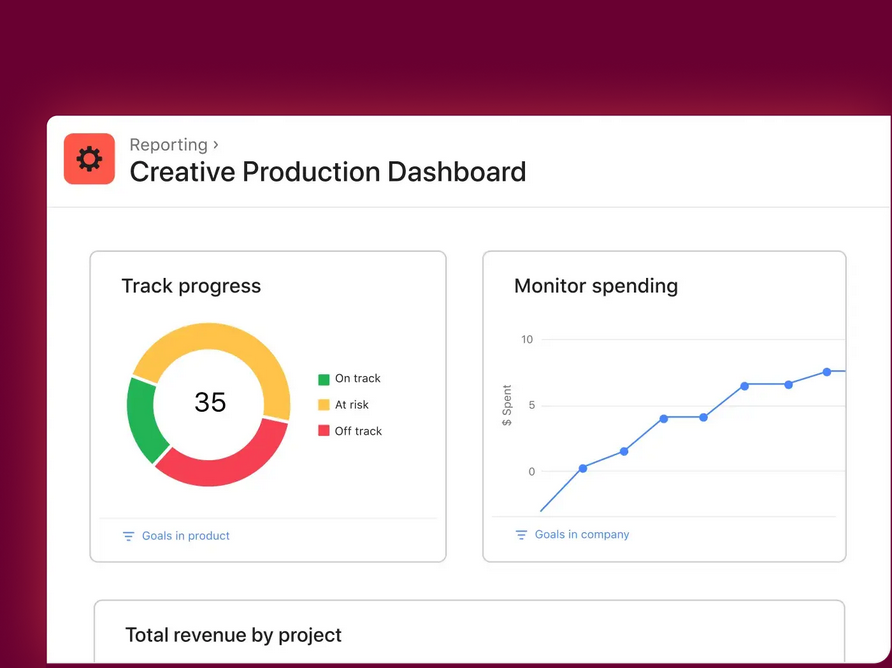
Asana is intuitive project management software used by over 170,000 customers worldwide. The platform offers lists, calendars, workflow automation and other features that scale with agency complexity.
Source: Asana
Agencies use Asana to manage deliverable timelines across multiple client accounts. List views organized by campaign phase make it easy to track tasks such as “Develop social media copy” or “Review ad performance” alongside their owners and due dates. Calendar views allow cross-client capacity planning, helping account leads balance workloads and avoid bottlenecks.
As such, for agencies seeking a scalable, feature-rich solution that grows with their client roster, Asana is a strong choice.
Pricing
Asana’s pricing plans are built to grow with the number of projects your agency takes on.
- Personal plan: This free option is built for teams managing tasks with basic workflows and a few project views.
- Starter plan: This one is ideal for digital marketing agencies that need automation, enhanced security and AI reporting.
- Advanced plan: It’s designed for teams requiring advanced workflows, portfolio management and resource tracking for complex projects.
5. Notion: internal documentation tool
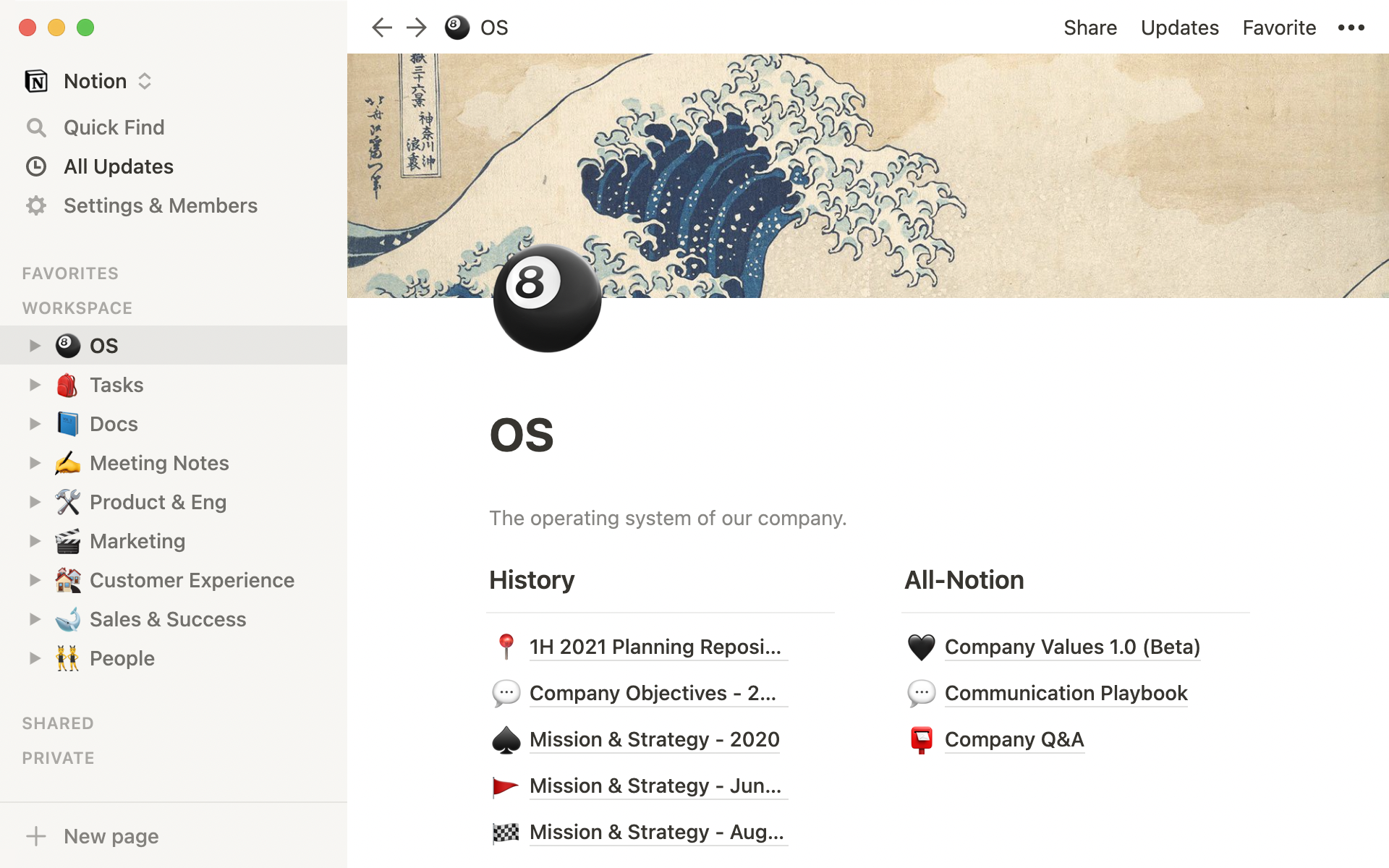
Notion combines task management, collaboration and documentation into a single platform. Agencies use Notion to centralize style guides, onboarding documentation and client briefs. This eliminates scattered Google Docs and reduces onboarding time for new team members or freelancers.
Source: Notion
Notion is particularly helpful for agencies that outsource to contractors who need self-serve access to brand guidelines, project context and approved assets. You can toggle between pages, embed examples, link to resources and leave comments with real-time updates.
Pricing
As digital marketing agencies scale, Notion’s pricing plans add features like advanced permissions, forms for client input and automation to optimize workflows.
- Personal plan: This free plan offers basic task management and collaboration tools.
- Plus plan: Access helpful features such as advanced project views and increased collaboration capabilities.
- Advanced plan: Benefit from advanced workflows, reporting and resource management tools.
- Enterprise plan: At this level, you get enterprise-grade security, compliance and dedicated support.
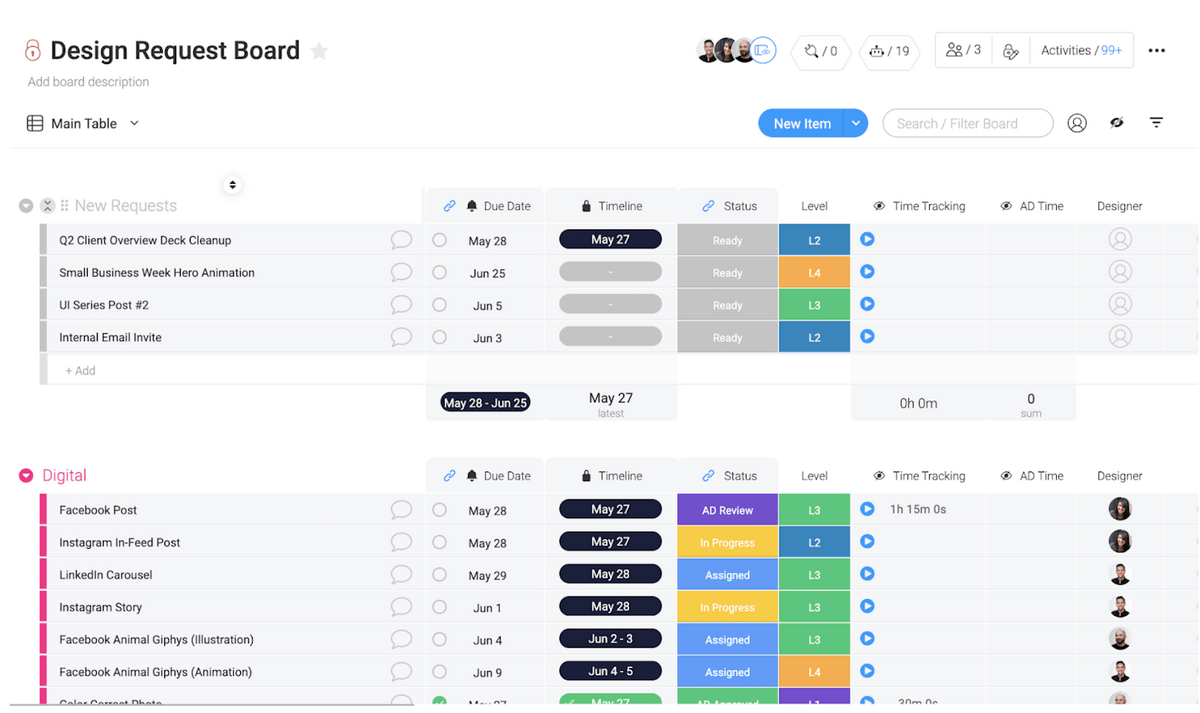
6. monday.com: overall project management tool
Over 245,000 customers trust monday.com. It’s a market leader in project management and stands out for its powerful customization and automation capabilities.
Source: Monday.com
Agencies that manage ten or more active client accounts benefit from monday.com’s board-per-client structure. Within each board, you can create automation rules that notify clients when deliverables are complete or remind team members of upcoming deadlines.
A forms feature allows multiple clients to submit creative requests, which can be immediately logged as tasks. Portfolio-level dashboards pull data across all client boards, which gives leadership teams in agencies visibility into utilization and project health without digging into individual accounts.
Pricing
As agencies scale, monday.com plans unlock advanced dashboards that consolidate client data across boards for a comprehensive overview.
- Free plan: This option provides basic tools to organize simple projects.
- Basic plan: This tier has essential collaboration features for teams starting to scale their workflows.
- Standard plan: You get advanced planning tools like timelines and integrations.
- Pro plan: Benefit from more automation tools, reporting and multi-board dashboards.
- Enterprise plan: This tier is made for enterprise-level security, permissions and scalability.
Digital marketing automation tools for agencies
Agency business models are shifting, and automation and AI are accelerating workforce change. For example, Forbes reports that Forrester forecasts a 15% reduction in agency headcount in 2026, following an average 8% cut in 2025. Despite this reduction, the market research company estimates that profits will double this year.
This kind of transition is only possible with the right technology. Yet, according to our research, fewer than 30% of marketers currently use automation to handle repetitive SEO and optimization tasks. The tools below help agencies automate workflows, eliminate manual busywork and free up capacity for higher-value strategic work.
7. Pipedrive
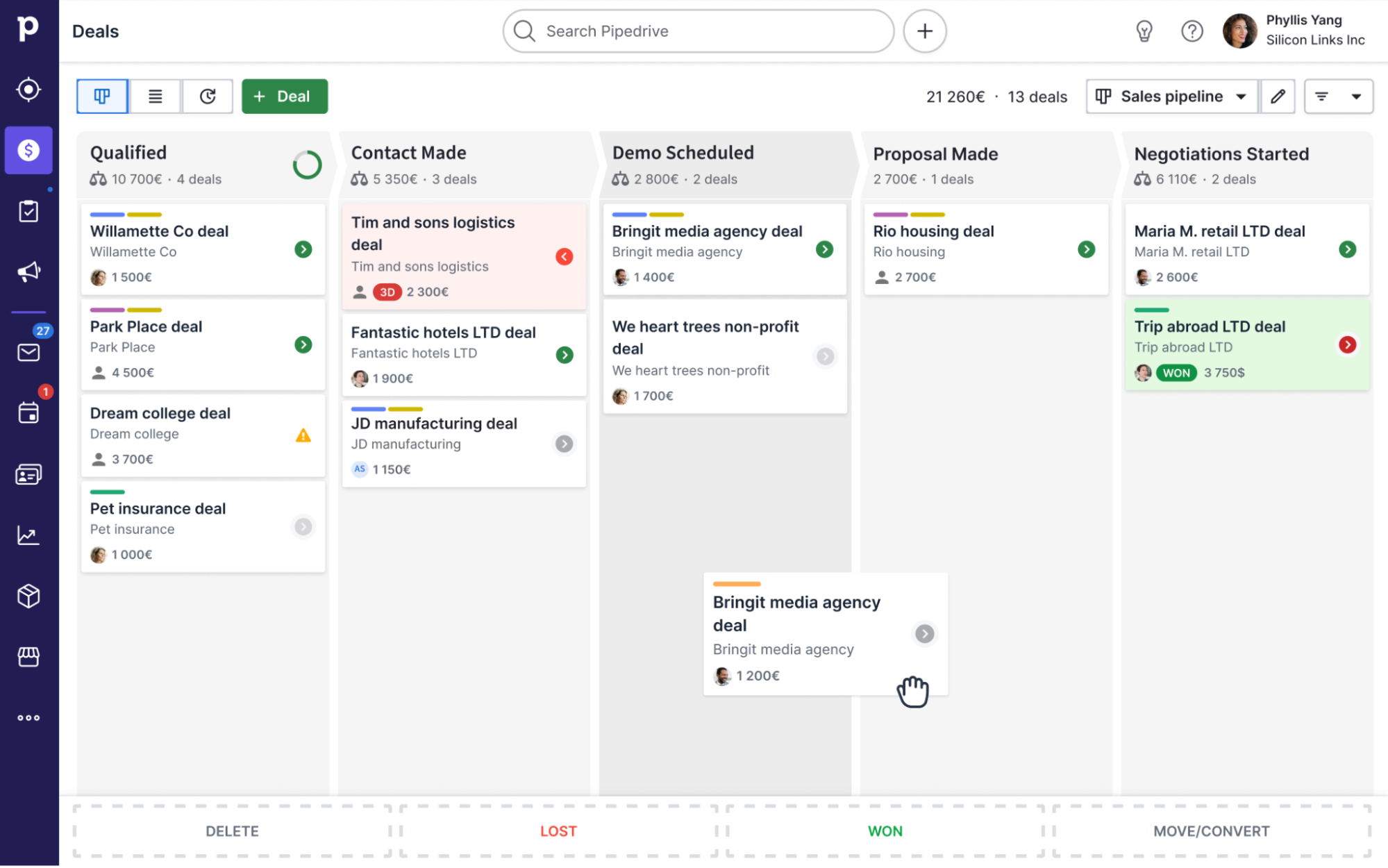
Pipedrive offers intuitive CRM tools and pipeline management features. You can visually track leads through typical funnel stages like "initial contact," "proposal sent" and "closed deal," and prioritize leads based on custom criteria.
Source: Pipedrive
Its automation features eliminate repetitive work like follow-ups or logging calls. For example, you can set up a workflow that automatically sends a follow-up email three days after a proposal is sent. It even integrates with tools like Slack, Gmail and Google Calendar.
Pricing
You can start using Pipedrive with a free trial. The pricing tiers include plans with various automation tools and the ability to see how potential clients have engaged with your proposals.
- Essential: This plan has pipeline management, client management, reports, integrations and personalized onboarding.
- Advanced: You get email tracking, group emailing and automation tools for growing teams.
- Professional: This plan includes advanced AI tools, e-signatures, lead routing and revenue forecasting.
- Power: You benefit from project tracking, enhanced permissions and 24/7 support.
- Enterprise: This plan provides full feature access, unlimited customizations and advanced security.
8. HubSpot
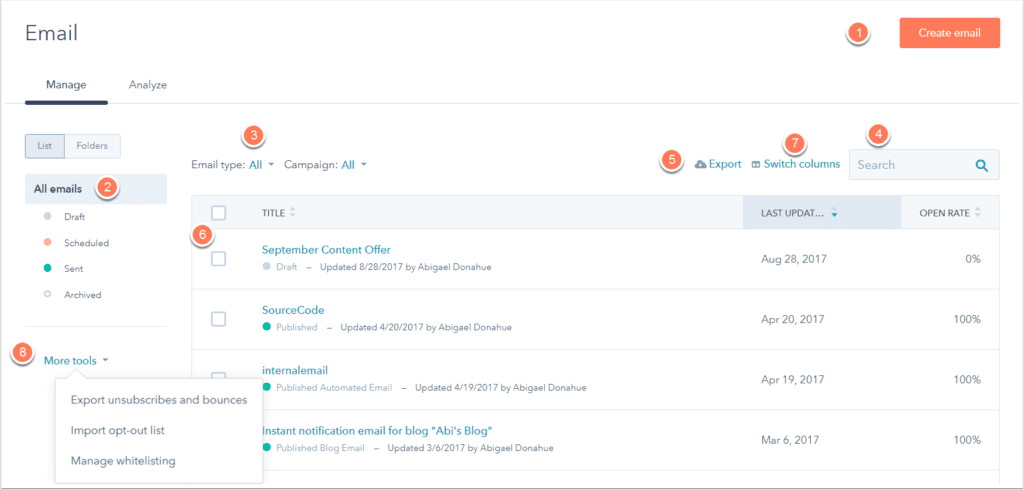
HubSpot’s customers include companies like DoorDash and Reddit. The platform provides tools for email marketing, forms, live chat and ad management to help agencies run personalized digital marketing campaigns at scale.
Source: HubSpot
Agencies use HubSpot to capture leads using forms that sync with customer relationship management (CRM) tools and provide real-time client support through live chat. It’s particularly useful for agencies that run their own demand generation or that manage client email marketing programs.
Pricing
- Marketing Hub Starter: This plan includes email and content marketing, basic automation and space for 1,000 contacts.
- Starter Customer Platform: It combines Marketing Hub with CRM and other hubs for a complete customer platform.
- Marketing Hub Professional: At this level, users benefit from advanced automation, personalization and reporting for growing businesses.
- Marketing Hub Enterprise: This plan is tailored for enterprises that need AI-powered insights, multi-touch attribution and advanced analytics.
9. Mailchimp
Mailchimp works with over 11 million users to provide email marketing tools and automation. Its platform allows agencies to automate sequences like welcome series, post-purchase flows and re-engagement campaigns. You can set up a welcome email series for new subscribers or automate follow-ups after newsletter sign-ups.
Pricing
Mailchimp's paid plans help make your email marketing efforts more dynamic and automated.
- Free: This plan has a limit of 500 contacts, basic email tools, forms and landing pages.
- Essentials: This tier offers flexibility and support for up to 10x contacts, multiple audiences and the ability to remove Mailchimp branding.
- Standard: Users benefit from advanced segmentation, A/B testing and user behavior targeting.
- Premium: Your clients can have 10,000+ contacts. This plan also offers dynamic content creation tools and custom templates and comes with priority support.
Creative and AI marketing agency tools
Agencies are at a pivotal point where the ability to evolve determines whether they grow. Part of that evolution is replacing manual processes and speeding up creative work with AI.
According to HubSpot’s AI Trends for Marketers report, globally, two-thirds of marketers use AI in their work, and for Americans, it’s 74%. Meanwhile, 98% of organizations plan to maintain or increase their investments in AI and automation tools. That being said, only 7% of marketers who use AI for content creation don’t edit it at all, which emphasizes the importance of AI as a creative partner rather than a replacement.
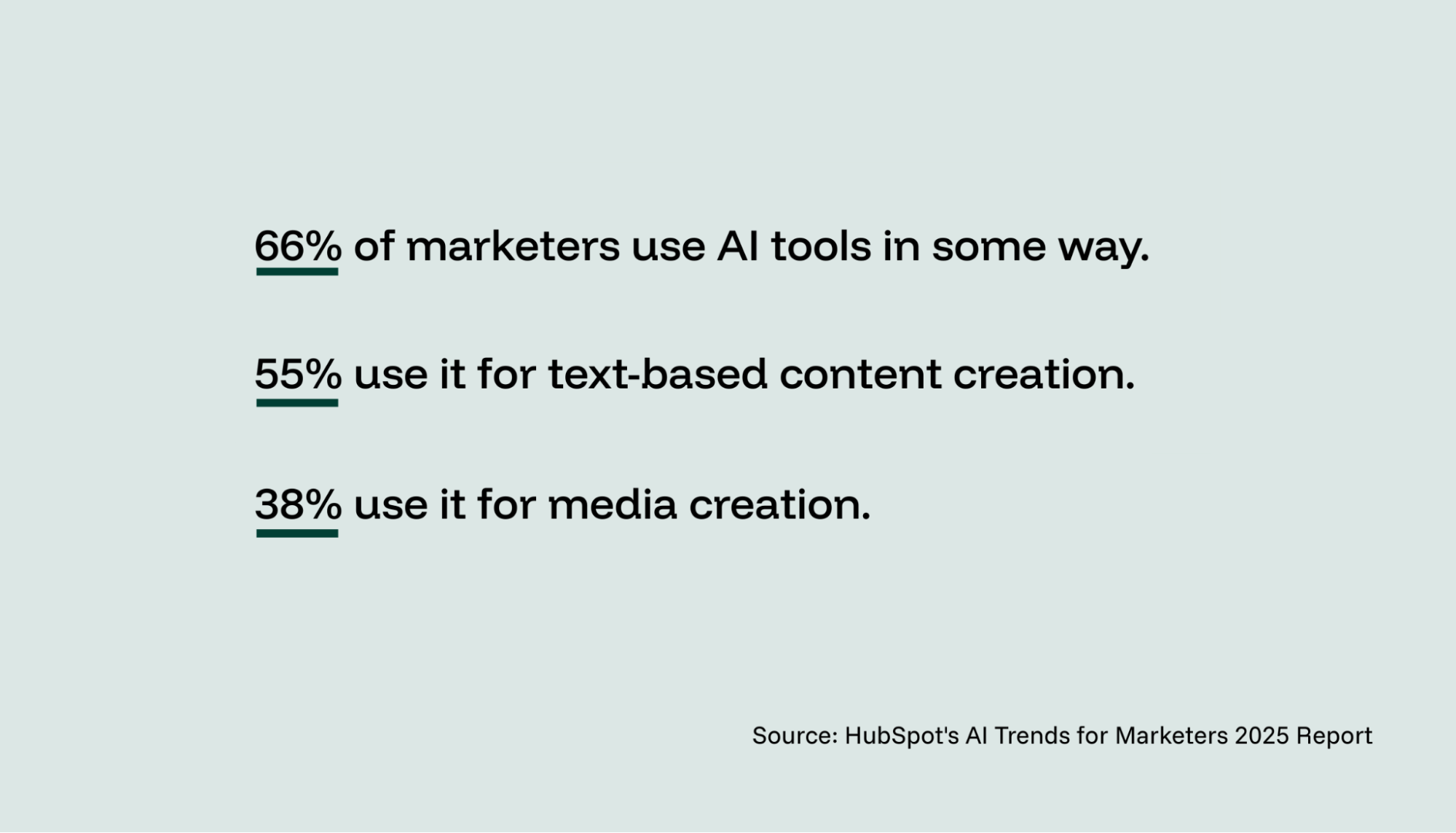
Learning to work with AI could be the difference between scaling your business and being replaced by agencies that do. Here are tools that enable your agency to create quality content at scale.
10. Writesonic
Writesonic lets users generate high-quality, SEO-optimized content. Its AI Article Writer can create long-form articles for clients based on real-time data and competitor content.
Agencies can use Writesonic to adapt and deploy content frameworks quickly. For example, if you’ve got a Black Friday article targeting the beauty industry, you could use Writesonic to adapt it for finance, fitness and technology. It will automatically insert keyword research requirements and target links.
Pricing
Writesonic’s paid plans allow you to create content in bulk and integrate other platforms using their API.
- Free: This plan offers 25 credits, some Writesonic and Chatsonic features and basic content generation.
- Individual: This option has 100 credits, GPT-4.0, unlimited Chatsonic use, advanced templates and SEO tools.
- Standard: More suitable for agencies, at this tier, you get 1,000 credits, team collaboration tools and advanced AI tools like bulk article generation and topic clustering.
11. Figma
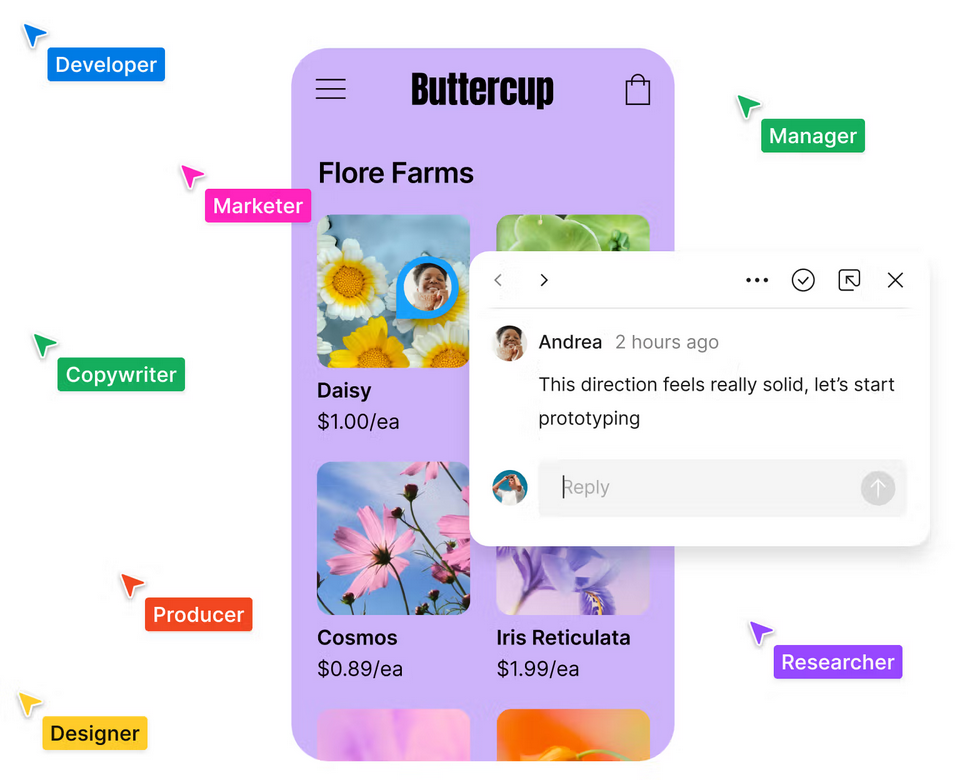
Figma works with over 10 million users to make collaborating on design mockups more accessible. It lets you comment directly on website frames, ads or other design projects.
Source: Figma Design
This tool eliminates the back-and-forth of collecting feedback via email. Clients can comment directly on frames, designers resolve comments in context and version history tracks every iteration. This is particularly valuable for agencies with distributed teams or freelance designers who need real-time access to working files.
Pricing
Upgrading to Figma paid plans increases the number of collaborative files and features you can access.
- Free: This plan gets you started with three collaborative design files, unlimited personal drafts and basic file inspection.
- Professional Team: Level up for unlimited design files and additional features like team libraries and advanced prototyping.
- Organization: This plan offers organization-wide libraries, design system analytics, branching, merging and private plugins.
- Enterprise: The enterprise tier comes with advanced security features, support and API integration.
12. Adobe Express
Adobe Express is meant for quick designs on the go. It offers over one million templates, stock images and over three million free photos. You can use its drag-and-drop editor to create content like social media posts, ads or flyers. It’s useful for account managers or strategists who need to mock up concepts before handing them off to designers, or for teams producing high-volume social content.
Pricing
Opt for Adobe Express paid plans to unlock tools like background removal, resizing for multiple platforms and over 100 million media assets.
- Free: Sign up at no cost and access basic editing tools, 10,000+ templates, Adobe Stock assets and 5GB of storage.
- Premium: This plan has AI tools, premium templates and advanced editing features, and it includes 100GB of storage.
- Teams: This plan comes with real-time collaboration tools and 1TB of storage.
13. Invideo
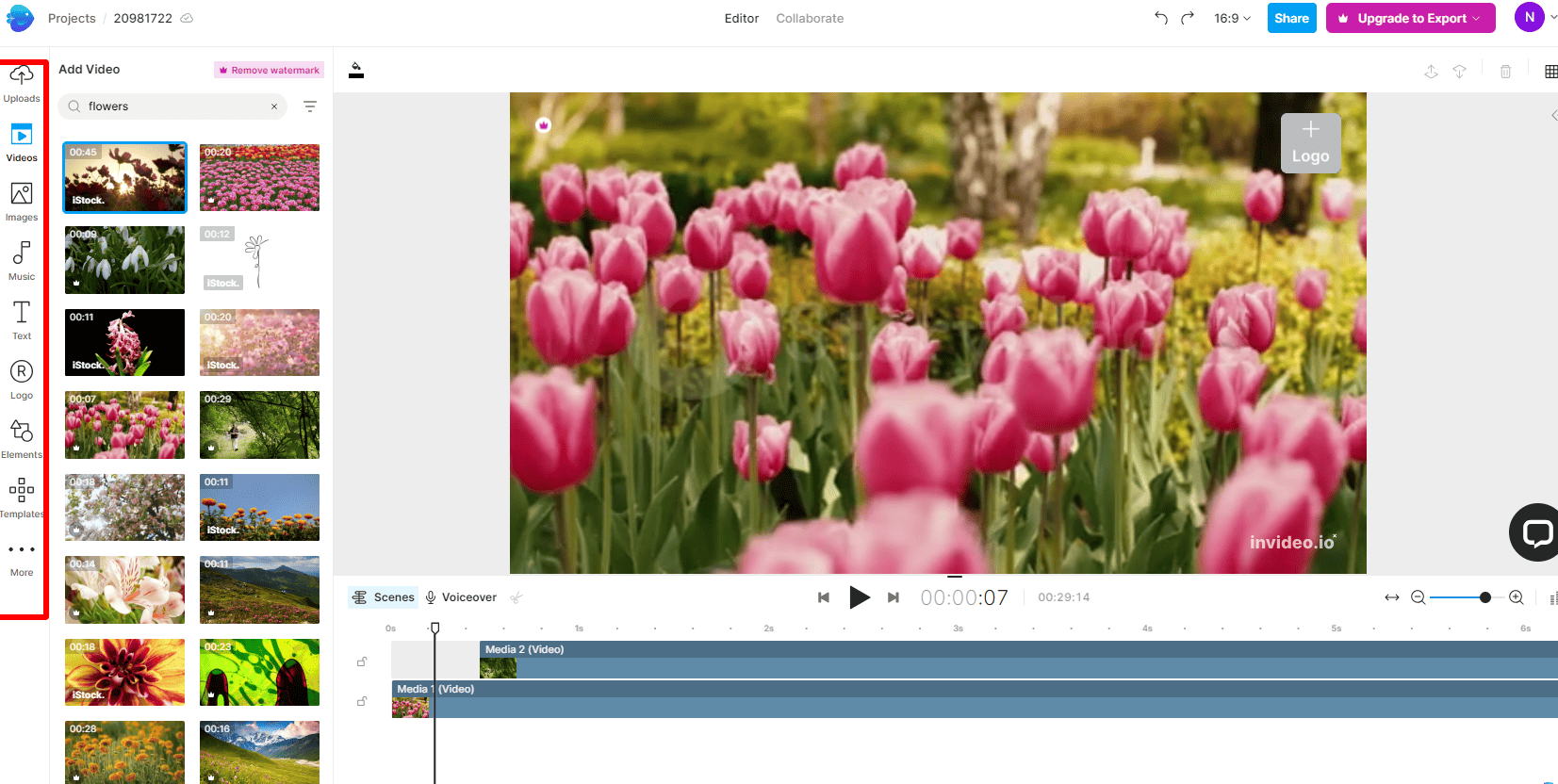
40 million users use InVideo to produce professional-quality videos without the typical upfront costs of production. The free plan offers 10 minutes of weekly AI-generated content.
Source: Invideo
This editing tool helps agencies create social media marketing ads and explainer videos using 16 million stock assets, reducing production time. You can also test content like faceless YouTube videos to promote a new service and see how well an audience responds.
Pricing
Invideo’s paid tiers offer more minutes and key features like voice cloning.
- Free: This plan offers basic AI generation at 10 minutes a week, limited exporting, 10GB of storage and access to standard media.
- Plus: This second tier expands AI generation to 50 minutes a month and provides iStock assets and 100GB of storage.
- Max: Users get 200 minutes of AI generation a month, storage and voice cloning.
- Generative: This plan features high generative credit limits and full access to premium features.
14. Admaker by Picsart
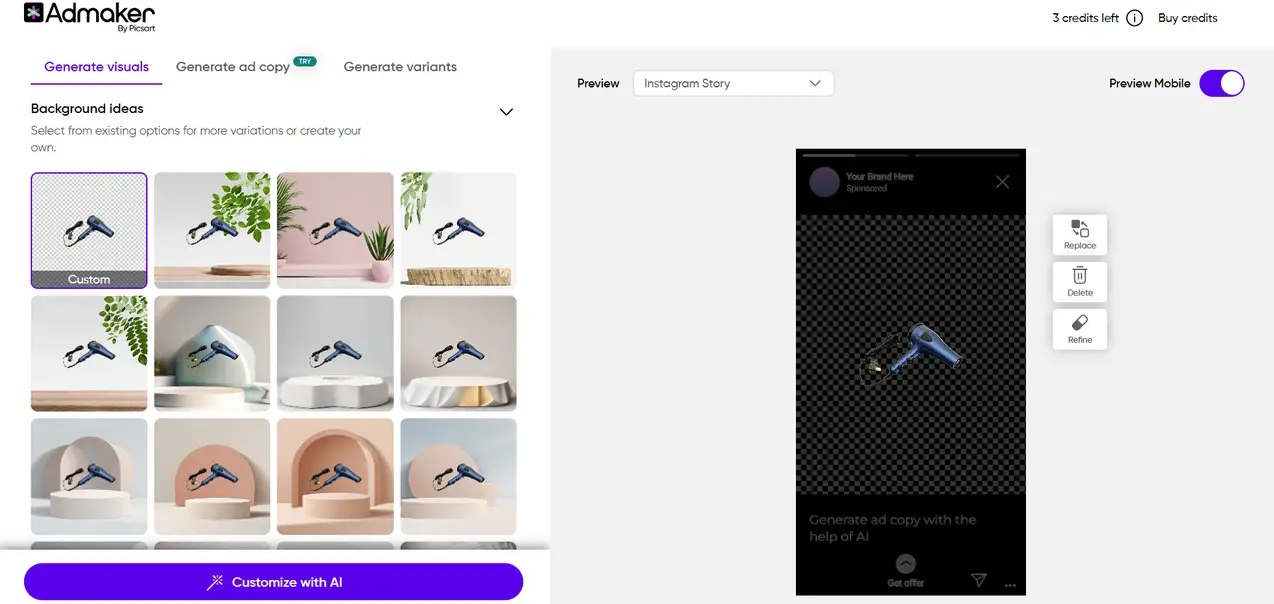
Over 150 million people use Admaker by Picsart for professional ad creation. It includes customizable templates and AI-generated visuals and ad copy to streamline ad creative production for agencies for various social media platforms like Facebook, Instagram, TikTok and Pinterest.
Source: Admaker
If you’re managing ads for an e-commerce client, you could upload a product image, use AI, add an appealing background and create AI-generated ad copy. The platform makes it easy to test ad variations with export options in multiple sizes.
Pricing
Admaker’s paid plans allow you to produce more ads and offer additional exporting features.
- Free: This plan includes 16 images a month and lets you export images in multiple sizes.
- Lite: Go up a level for 200 images, ad copy generation and social media exports.
- Plus: Benefit from 400 images and all Lite Plan features.
- Pro: The highest tier includes 800 images and unlimited ad copy generation for Facebook.
Performance measurement tools agencies use
Advanced analytics separates confident agencies from cautious ones. According to our Marketing Intelligence Report, only 21% of agency marketers and 8% of in-house marketers consistently use advanced analytics, yet 66% of agencies see it as a major growth opportunity.
That being said, measurement means different things in different agency contexts. For most agencies, it starts with evaluating performance day to day and understanding spend efficiency, attribution signals and what’s driving results. For larger or more mature clients, measurement can extend into more strategic modeling, such as marketing mix modeling (MMM).
This section focuses on tools agencies use when they need to go deeper than dashboards, typically on a selective, client-by-client basis. Whether that’s attribution, experimentation or modeling, measurement tools help agencies prove incremental value and defend results to clients.
15. Ruler Analytics
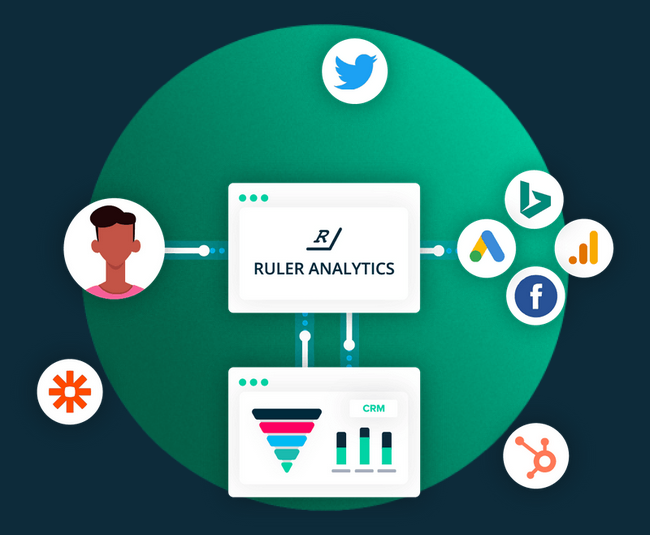
Ruler Analytics is a marketing measurement platform that offers multi-touch attribution, impression attribution and marketing mix modeling. It tracks customer journeys and connects marketing touchpoints to revenue outcomes by integrating website data, CRM systems and marketing applications.
Source: Ruler Analytics
Agencies use Ruler when they need to prove which campaigns drive real business results. The platform tracks calls, forms, live chat and touchpoints automatically. Then, it links those interactions to closed revenue. This makes it easier to defend performance claims and optimize spend based on value-driven metrics rather than surface-level engagement.
Pricing
Ruler Analytics bases its pricing on monthly visits.
- Small Business: From £199/month based on 5,000 monthly visits
- Medium Business: From £649/month based on 50,000 monthly visits
- Large Business: From £1149/month based on 100,000 monthly visits
- Advanced: Price available upon request
16. Fospha
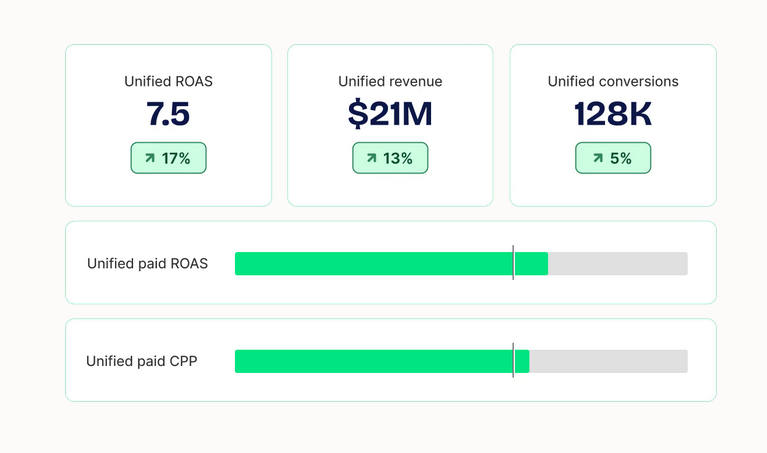
Trusted by brands like Huel, HelloFresh and Gymshark, Fospha is a full-funnel marketing mix modeling platform delivering daily, ad-level insights. It’s built on a proprietary Bayesian media mix model that updates daily rather than quarterly, combining the speed of attribution with the scope of traditional MMM.
Source: Foshpa
Agencies use Fospha to show how upper-funnel activity drives sales across DTC, Amazon and marketplaces like TikTok Shop. The platform’s incremental forecasting helps teams identify opportunities for profitable growth and pinpoint diminishing returns before overspending.
Why your marketing agency tool stack matters more than ever
Your clients don’t just want dashboards. They want intelligence and the ability to understand what’s working, why it’s working and what to do next.
According to Funnel's 2026 research, marketers rate agencies at just 81%, which suggests room to differentiate through better intelligence. Client expectations are rising while marketing budgets face pressure. As such, agencies that can answer harder questions while helping clients make smarter decisions will stand out.
This is why a purposeful stack matters more than tool sprawl. Every platform in your stack should contribute to clarity, not complexity. The agencies thriving in 2026 are those building solid foundations now.
This foundation needs to be built on clean, trustworthy data that powers everything else. Funnel ingests marketing data from hundreds of sources, cleans and normalizes it, and delivers analysis-ready data for your clients’ dashboards. You can compare cross-channel performance with confidence, build reporting that’s actionable rather than decorative and help clients see the how and the why behind the numbers so they know what to do next.
Build a marketing agency tool stack that delivers
The value of your marketing agency’s tech stack isn’t measured in how many tools you have or how little you pay for them. Rather, it’s measured in clarity: can you show your clients what’s working, why and what to do next?
In a landscape where most marketers don’t have a clear signal on what’s working, agencies that build reliable, scalable infrastructure stand out. Your stack should help you experiment, refine and prove results without unnecessary overhead or constant maintenance.
Funnel’s marketing intelligence platform gives agencies the foundation they need through unified, trustworthy data, scalable reporting and the flexibility to grow alongside your clients. When deeper measurement is relevant for more mature clients, your data foundation is ready to support it. Because when better insights build better client relationships, everyone wins.
Book a demo with Funnel today to see how it can power your agency’s data and reporting.
Read this next: 15 of the best digital marketing dashboards
Your questions about marketing agency tools
What tools do marketing agencies need in 2026?
Modern agencies need tools across five core layers: data and reporting, project management, marketing automation, creative and AI, and performance measurement. The foundation is a reliable data layer that unifies information across clients and channels. Prioritize platforms that integrate well and reduce tool sprawl.
How do I choose the right marketing tech stack for my agency?
Evaluate based on scalability (does it grow with you?), integration (does it connect to what you already use?), reliability (will reports break?) and client fit (does it serve their unique needs?) Consider whether one platform can replace multiple point solutions. Look for managed connectors and no data retention limits so you’re not constantly troubleshooting broken pipelines.
How do agencies prove marketing ROI to clients?
Move beyond vanity metrics like clicks and impressions. A unified data foundation ensures the numbers you present are accurate and defensible. For clients with more complex needs, advanced analytics like marketing mix modeling, attribution and incrementality testing can help demonstrate impact and ROI.
What is marketing mix modeling, and why does it matter for agencies?
Marketing mix modeling uses statistical models to measure the impact of various marketing activities on business outcomes like sales and ROI. It doesn't rely on crumbling third-party data infrastructure. MMM isn’t for every client, since it mostly makes sense for larger accounts with sufficient data and complexity. But agencies with a solid data foundation can support or lead MMM engagements when the use case justifies it.