



 Talk to sales
 Log in




If you’re on the hunt for a Sellforte alternative, you already know marketing mix modeling (MMM) is a key part of the marketing measurement equation, so you’ll likely choose between five tools with MMM capabilities: Funnel Measure, Google Meridian, Nielsen/Circana, Rockerbox and Haus.
Each one tackles the current performance marketing crisis, but they all fall somewhere along the spectrum of pure model vendors to integrated data-and-measurement tools.
Sellforte operates strictly as a model-only tool, so your team handles the database preparation before you get a budget forecast. To pick the right Selforte alternative for your team, evaluate your own data infrastructure and make the decision that hinges on the software's architecture:
- Do you want to maintain an internal pipeline with tools like Fivetran to move raw API data into BigQuery?
- Or do you prefer to consolidate marketing data collection and data science in a single platform?
In this article, you’ll learn the best marketing mix modeling software alternatives to Sellforte and how to choose one that works well with your current and future data infrastructure.
Why teams look for Sellforte alternatives for marketing mix modeling (MMM)
Marketing teams looking to replace Sellforte fall into one of the following scenarios:
- Your Sellforte contract is coming up for renewal, and you need to benchmark the market before signing a new multi-year deal.
- Your measurement scope has expanded beyond marketing mix modeling alone, and you want multi-touch attribution and incrementality testing without relying on three separate vendors.
- You’re paying an outside data engineering vendor to clean and feed your data into Sellforte, and you want a platform that owns both the data pipeline and the model.
- Sellforte is on your shortlist for an active RFP, and you need to compare it against alternatives.
No matter which scenario brought you here, your core buying decision is to determine which category best fits your data architecture, way of working and how you want to scale. Once you have the category nailed down, your list of measurement vendors will narrow.
MMM platform comparison: model-only vs. integrated
Model-only vendors, like Sellforte, sell you the measurement engine alone. Other examples include Recast, Meridian, Robyn and traditional marketing mix modeling consultancies like Nielsen, Kantar and Analytic Partners. If you choose the model-only route, your data science resources must handle the ad platform connectors, currency conversions, metric reconciliation, campaign naming standardizations and daily refresh cycles. The model runs on top because your team has already done the data preparation.
Integrated platforms fold the data pipeline directly into the measurement product. A Data Hub like Funnel automatically handles the ingestion, transformation and storage of your data across more than 600 connectors, then Funnel Measure runs on the unified, governed data foundation. Your subscription covers both the initial pipeline build and its ongoing maintenance, saving your team from having to build it from scratch.
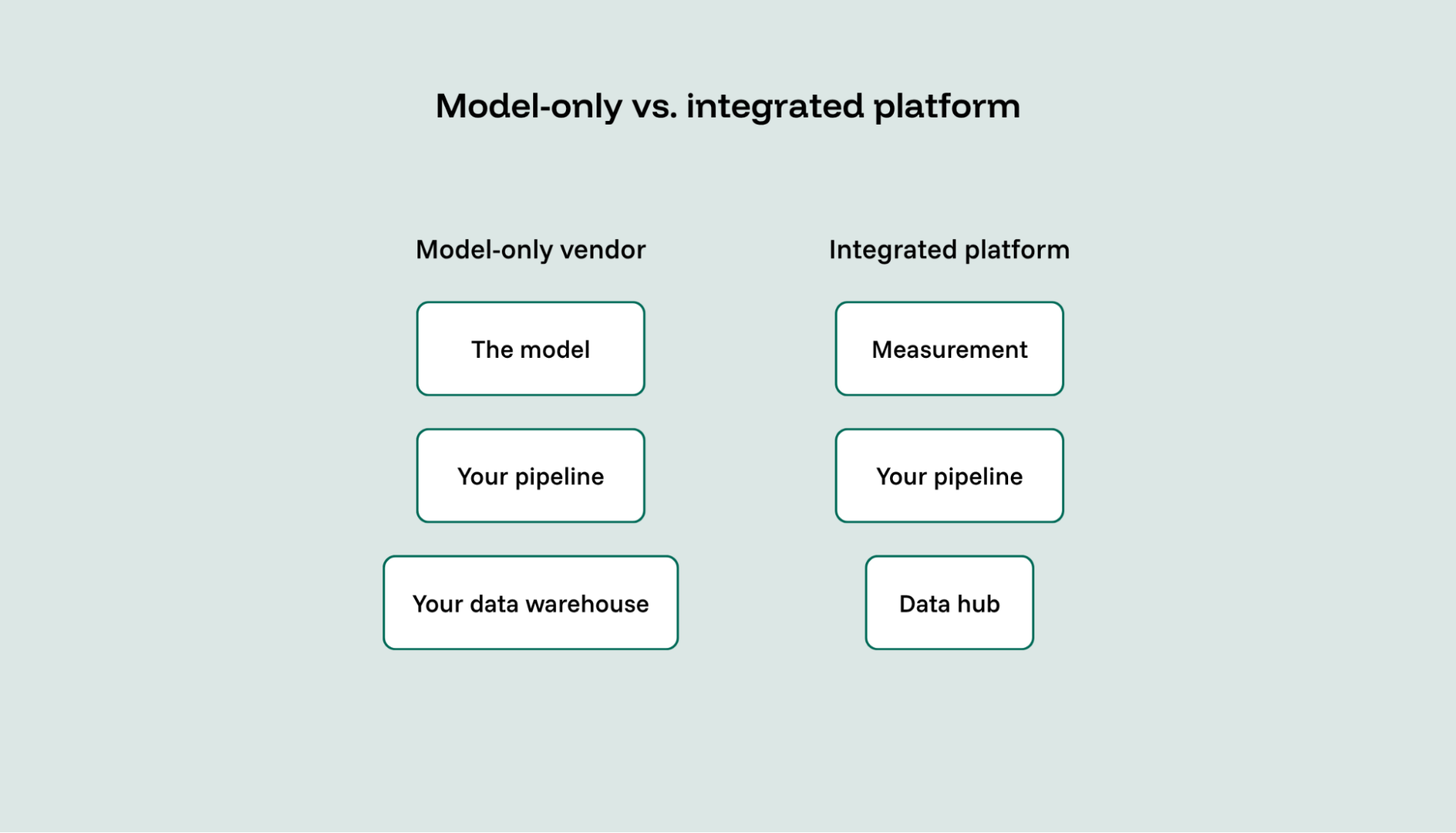
So which category fits your organization?
If your marketing team runs a working data warehouse with someone owning the pipeline, a model-only vendor works. You keep the option to swap models later on without rebuilding your data setup.
If your marketing data is scattered everywhere and nobody owns the pipeline, an integrated platform saves you from having to buy two products and make them work together yourself.
Budget planning
Ultimately, your total cost of ownership (TCO) is the software subscription plus the internal or external headcount required to build and maintain your data layer, plus any future switching costs. It’s important to calculate the total number and compare your vendors based on that, rather than just looking at the subscription price for an MMM software alternative.
The best marketing mix modeling competitors
Now that you understand the category you need, let’s explore the best Sellforte competitors on the market.
1. Funnel Measure: integrated data and marketing measurement
Funnel Measure runs on Funnel's Data Hub. Rather than forcing you to buy one tool to move your data and separate software to model it, Funnel uses its Data Hub and 600+ managed connectors to handle the arduous work of data plumbing first.
Measure runs on two tiers. Digital Measurement covers digital-first advertisers and combines marketing mix modeling, multi-touch attribution and ad platform signals into one calibrated system. Advanced Measurement adds offline media, TV, incrementality testing and geo-experimentation and runs on triangulation, so marketing mix modeling, multi-touch attribution and incrementality operate together with each method covering the blind spots of the others. Both tiers refresh models daily and cover budget optimization, scenario analysis and media planning.
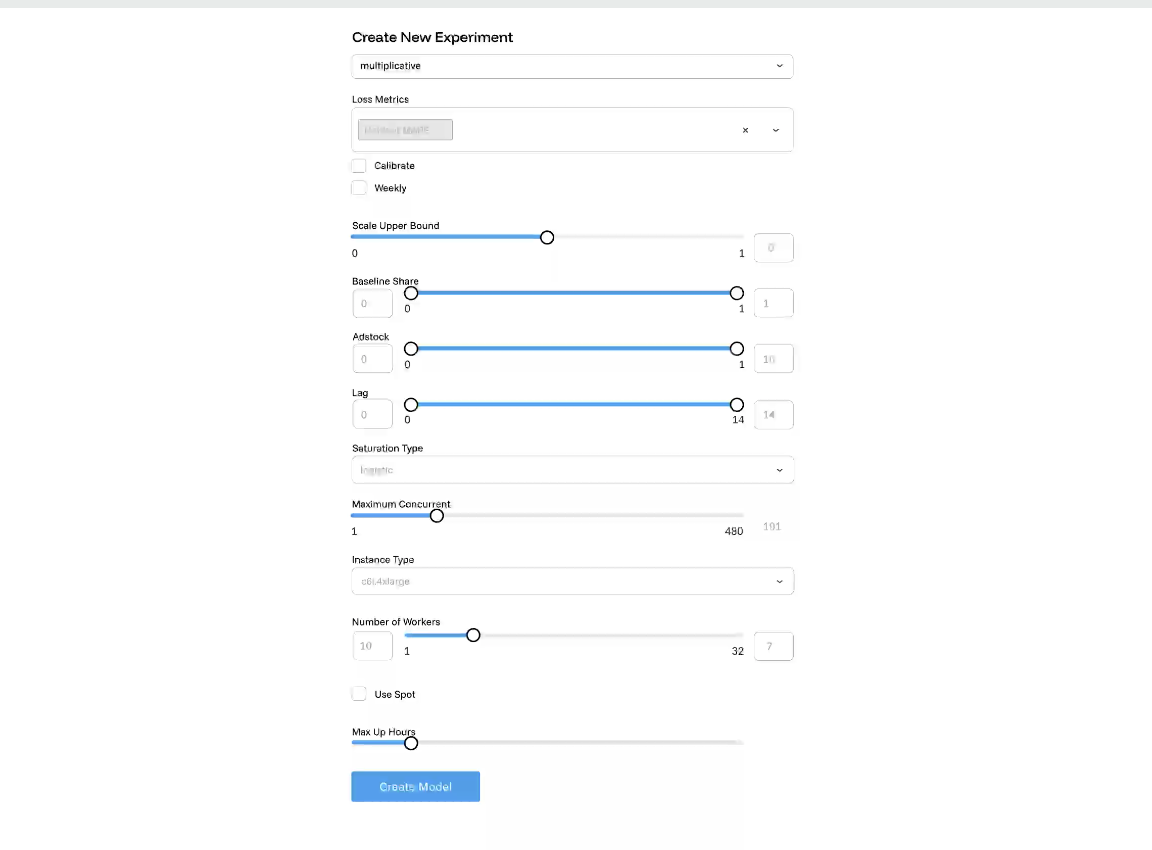
Ultimately, Funnel is a great marketing mix modeling solution if your marketing data is scattered across a dozen ad platforms and CRMs. It’s an advanced cross-channel measurement system in a self-serve platform that’s accessible to marketing and data analytics teams, so it eliminates engineering dependence.
That said, if your brand already maintains a custom-built data warehouse with an internal pipeline you completely trust, you’d be paying for data-handling capabilities you’ve already built.
2. Google Meridian: open-source MMM
Google Meridian is a free, open-source Bayesian mix marketing modeling code library designed for brands with the data science maturity to build and maintain their own models. Developed by Google's research team, it supports advanced geo-level modeling and reach/frequency tracking. It also allows you to feed incrementality experiment results into the model.
If your ad budget is heavily concentrated on Google properties, Meridian integrates with Google's data platform to pull in rich, platform-exclusive inputs like Search Query Volume. However, because it is an open-source library, it doesn’t ship with any pipeline infrastructure, user interface or data-cleaning tools, and its modeling is restricted to the channel level rather than individual campaigns.
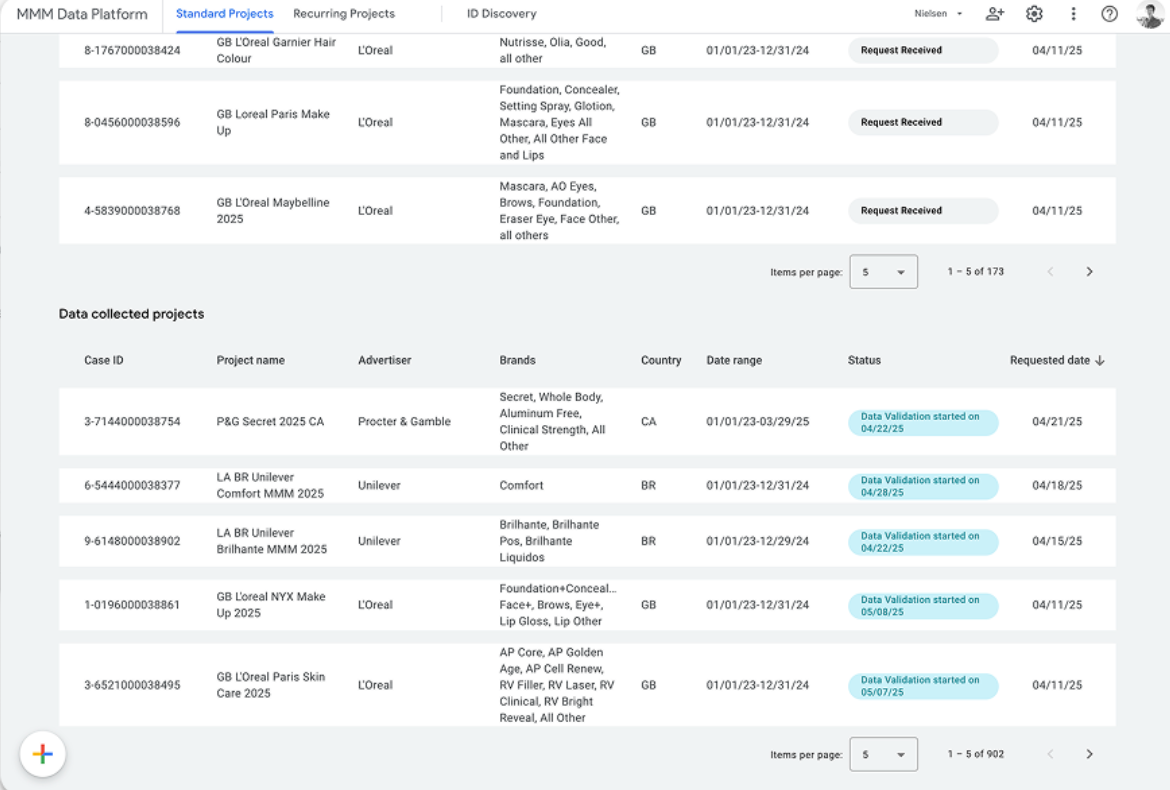
Image source: Google Meridian
Google Meridian is a solid Sellforte alternative if you want total mathematical transparency and have internal data science resources with deep expertise to run it, but the total cost of ownership in engineering headcount and GPU compute will often land much higher than a paid SaaS vendor.
3. Circana: MMM for in-store retail
Circana is the gold standard for traditional consumer packaged goods (CPG) and brick-and-mortar retail brands that need measurement grounded in real sales data. Following Nielsen’s sale of its MMM business to Circana, this legacy modeling now runs on the Liquid Data platform, which is backed by actual store-level point-of-sale (POS) data and over 10,000 retail industry benchmarks.
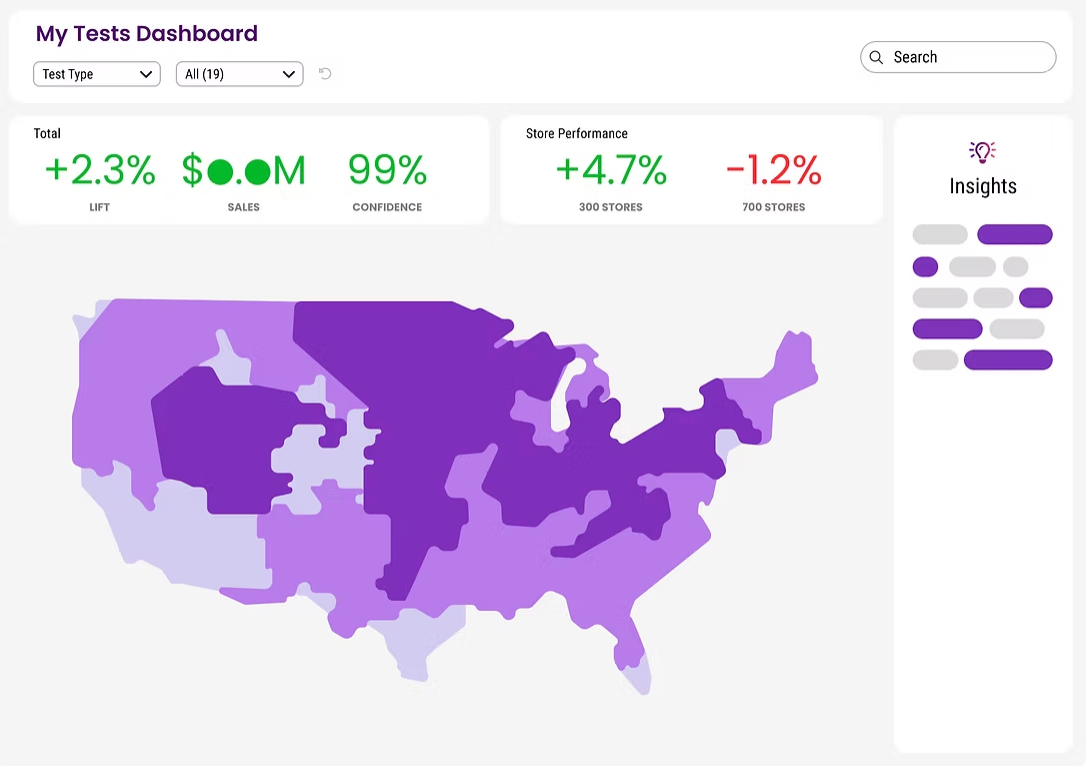
Image source: Circana
For brands that require fast, agile insights, the Liquid Mix platform offers self-serve models with daily refreshes. It’s the ultimate choice for retailers' mass-retail shelves, but if you are a digital-first, B2B or purely e-commerce brand, you’ll get very little mileage out of their physical-retail-heavy data assets.
4. Rockerbox: MTA focus
Rockerbox is an attribution platform designed for mid-market ecommerce brands that need to untangle and deduplicate complex online customer journeys on digital channels. The platform's main strength is its user-level multi-touch attribution (MTA) across more than 100 native integrations, which allows you to track paths to purchase across messy digital and offline touchpoints and later layer in mix marketing modeling and incrementality as your budget grows.
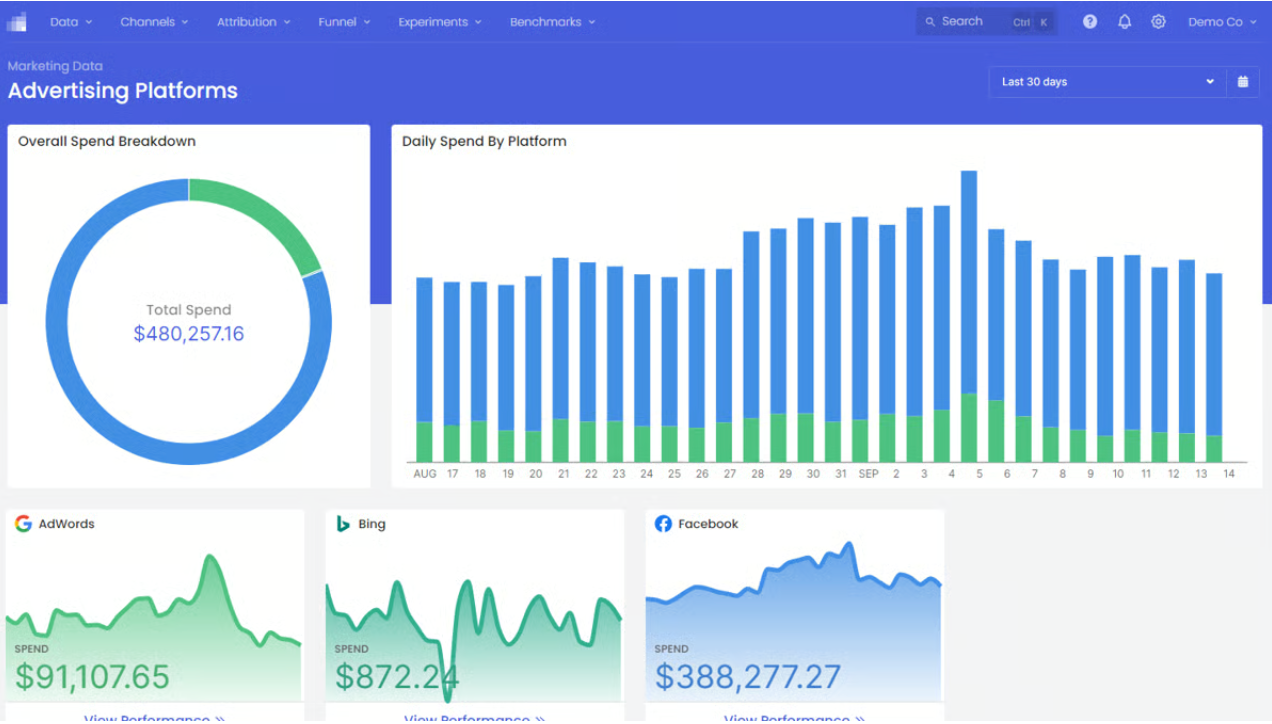
Source: Rockerbox
As Rockerbox has expanded outward from its core MTA capabilities, its newer MMM and incrementality features don’t yet have the decades of heritage found in legacy modeling platforms. It’s the ideal starting point if your primary challenge is digital path-to-purchase attribution. However, if you’re an omni-channel retail giant with a heavy offline TV and print budget, you’ll want to thoroughly stress-test their modeling depth against your offline mix before signing a contract.
5. Haus: incrementality focus
Haus is a highly specialized, cookieless geo-testing platform built to sit alongside your existing measurement stack to prove the exact, incremental lift of your marketing spend.
The platform uses synthetic controls to run geographic experiments, bypassing tracking pixels and third-party cookies so your measurement remains completely unaffected by browser privacy updates.
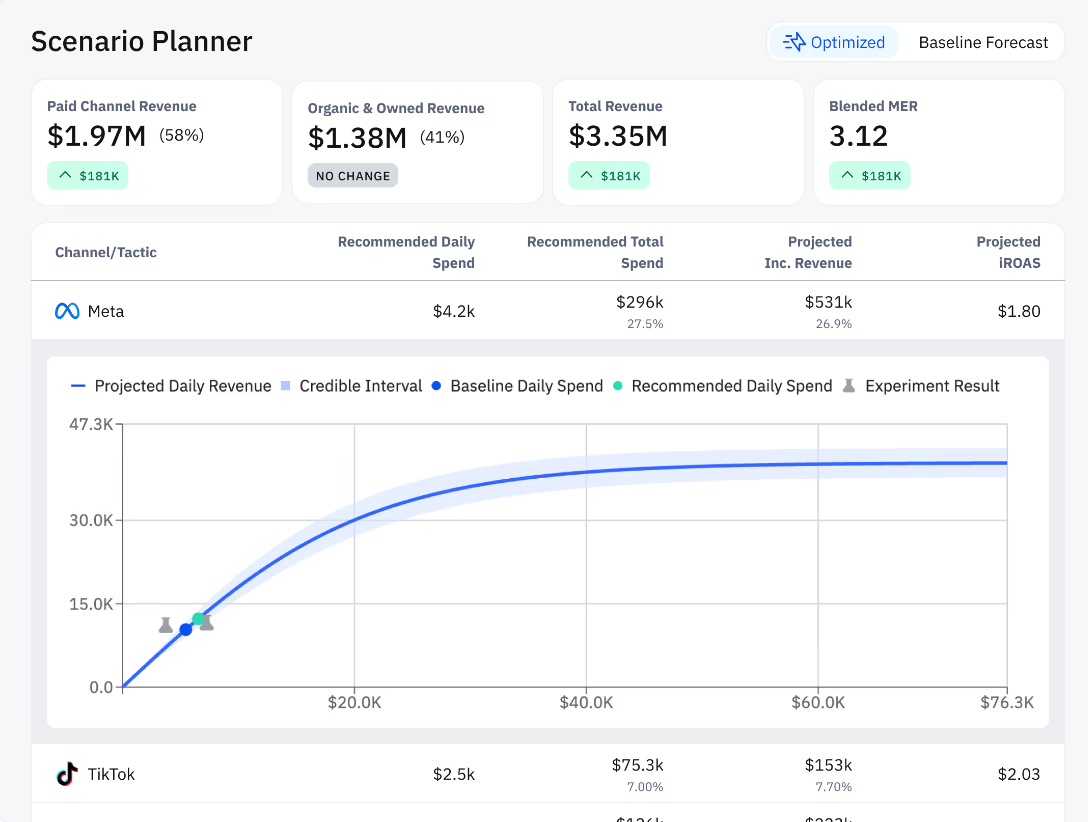
Image source: Haus
This futureproof approach to tracking is effective for identifying the true, unbiased business lift of paid social, CTV and influencer campaigns where platform-reported data is almost always heavily skewed in the ad network's favor. However, because Haus only does geographic experimentation and doesn’t offer multi-touch attribution, traditional MMM or a raw data pipeline, it’s a tool designed to complement an existing, functional data setup rather than act as a standalone, all-in-one replacement.
Evaluation criteria for a Sellforte alternative
When you’re walking into vendor demos, it’s best to ask the hard-hitting questions that strip away the slick user interface and expose the engineering labor your team will have to do.
To prevent buying a tool that sits unused because your team can't feed it clean data, screenshot these questions and bring them to your next call:
1. Does the vendor handle the data pipeline?If your team owns it, factor the internal cost of running it into the comparison. If the vendor owns it, you're paying for that capability either way.
2. Does the platform cover marketing mix modeling, multi-touch attribution and incrementality, or one of them?Marketing mix modeling handles strategic allocation, multi-touch attribution handles granular digital paths and incrementality handles causal validation. If you need more than one, the alternative to a single platform is multiple contracts, integrations and renewal conversations.
3. How often does the model refresh?Annual and quarterly cycles were the norm five years ago. Daily and weekly refreshes are now standard for in-quarter budget decisions.
4. What's the total cost?The license fee is what you see on the invoice. Data preparation work, internal headcount and any other platform you'll buy to cover the gaps are invisible costs that inflate fast.
Funnel Measure vs. Sellforte
All in all, the difference between Sellforte and Funnel Measure mainly comes down to what the software handles for you, rather than the accuracy of the models themselves. Sellforte gives you the model, while your team handles the data pipeline to feed it by using tools like Fivetran or Supermetrics to push everything into a warehouse like Snowflake or BigQuery. Funnel Measure includes Funnel's Data Hub, so data prep and measurement happen within the same tool.
Both options are software-driven, update continuously and offer scenario planning and budget optimization. The choice here is simply between a standalone model and a fully integrated data platform.
Which one works best depends on whether you already have a data setup in place or if you want the tool to build the foundation for you. If you want a deep dive into how the two platforms stack up head-to-head, check out our comparison on Sellforte vs. Funnel.
See how Funnel Measure works. Book a demo.
FAQs
What are the best MMM software alternatives to Sellforte?
Funnel Measure, Google Meridian, Nielsen/Circana, Rockerbox and Haus cover most of the market. Funnel Measure and Circana handle both the data and the modeling. Meridian, Rockerbox and Haus specialize in specific measurement methods.
Does Funnel do marketing mix modeling?
Yes. Funnel Measure includes MMM alongside multi-touch attribution and incrementality testing. The measurement layer runs on Funnel's Data Hub, so every model runs on marketing data that's already collected, transformed and kept current.
What's the difference between a pure MMM tool and an integrated measurement platform?
A pure MMM tool runs the model only. Your team supplies the normalized, connected marketing data. An integrated platform includes the data ingestion, transformation and storage layer as part of the same product, so one vendor owns both the pipeline and the modeling.
Is Google Meridian a good alternative to Sellforte?
For teams with a mature internal data science function, yes. Meridian gives you full transparency into a Bayesian MMM at no license cost. For teams without data scientists or connector-building capacity, the implementation load outweighs the savings.
What should I look for when choosing the best MMM tools?
Match the platform's scope to the questions you need answered. Marketing mix modeling alone works if strategic allocation is your only question. Add MTA for granular digital paths. Add incrementality for causal validation. Ever since privacy updates reduced user-level signals, ad networks have skewed reporting toward themselves, and MMM combined with incrementality helps separate net-new incremental sales from platform-claimed credit.
When is Funnel Measure the right choice over a pure MMM vendor?
When your marketing data lives across many sources with no internal owner for the pipeline, or when you'd rather buy the data foundation and the measurement layer from one vendor instead of two, Funnel Measure is usually the best option.