



 Talk to sales
 Log in




The best Windsor.ai alternatives are Funnel, Supermetrics, Coupler.io, AgencyAnalytics and Whatagraph. Funnel is the strongest choice for marketers who have outgrown basic extraction and need a marketing data hub that natively stores and models data. The other alternatives fill lighter roles and range from pure data pipelines to automated client reporting dashboards
If you’re considering replacing Windsor, you might want an option with more predictable pricing or a more cost-effective connector to transfer marketing data into a spreadsheet or a data warehouse.
Alternatively, if you’re like many marketing teams, you may have outgrown the connector model altogether. If you’re spending hours manually fixing data in Google Sheets or constantly rebuilding broken dashboards when an API changes, you need a centralized data hub that can effectively contextualize and store your data.
The following guide breaks down the two paths available to your team. You’ll learn what each Windsor alternative does, who it’s built for and where it hits a ceiling.
Why teams look for Windsor.ai alternatives
According to research from Gartner, marketers use only 49% of the capabilities in their martech stacks. Despite an explosion of tools, with the 2025 landscape boasting a staggering 15,384 commercial platforms, more software hasn't led to better insights. Instead, it has made data integration the number-one stack-management challenge for mid-sized companies.
So, why are marketers struggling to get use out of the tools they’ve invested in?
Marketing data is inherently volatile, and it now lives in more silos than ever before; success depends on the platform that can consolidate, standardize and model that data under one roof, rather than just passing it from point A to B.
Windsor sits firmly in the connector-first camp; while great for basic pipelines, it lacks structural data modeling, historical data retention and other features that growing marketing teams need to scale.
Volume pricing that’s hard to forecast
The first thing that usually causes teams to search for a Windsor.ai replacement is the bill. Windsor's plans hinge on the number of data sources and accounts, but warehouse and database destinations are billed by monthly active rows. Row counts fluctuate with campaigns, seasonal traffic and new client accounts, so a strong quarter can raise your delivery cost and, as a result, your bill.
Limited transformation inside the tool
Windsor restricts you to basic in-app edits and forces you to perform more complex data modeling in your destination warehouse or BI tool. As a result, your core business logic, like campaign groupings, blended CPA calculations and currency conversions, is scattered across separate downstream destinations rather than residing in a central hub.
No live data layer to query
Windsor keeps up to 10 years of extraction history on paid plans, which sounds generous but comes with a catch. The history sits in a backup log, not a live database you can query, blend or inspect. So when a report disagrees with what a platform's own dashboard shows (and it will, at some point), there's no independent layer where you can go to check who's right.
Connector reliability issues
Every pipeline vendor deals with ad networks updating their APIs and then disconnecting; Windsor is no different, though its G2 reviews also mention frequent failures and refresh gaps. The knock-on effect is that ad platforms only return data from the last few weeks or months via their APIs. So if a connection breaks and stays down long enough, your historical marketing data can vanish, and there's usually no way to recover it.
How to choose the right Windsor.ai alternative
Before you demo another vendor, it’s important to decide what you need your data pipeline to do. To make that call, we need to take a step back and look at the categories on offer and what problem they solve for your data infrastructure. Once you determine your category, it will narrow down your options.
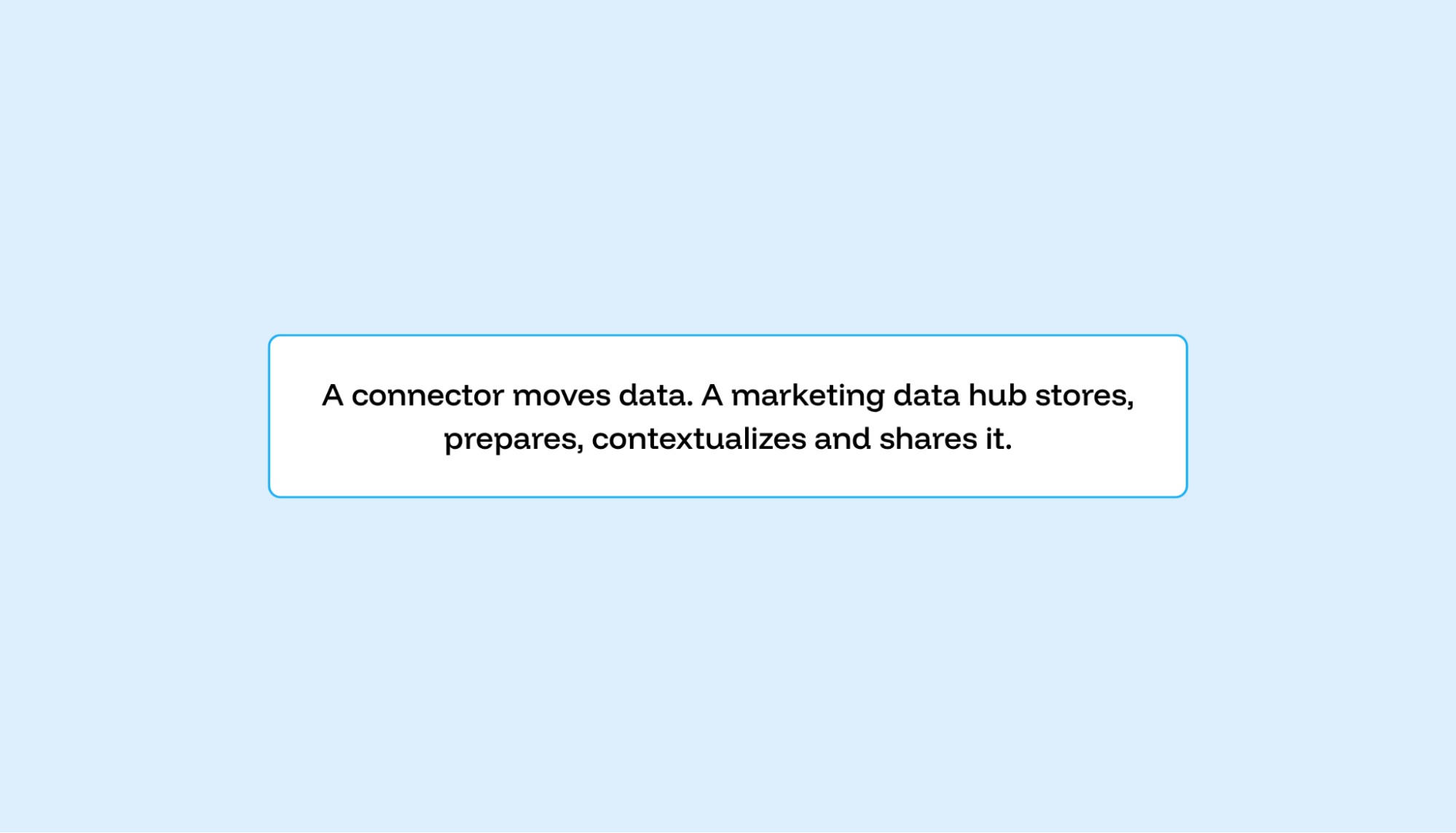
The two categories to focus on are connectors and marketing data hub alternatives. Connectors move data. A marketing data hub ingests, prepares, contextualizes, stores and shares it.
Windsor is a connector; so are Supermetrics and Coupler.io. A connector authenticates with each platform's API, pulls the data and drops it into a destination like Data Studio (formerly Looker Studio), Sheets or a data warehouse. Nothing sits between extraction and delivery. If the destination breaks or a formula changes, the fix needs to happen downstream, and it’s on your shoulders to build it.
A marketing data hub adds a database and a modeling layer between your sources and the destinations. The data lands in the hub first, is normalized against your custom definitions and then is sent to every downstream tool, including BI tools and AI workflows, so they can work with the same source of truth.
Path 1: lateral move to a different connector
If your pipeline works fine and you just want a different pricing structure, a simpler setup or better client reporting, stay in the connector category. Supermetrics, Coupler.io, AgencyAnalytics and Whatagraph are all great options to explore. Each one extracts data from point A and drops it into point B. These marketing data connector tools differ mostly in library size, dashboard capabilities and in how the pricing scales.
Path 2: upgrade to a marketing data hub
If your numbers don't match across separate reports, if you've started deploying a warehouse for marketing data or if API breakage keeps knocking out your dashboards for hours at a time, no connector on the market will fix those problems. The architecture is the problem, not the vendor. You need a system that ingests, standardizes and stores metrics in a central hub.
The best Windsor.ai alternatives
With the two paths in mind, here's how the best Windsor alternatives stack up.
1. Funnel: best for unified data modeling
Unlike basic connectors, Funnel operates as a marketing data hub. The platform pulls, stores and models metrics from over 600 sources within a centralized database layer, then feeds more than 40 downstream destinations from a single canonical schema. Because raw records remain preserved at the ingestion stage, your metric definitions stay consistent across all destinations. If an ad network updates its API, Funnel keeps your historical records intact.
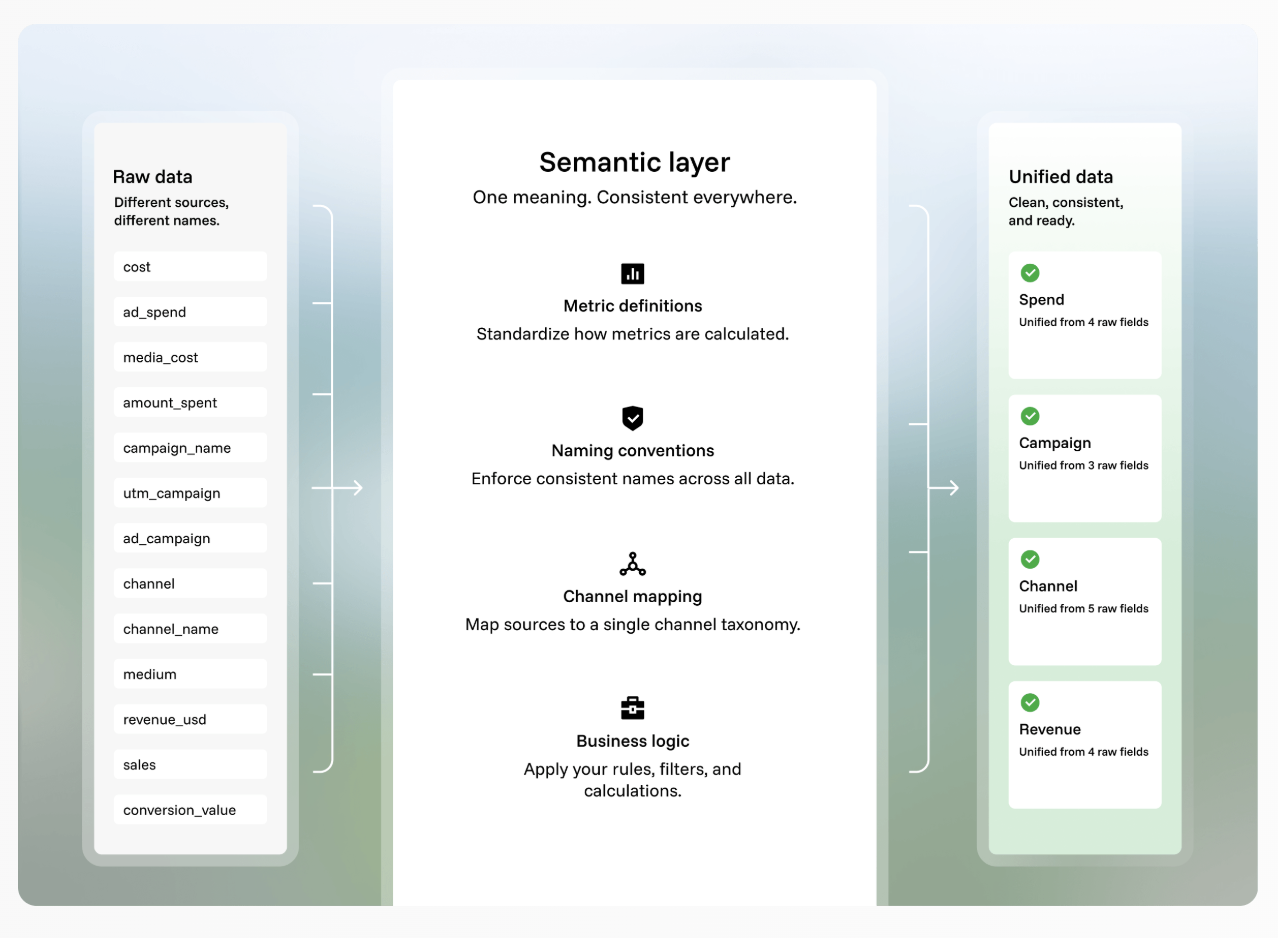
You’ll notice that Funnel costs more upfront than a basic connector, but rather than billing by raw row volume, which penalizes you for success, it uses a Flexpoints system based on your connected accounts and destinations. Funnel also requires more upfront configuration and logic design than a plug-and-play solution, so it may be overkill for simple, single-dashboard projects, but it’s often the right call if your priority is building a permanent, reusable marketing data foundation that grows with you.
2. Supermetrics: best for teams that need a premium connector library
Supermetrics is Windsor's closest architectural twin. Both are pass-through connectors, pull raw data from ad platforms (Supermetrics has 150+) and drop it into Data Studio, Sheets or a warehouse with no database in between. Supermetrics is best for teams that want a huge library of pre-made data connectors for spreadsheets and prefer to manually fix, blend and organize their metrics in the final reports.
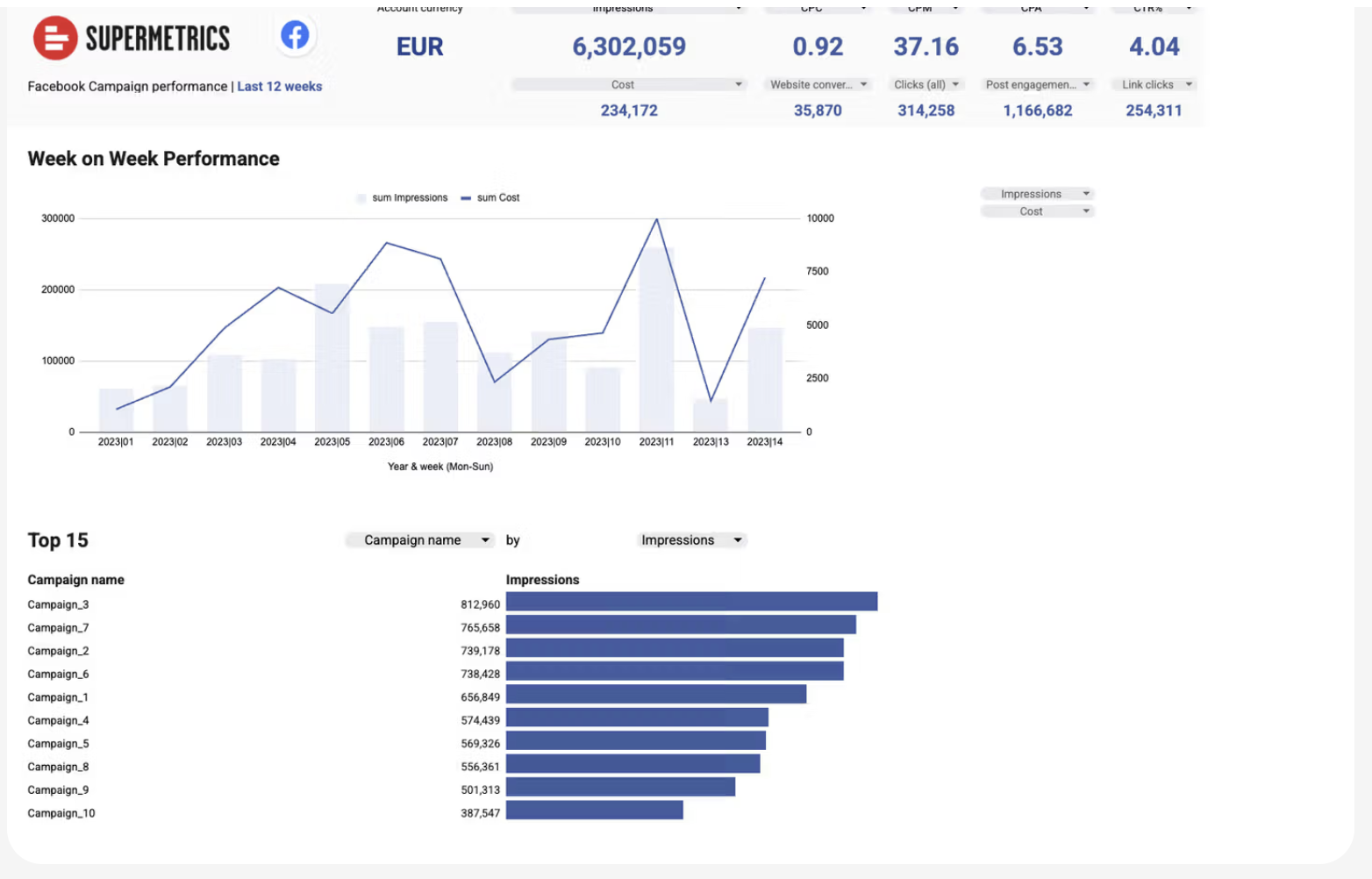
Image source: Supermetrics
Where the two diverge is on the commercial side: Supermetrics pricing locks internal storage and advanced features behind higher tiers, and it bills by user seats and accounts. For an in-depth comparison, check out Supermetrics vs. Funnel and Supermetrics alternatives.
3. Coupler.io: best for small teams automating imports to Google Sheets
For solo operators or small agencies, Coupler.io is a code-free scheduler that moves data from 400+ business applications into Google Sheets, Excel or simple databases. It’s a budget-friendly data automation tool that includes basic data blending, such as sorting and column joins, inside the UI.
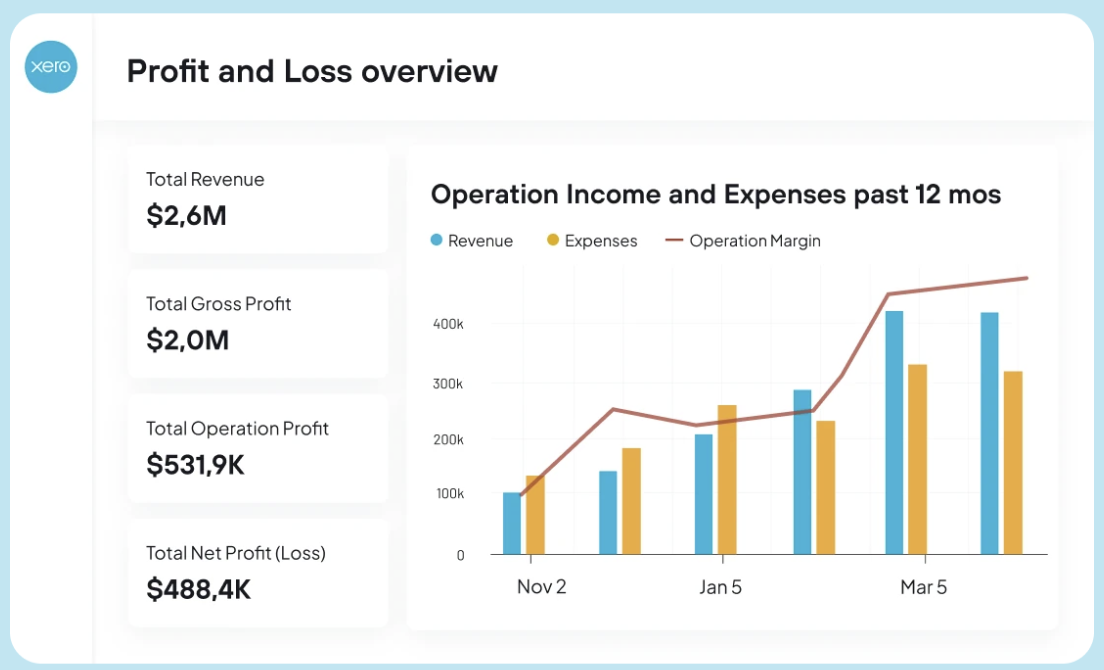
Image source: Coupler.io
But read the small print. Of those 400+ applications, only about 60 are ad networks, so make sure it covers the channels you need. Active connection and row-count caps also push the price up quickly if you run multiple client accounts, and every file that lands in the destination arrives raw, since Coupler is a tool for transit, not storage.
4. AgencyAnalytics: best for fast visual client dashboards
AgencyAnalytics is a data visualization tool and presentation platform built for marketing agencies that need to automate client dashboards with pre-built templates. It ships with 85+ ad platform integrations, automated email reporting and white-labeled client portals.
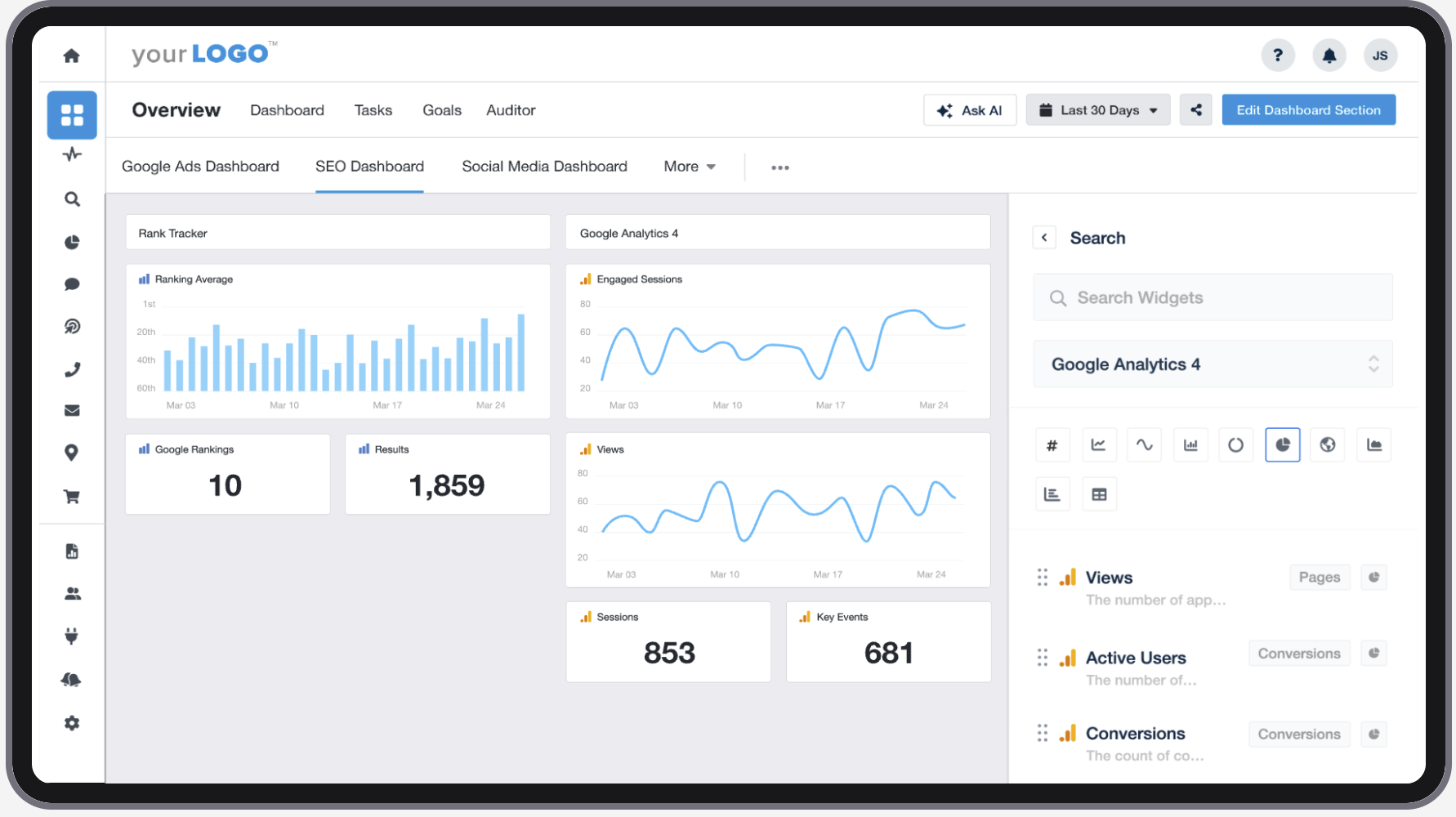
Image source: AgencyAnalytics
While the tool is great for streamlining client reports, it’s not a data storage system or a warehouse pipeline. So you can’t use it to extract, transform or store source marketing data for advanced modeling.
5. Whatagraph: best for polished client-facing reports
Whatagraph targets agencies that require highly polished, visual performance updates and PDF reports for client presentations. The platform offers clean, pre-built custom formulas, a white-label option and has a basic transfer feature to push data to warehouses.
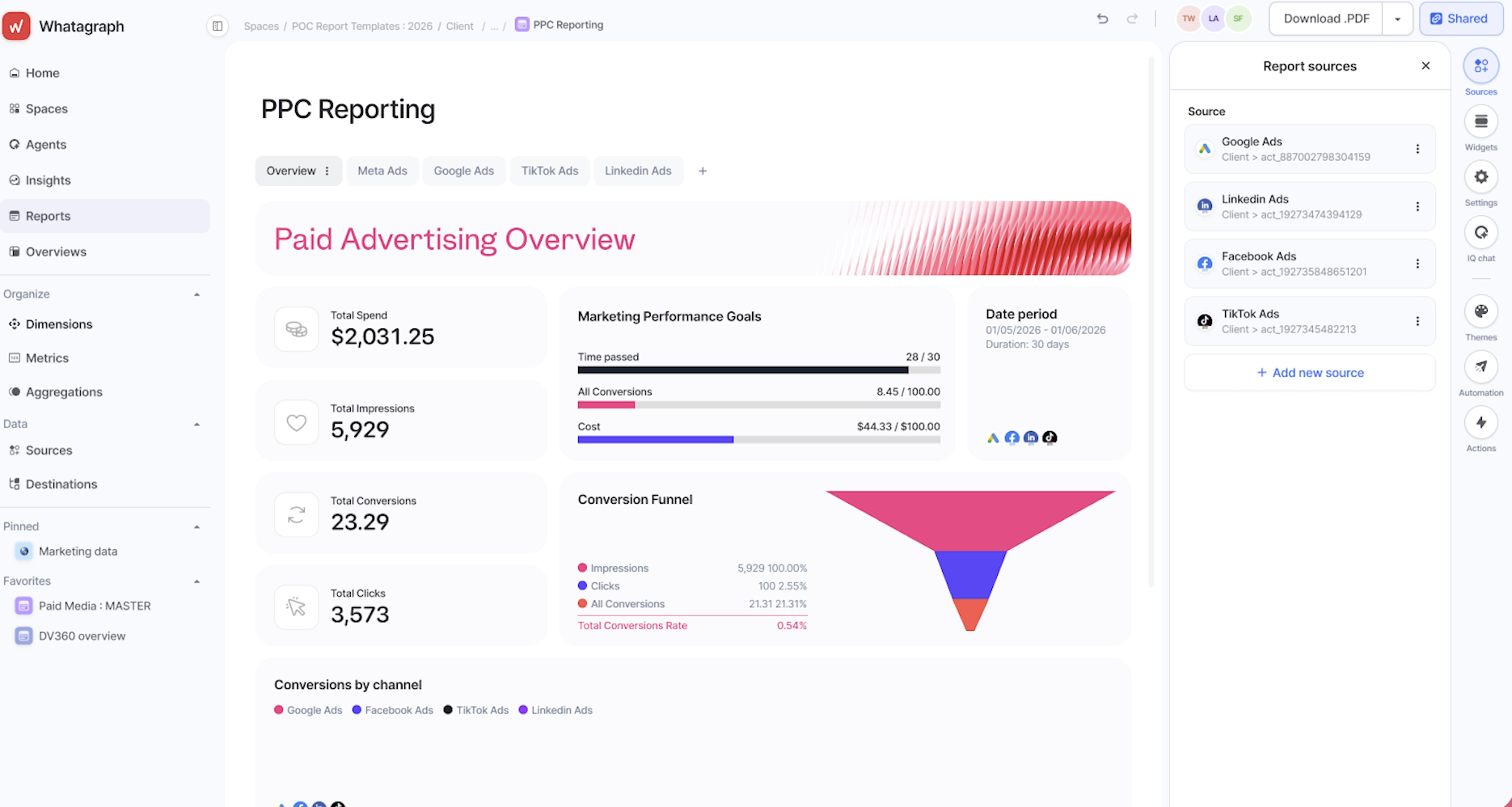
Image source: Whatagraph
The main constraint is in the pricing plan structure; contract pricing is tied to total active sources and workspaces. If you add a new client account, your subscription may unexpectedly move into a higher price bracket. Also, the integration library is more limited than that of other dedicated ETL tools.
How Funnel.io compares to Windsor.ai head-to-head
If you’re looking for a marketing data hub as a Windsor.ai alternative, here’s how Funnel compares.
|
Windsor.ai |
Funnel |
|
|
What it is |
No-code connector for ELT and ETL |
Marketing data hub with native storage and modeling |
|
Connectors |
325+ |
600+ managed connectors |
|
Data architecture |
Pass-through pipeline with no internal query layer |
Central hub with native storage and its own database layer |
|
Transformation |
Handled downstream in your warehouse or BI tool |
Handled natively in the hub before data reaches multiple destinations |
|
Governance |
Schema mapping and cross-channel blending done per report |
Shared metric definitions apply to every downstream report |
|
Pricing model |
Fixed tiers by sources and accounts. Data destinations billed by monthly active rows |
Plan plus Flexpoints capacity. No charge for rows or data volume. |
|
Best for |
Channel-level connection and attribution into a dashboard or warehouse |
A managed, modeled data foundation feeding BI, warehouse and AI tools |
If you pick a basic connector now and outgrow it in 18 months, you'll have to rebuild every metric, formula and workflow on the new platform from scratch. If you upgrade to a data hub while your setup is still manageable, you avoid the second migration entirely.
Ready to move beyond the connector? See what Funnel can do for your team. Book a demo.
Frequently asked questions
What are the best Windsor.ai alternatives?
If you simply need a swap for a basic pipeline, tools like Supermetrics, Coupler.io, AgencyAnalytics and Whatagraph all handle the data-routing job well. But these Windsor.ai competitors aren’t a good fit for marketing complexity challenges. If you’re looking for a data integration solution that stores data and has data normalization and modeling, Funnel is a better choice.
Is Funnel a good replacement for Windsor.ai?
Funnel is a good replacement for Windsor if your team has outgrown connector tools and needs a data hub to handle the real complexity of marketing. A pass-through pipe can only move raw data. A data hub pulls data, but it also stores, transforms and shares it.
What’s the difference between Windsor.ai and Supermetrics?
Both are connector-first tools that pass data through to dashboards, warehouses or spreadsheets. Supermetrics comes with a larger destination library and stronger business intelligence templates. Windsor bundles multi-touch attribution into the connection layer and prices multiple sources and accounts separately from warehouse row volume. Neither stores nor models the data centrally, so both leave your team owning the metric logic downstream.
When does it make sense to upgrade Windsor.ai to a full marketing data hub?
If your day-to-day bottleneck is that your numbers don't match across separate reports, your team has no central database to store historical data or your dashboard setup breaks whenever an ad platform changes its API, you’ve reached the structural limits of the basic connector model.
What should I use instead of Windsor.ai for agency client reporting?
When your channel mix and account volume create real reporting complexity, you need a dedicated marketing data foundation like Funnel that ingests, stores, contextualizes and standardizes your metrics before they ever reach your charts.